Saddle Fit: The Basics Every Rider Should Understand
You’re sitting on top of the evidence.
You do not fit your own saddle. But knowing what a bad fit looks like catches a problem months before the horse’s back does.
Fit is a recurring check, not a one-off purchase.
The horse’s back changes shape through the year.
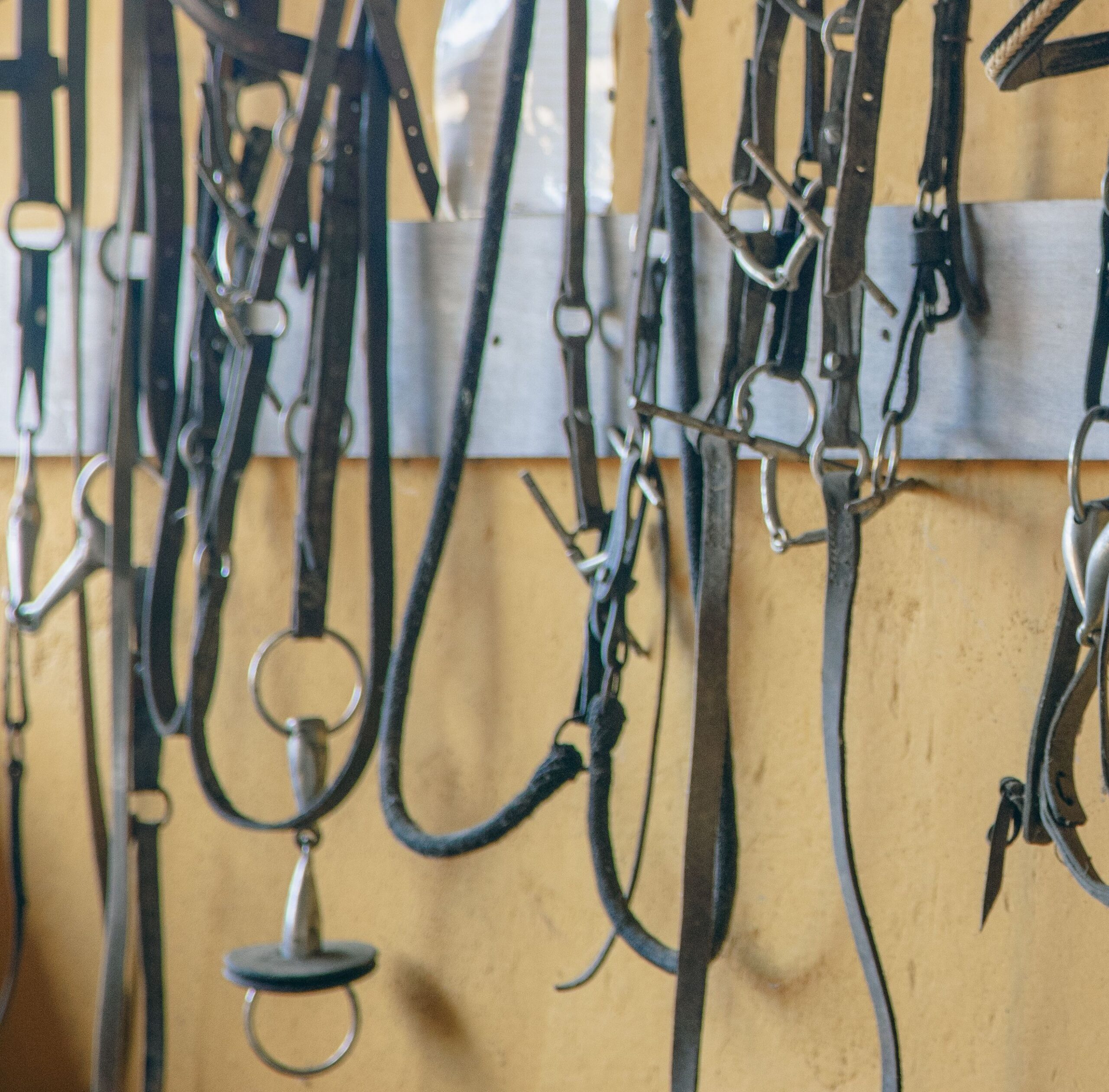
A badly fitting saddle is one of the quietest causes of poor performance and bad behaviour, because the horse cannot say what is wrong and the rider is sitting on top of the evidence. Fitting is a skilled job for a qualified fitter. Knowing what they are looking for is the rider’s job.
Fit is a moving target
The horse’s back is not a fixed shape. It changes with age, with muscle built or lost in work, with body condition, with the season, and with pregnancy. A saddle that fitted perfectly in spring can be pinching by autumn without anything being “wrong” with it. Fit is therefore a recurring check: a qualified fitter every six to twelve months, and sooner after any real change, a jump in workload, weight gained or lost, a return from a lay-off, a new discipline.
The tree, and the “just the gullet” myth
Inside most English saddles is a rigid frame, the tree, and the width of the tree at its points has to match the horse’s shape there. Too narrow and the saddle perches high at the front, rocks, and pinches the muscle either side of the wither. Too wide and it drops down and bridges: contact at the front and back, a gap in the middle, so the horse carries the load on four small patches instead of the whole panel. Many saddles now have an adjustable gullet plate, and it genuinely helps a saddle span a range of shapes.
“I’ll just fit a wider gullet” solves a small mismatch and cannot rescue a saddle whose tree is the wrong shape for the horse.
What a fitter actually checks
A fitting is a sequence of checks, done with the saddle on the horse’s bare back, then girthed, then ridden. As a rider you can run the static version yourself between visits and know when to pick up the phone.
The static fit check- Seat level, deepest point central, no chair seat, no tipping back
- 2–3 fingers clearance over and beside the withers
- Channel clear of the spine its whole length. Even width front to back
- Both panels in full contact. No bridging, no rock on the cantle
- Girthed, no rider: saddle stays put, doesn’t slip back or sideways
- Fits the rider: seat size, balance, block position
The signs from the ground
The horse’s back and behaviour report the fit if you know what to read. These are the ones to act on.
Dry patches
A dry oval bigger than a coin in an otherwise sweaty area is localised pressure cutting off circulation. White hairs there are older damage.
Uneven sweat
One side of the numnah wetter than the other, or dry rails along the spine, means the panels aren’t sharing the load evenly.
Muscle loss
Hollows either side of the wither, the back seeming to drop away under the pommel, a too-narrow tree wrong for a while.
Rubs & swelling
A consistent rub or a soft, warm swelling under the panel edge, the same spot every time, not a one-off girth gall.
Tacking-up behaviour
Dipping away from the saddle, girthiness, ears back, tail swishing, a horse expecting the ride to hurt.
The signs from the saddle
What you feel in the saddle is evidence too. Constantly slipping into a chair seat, tipped behind the movement, usually means too wide or too low at the front. Pitched forward onto the fork, hard against the pommel, is often too narrow and riding up. Feeling perched and unstable, as if you are on top of the horse rather than around it, points the same way.
Watch the timing. A horse that starts hollowing, refusing, bucking or rushing around the same time a saddle changed is telling you something specific.
When a slipping saddle isn’t the saddle
A saddle that slips consistently to one side is often assumed to be a fitting fault, and re-flocked again and again to chase it. But if a qualified fitter has checked the saddle and finds it even, a saddle that keeps slipping the same way is frequently reporting a problem in the horse, a hindlimb lameness, a genuine asymmetry, or a rider who habitually sits crooked.
Research has linked consistent one-sided saddle slip to hindlimb lameness the rider had not otherwise noticed. If a saddle a fitter calls even keeps sliding one way, have the horse assessed by a vet before you spend more money on the saddle.
 AcavalloAnatomic Gel PadShaped, breathable anti-slip gel pad: an anti-slip layer, not a fit correction.View at TRI Equestrian →
 AcavalloClassic Gel Pad with SheepskinGel with cut-out sheepskin: thicker, shock-absorbing, keeps the saddle from creeping.View at TRI Equestrian →
If either of these is doing structural work, the saddle needs a fitter.
Buying: new, used, flocking
Buy the saddle fitted to your horse and ridden in, ideally on a trial, with the fitter watching the horse move. A used saddle can be excellent value, but it has usually settled to the shape of its last horse and needs re-flocking to yours. Use a properly qualified fitter and insist they see the horse ridden, not just standing.
Adjusted and topped up by a fitter, but settles and compresses, needs periodic maintenance.
Consistent and low-maintenance but cannot be adjusted. A poor fit means a new panel or saddle.
Adapt to movement but need monitoring and topping up. Riders are divided on them.
The rider is sitting on top of the evidence. Learning to read the back, the sweat mark and your own seat is how a fit problem gets caught early.
Fit is a recurring check, every 6–12 months, sooner after a big change, not a one-off purchase.
Tree width must match the horse. An adjustable gullet helps, it doesn’t fix the wrong tree.
Static checks: level seat, 2–3 fingers clearance, clear even channel, full panel contact, sits still girthed.
Ground signs: dry patches, uneven sweat, muscle hollows, consistent rubs, tacking-up resentment.
Saddle signs: chair seat, forked forward, instability, or a behaviour change dating from a saddle change.
A well-fitted saddle that still slips one way can point to lameness or asymmetry. Have the horse checked.
Buy fitted and ridden-in, re-flock a used saddle. Use a qualified fitter who sees the horse move.
General editorial guidance, not a substitute for a qualified saddle fitter and, where lameness or asymmetry is suspected, your vet.
 Buying & Owning
What to Look for When Buying a Horse
Conformation, including the back the saddle has to sit on.
 Buying Guides
How to Choose a Riding Helmet
The other piece of kit where fit beats price.
 Buying & Owning
What Does Owning a Horse Really Cost?
Saddle fittings and re-flocks as a recurring line.