Up to Fifteen Litres an Hour: What Sweat Takes With It
A bucket of water after the ride puts it all back. That is what most of us believe. The measurement is in litres and grams, and it says otherwise.
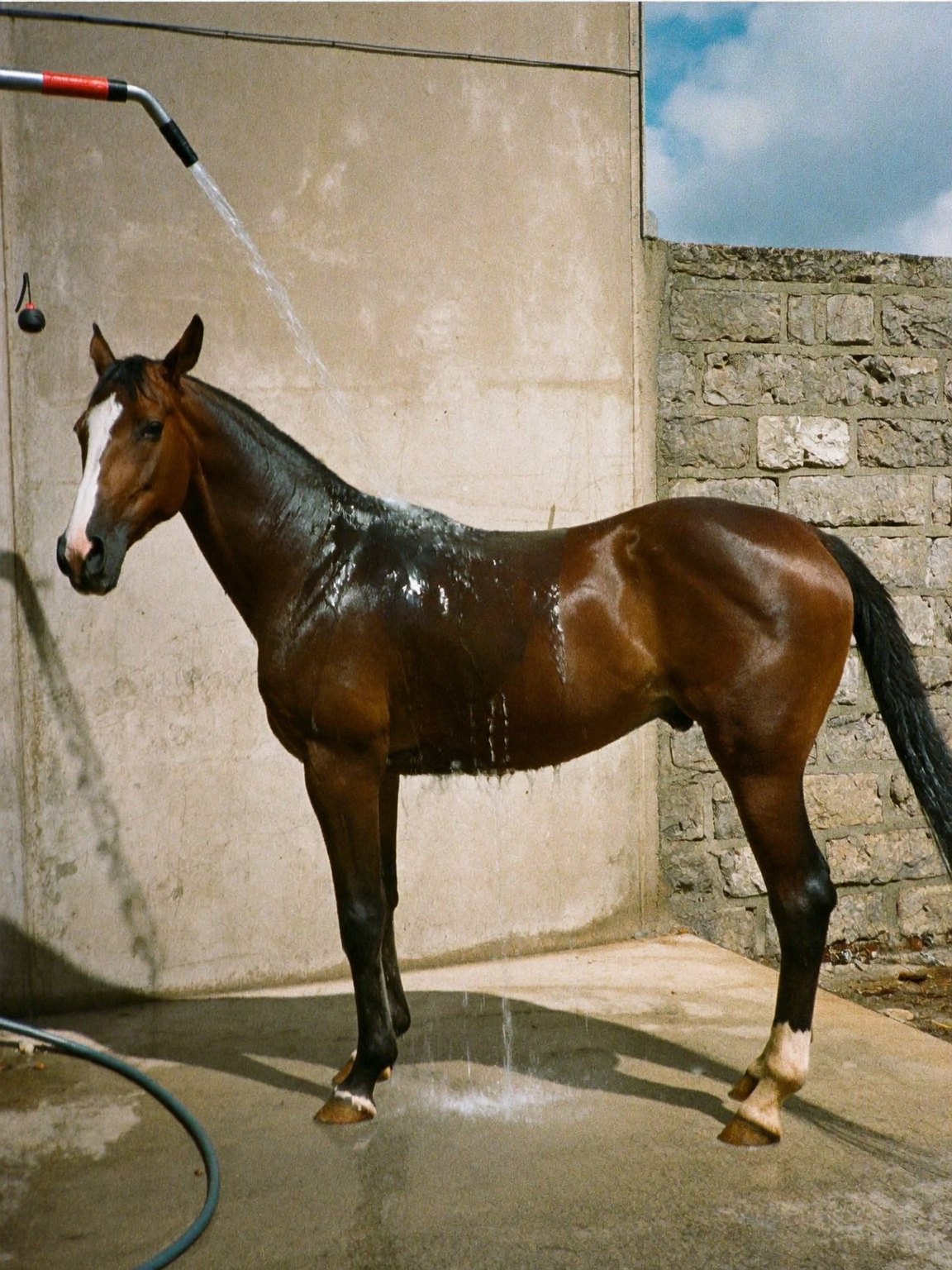
A horse in steady work loses five to ten litres of sweat an hour, up to fifteen when the work is hard, and more as heat and humidity rise, according to Kentucky Equine Research. Roughly ten grams of electrolytes leave with every litre. The part most riders miss is what the loss does to thirst: as sodium, potassium and chloride go, the horse’s drive to drink drops with them, so the horse that needs water most is often the one drinking least. The numbers, why water alone does not put them back, and what a summer hydration routine on Mallorca looks like.
Water always in reach, plain salt every day, an electrolyte plan for hot-weather work agreed with the vet or nutritionist, and never electrolytes without water beside them.
The numbers
Kentucky Equine Research puts sweat loss in a range that surprises most riders. At low intensity, a steady trot and canter of the kind a hack or a schooling session involves, a horse loses between five and ten litres of sweat an hour. At the intensity of fast work, the figure reaches fifteen litres an hour. As heat and humidity climb, the same work costs more, and the research puts hot-weather losses at ten to twelve litres an hour for work that would cost far less on a cool day.
A standard stable bucket holds around ten litres. That is the picture: an hour of ordinary summer work on Mallorca can take a bucket or more out of the horse, and a harder hour takes a bucket and a half.
What leaves with the sweat
Horse sweat is not water. It is saltier than the horse’s own blood, which is unusual among mammals and is the reason a sweating horse loses minerals so fast. Kentucky Equine Research gives the figure as roughly ten grams of electrolytes per litre: an average horse can lose five to seven litres of sweat, and with it fifty to seventy grams of electrolytes, in an hour of steady trotting and cantering. Sodium, chloride and potassium make up most of it, with smaller amounts of calcium and magnesium.
Those minerals do the body’s electrical work: nerve signals, muscle contraction, the balance of fluid between the blood and the tissues. Lose enough of them and the horse tires early, the muscles weaken or cramp, and, in the worst case, the gut slows.
Horse sweat is saltier than horse blood. Every litre takes about ten grams of minerals with it.
Why the horse stops drinking
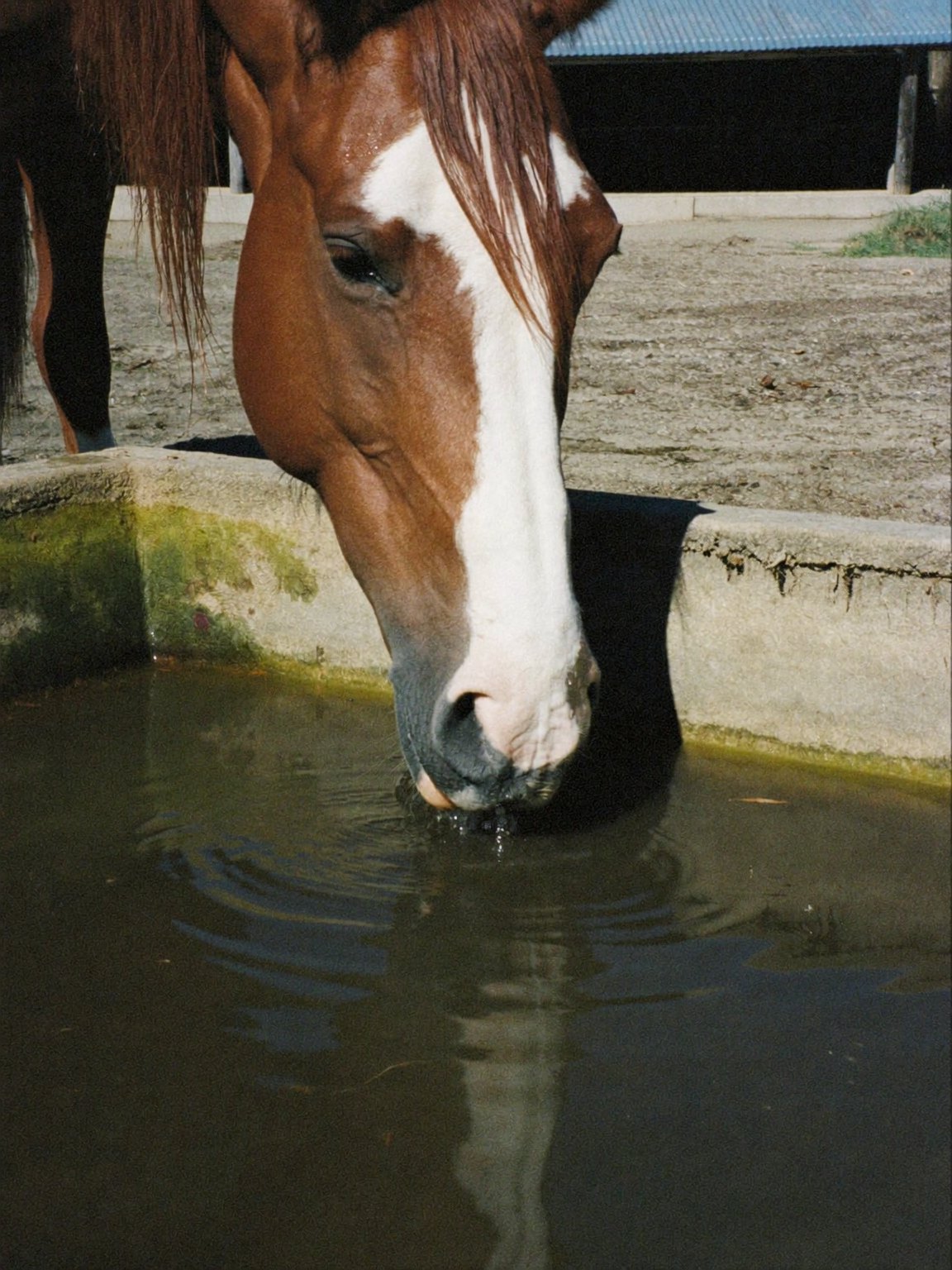
This is the mechanism riders rarely hear about. Thirst is triggered largely by the concentration of sodium in the blood. When a horse sweats, it loses water and sodium together, so the concentration barely changes, and the signal that should send the horse to the trough stays quiet. Kentucky Equine Research describes it directly: the loss of these electrolytes decreases the thirst response to dehydration. The horse can be litres down and not feel thirsty.
That is why the bucket at the end of the ride is not the answer on its own. A horse that has sweated hard and drinks little is not being difficult; its body is not asking. Replacing the salt is what turns the thirst back on, and the water then follows.
The summer routine
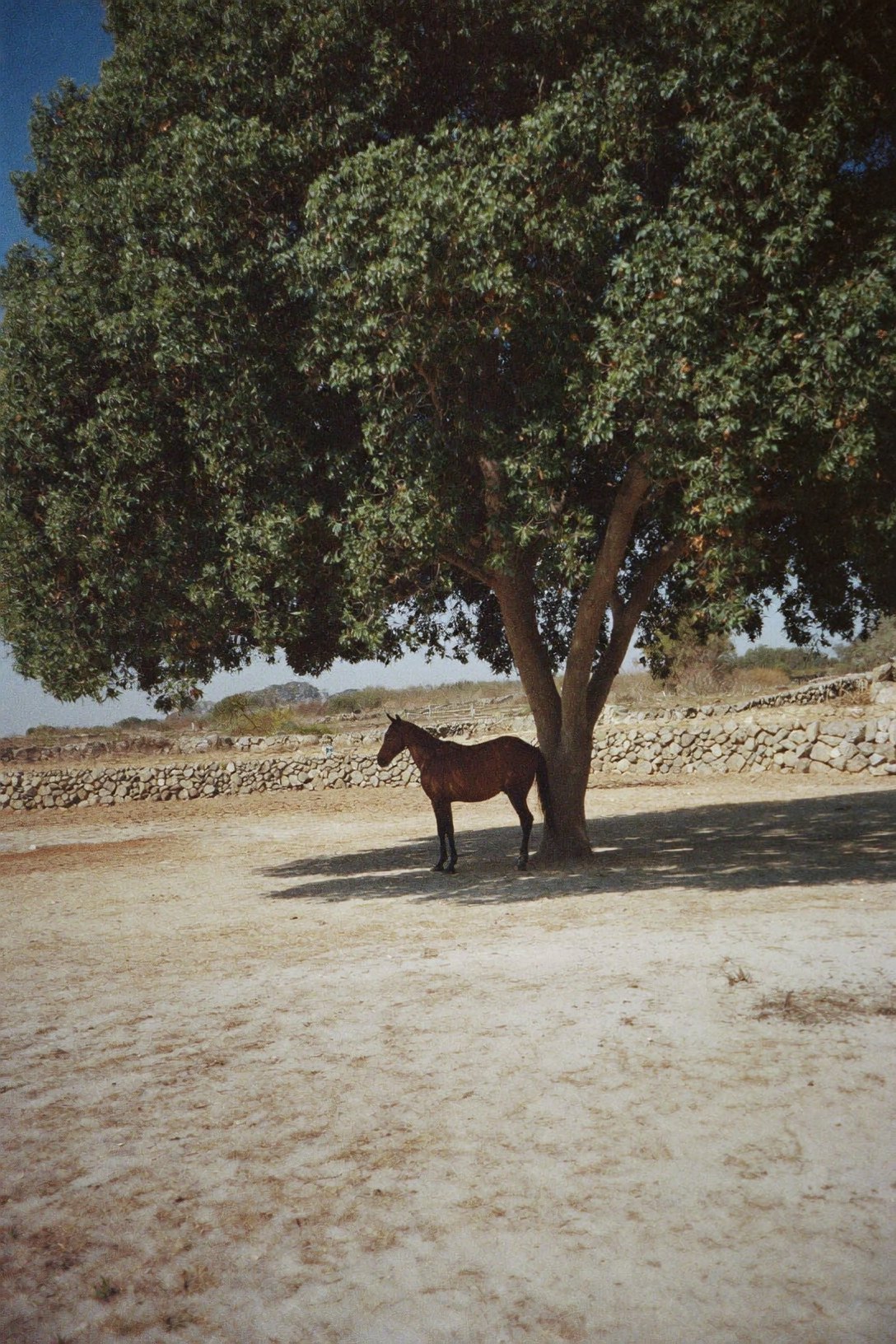
Water within reach all day and checked in the afternoon, when a trough in the sun is warm and the horse takes less of it. Plain salt available every day, as a lick or a measured amount in the feed, so the baseline is never in deficit. On days with real work in the heat, an electrolyte dose according to a plan agreed with the vet or a nutritionist, given with water always beside it, never as a paste into a horse that cannot drink. And the work itself shorter, earlier and followed by water in reach, because on Mallorca the loss starts on the walk to the arena, not in the arena.
The horse that comes back from a summer ride and drinks deeply is doing well. The horse that comes back and does not drink is the one to watch: offer water again after cooling, offer it slightly salted if the horse is used to that, and if it still refuses and looks dull, that is the vet’s call.
Electrolytes given without free access to water pull fluid into the gut and make dehydration worse. Water first, always; the electrolytes are there to make the horse want it.
Salt, electrolytes and the vet
For most horses in ordinary summer work, daily plain salt and free water cover the need, and a commercial electrolyte is for the days that go beyond ordinary: a long ride in the heat, a show, a transport in August. The dose depends on the horse, the work and the product, which is why the plan belongs to the vet or a nutritionist rather than to the label alone. Products differ widely in how much sodium they actually contain, and some are mostly sugar.
Signs that the losses have gone too far are the same as the signs of heat stress in the companion article: dullness, weak or absent sweat, skin that stays tented, dark gums, a horse that will not drink. Those are the vet’s, the same hour. The measurement in this article is there so that the ordinary summer never gets that far.
The horse that needs water most is often the one drinking least. Replace the salt, and the thirst comes back.
- Five to ten litres of sweat an hour at a steady trot and canter, up to fifteen in hard work, more in heat and humidity (Kentucky Equine Research).
- Roughly ten grams of electrolytes leave with every litre; horse sweat is saltier than horse blood.
- Losing sodium, potassium and chloride lowers the thirst response, so a dehydrated horse may not drink what it needs.
- Water always in reach, plain salt daily, an electrolyte plan for hot-weather work agreed with the vet or nutritionist.
- Never electrolytes without water beside them; a horse that will not drink and looks dull is the vet’s call.
General editorial guidance, not veterinary or nutritional advice. Electrolyte dosing is a plan for the vet or a qualified nutritionist; a horse that will not drink and looks dull after work in the heat needs a vet the same hour.