What Does Owning a Horse Really Cost?
The purchase price is one of the least useful numbers.
The costs that decide it are recurring, uneven, and mostly invisible until you own one.
A quiet year and an unlucky year,
for the same horse, can differ by a factor of ten.
Where the money actually goes
There is no single honest answer to what a horse costs, because the number depends on where you keep it, what you do with it, the horse itself, and luck. What can be described clearly is the shape of the spending, which parts are fixed, which are uneven, and which routinely catch first-time owners out. The figures below are broad European ranges to show proportion, not quotes. Local prices, and Mallorca’s in particular, can sit outside them.
Five headings cover most routine spending. The single largest is almost always the first one (where and how the horse is kept), and it varies more than any other.
the big variable
more if bought in
every 5–8 weeks
before anything goes wrong
rugs, tack, bedding, repairs
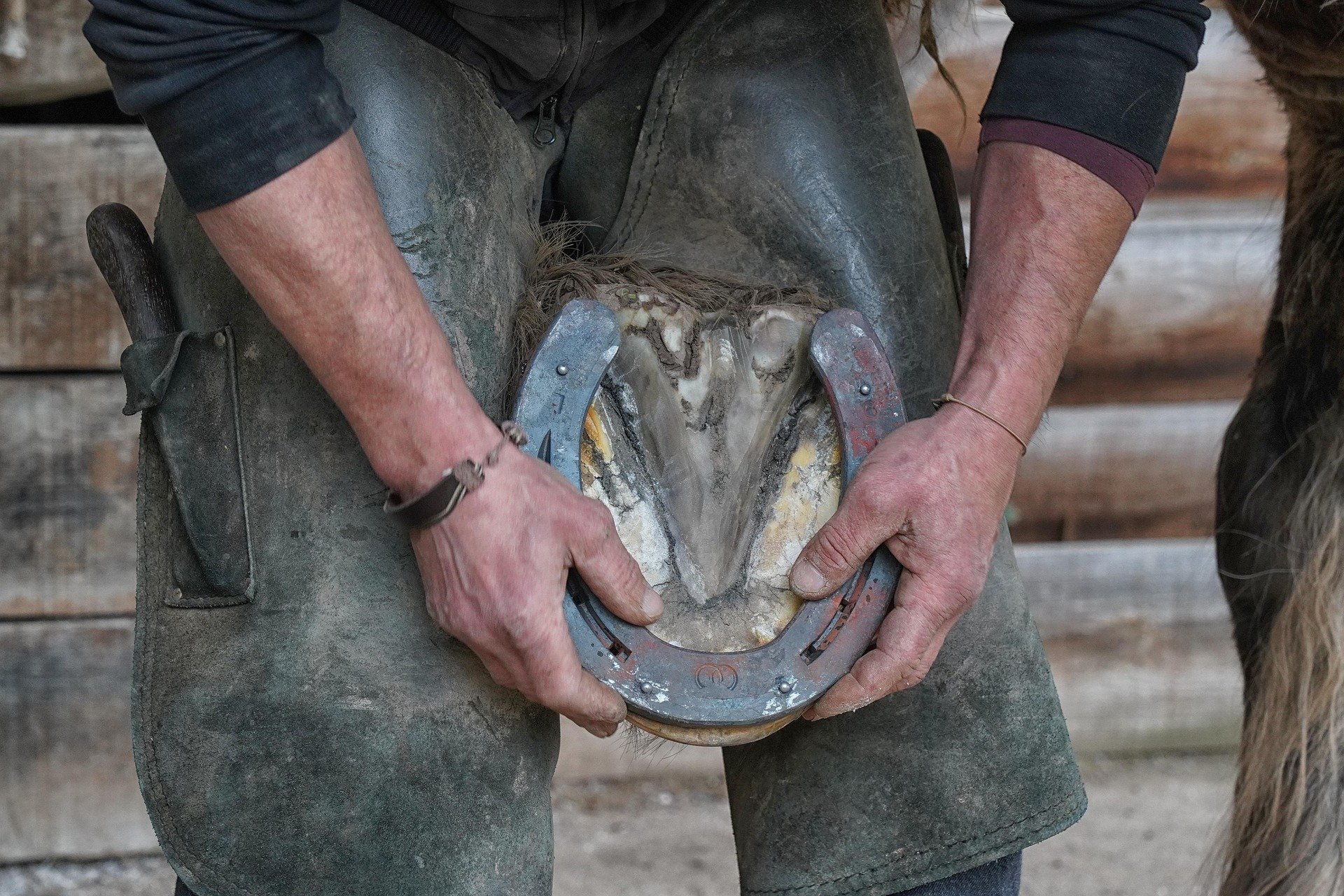
Two things about that row are worth noticing straight away. First, the farrier line is not monthly, it lands every five to eight weeks whether the horse is shod or barefoot-trimmed, so it doesn’t divide neatly into a monthly budget. Second, “routine vet” here means vaccinations, a dental check, worm-egg counts and targeted worming in a year where nothing is wrong. It is the floor, not the ceiling.
Why the monthly average lies
The instinct is to add everything up and divide by twelve. That number is real, but it describes a year that almost never happens, because the spending is lumpy. Some costs arrive on a rhythm that isn’t monthly. Others arrive once, without warning, and dwarf everything else.
A dental check is once or twice a year, not monthly (and the interval isn’t fixed either. Younger horses, whose teeth are still erupting and changing, and older horses, whose teeth are wearing out, are generally checked twice a year. The horses in between often go annually. Vaccinations follow their own schedule, with a more expensive primary course in the first year. Physiotherapy or bodywork, a saddle re-check as the horse changes shape, sheath or udder cleaning, an insurance renewal), all sit outside the monthly picture.
Then there are the step-changes. One lameness that needs a proper work-up with imaging. One period of box rest, which quietly adds bedding, extra forage, hand-walking time and often a change of shoeing. One colic that becomes surgery. A quiet year and an unlucky year for the same horse can differ by a factor of ten. The useful budgeting move is not a tidy monthly figure, it is a monthly figure plus a contingency you don’t touch, because the question is never if an unusual bill arrives, only when.
Set the contingency in terms of a real event, not a percentage. “Could I fund a €2,000–€4,000 lameness work-up, or a colic surgery, this month, without borrowing?” is the honest test of whether you can afford the horse, not the average monthly outgoing.
One-off and irregular costs
These are the lines new owners either forget entirely or assume are rare. Individually small or occasional. Together, a meaningful share of the real cost of ownership.
Dentist & bodywork
Dental check and rasp. Physio or chiropractic as the horse works, ages or changes.
Saddle re-fit
Horses change shape with fitness, age and season. A saddle that fitted in spring may not in autumn.
Insurance excess
You pay the excess on every claim, and cover has per-condition and 12-month limits. The renewal is not the whole cost.
Box rest
Extra bedding and forage, remedial shoeing, hand-walking, sometimes sedation. Weeks, not days.
Transport
Lessons, clinics, referral hospitals. On an island, referral care can mean transporting the horse off Mallorca.
Insurance deserves a closer look, because it is widely misunderstood as a fixed monthly cost that makes vet bills someone else’s problem. Vet-fee cover typically excludes anything the horse has had before, so a horse with any medical history is effectively uninsurable for that condition. It carries a limit per condition and usually a twelve-month window to claim, after which the same problem becomes an exclusion. And you pay an excess on every claim. Owners tend to discover all of this at the point of claiming, not when they buy the policy. Read the exclusions before you decide whether the premium is buying you what you think it is.
The costs owners systematically underestimate
Your own time, and travel. DIY livery’s low headline price assumes free labour and a short, cheap commute. Two visits a day, every day, including the days you are ill, working late or away, is the actual commitment. Costed honestly, DIY is rarely as cheap as it looks.
Wear and replacement. Rugs get torn and outgrown, girths and stirrup leathers perish, boots wear through, a bridle needs new reins. None of it is dramatic, all of it recurs.
The horse’s individual “maintenance load.” Two sound horses in the same yard can cost very different amounts to keep. One holds weight on forage alone and is happy barefoot. The other needs hard feed and balancers, remedial shoes, and a rug for every ten-degree change. This is the number worth asking about before you buy, and it barely shows on a viewing.
Retirement. A riding horse’s working life is a fraction of its lifespan. A retired horse still needs keep, feet, teeth, worming and vet care for years, often with rising costs as it ages, and it is no longer offsetting any of that by being ridden.
- ✓ Good doer, or needs hard feed to hold condition?
- ✓ Barefoot, or shod, and remedial?
- ✓ Any condition currently being managed?
- ✓ Insurable for vet fees, or does history exclude it?
- ✓ What does the current owner actually spend a month?
Cheap to buy, expensive to keep
Several of the most common “bargains” are cheap for reasons that translate directly into ongoing cost.
An unbacked youngster is inexpensive because it cannot yet do the job. You then fund two or three years of full keep, plus professional backing and schooling, before it is a riding horse, and youngsters are not a reliable outcome. A horse that “just needs its feet sorting” is usually describing remedial farriery, which is not a one-off correction but a more expensive shoeing cycle for the life of the horse. A horse with a known, managed condition, kissing spines kept comfortable with work and medication, arthritis on a maintenance plan, a metabolic issue controlled by diet, is priced low precisely because “managed” means a permanent line in your budget and a partial exclusion on your insurance.
A horse priced low because a condition is “managed” comes with a permanent line in your budget, and a partial exclusion on your insurance.
An older horse bought cheap brings age-related costs with it: more frequent dental work, a shift to more expensive forage and feeds that are easier to chew and digest, more rugs, and a greater chance of needing veterinary support. And a horse that cannot be insured for vet fees means you are self-insuring every colic and every field injury from day one.
None of these are reasons not to buy such a horse. They are reasons to price the keeping, not the purchase, before deciding it is affordable. Our guide to what to look for when buying a horse covers how to spot which category a horse falls into.
A horse you can afford to buy but not to keep is the most expensive kind there is.: EquiMallorca
Where you keep the horse changes almost everything
The livery model you choose is the single biggest lever on both cost and workload, and the headline fee only tells part of the story.
Full livery is the most expensive number and the calmest. It converts unpredictable daily labour, holiday cover and a lot of small decisions into one fixed monthly figure. You are paying for time and reliability, not just a stable.
Part or assisted livery splits the work and the cost. It can be a good balance, but the division of responsibility needs to be explicit (who does what, and what happens when you are away), or the “saving” evaporates into misunderstandings.
DIY livery has the lowest fee and the highest personal cost: every feed, muck-out, turnout, rug change and late-night check is yours, every day of the year. It suits people with time, flexibility and a yard close to home. It does not suit people who travel for work.
Grass livery, keeping the horse out year-round with shelter, is usually the cheapest and can be excellent for the right horse. It is also the most weather-exposed: a wet Mallorcan winter or a long dry summer both make grazing, water, forage and fly management harder and more expensive than the low fee suggests.
Rugs, a grooming kit, basic first aid and stable tools are among the first costs of ownership. Our curated selection covers the essentials without the catalogue.
Explore the EquiMallorca Edit →Planning it honestly
A workable approach: build your monthly figure from the fixed lines (keep, forage, insurance), then add a realistic monthly average for farrier, routine vet and dentistry, then set aside a separate, untouched contingency sized to a real emergency, not a percentage.
Sense-check it against the horse in front of you rather than a generic budget. A good doer on full livery near home is a very different commitment from a poor doer on DIY an hour away, even if the headline livery fees match. And treat the purchase price as almost incidental: within the first year or two, the cost of keeping most horses will exceed what a modest one cost to buy. The price gets you into a smaller pool of horses. It does not lower the running cost, and it is a poor guide to whether you can afford the years that follow.
Fixed + routine only
Full or part livery, forage, insurance, farrier every 6 weeks, annual vet and dental. Predictable, plannable, no surprises.
The baseline you must be able to cover, every monthOne major event
Add a lameness work-up with imaging, six weeks of box rest and remedial shoeing, or a colic that goes to surgery.
The reason a contingency is not optional- Where and how you keep the horse is the biggest cost, and varies more than anything else.
- The monthly average describes a year that rarely happens. Budget a figure plus a contingency sized to a real emergency.
- Farrier is every 5–8 weeks, not monthly. Dentistry frequency changes with the horse’s age.
- Insurance excludes pre-existing conditions, limits claims per condition, and charges an excess each time. Read it before you rely on it.
- “Managed” conditions, remedial feet, unbacked youngsters and cheap older horses are priced low for reasons that become recurring costs.
- Within a year or two, keeping a horse usually costs more than a modest one cost to buy. Judge affordability by the keep.
General editorial guidance. Figures are broad European ranges, not quotes. Mallorca prices are not independently sourced.
What to Look for When Buying a Horse
Pre-Purchase Vetting: What Actually Gets Checked?