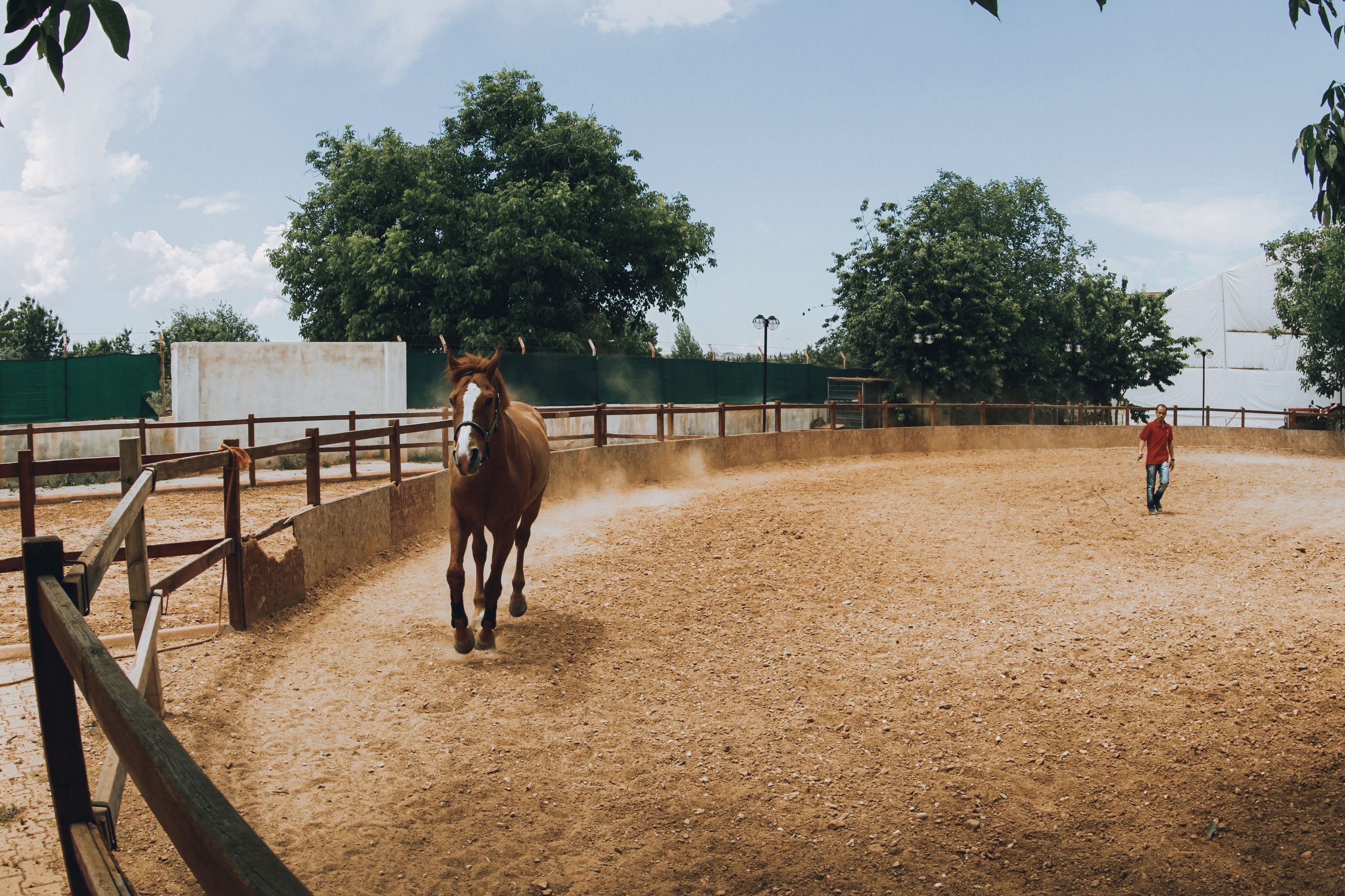
Questions to Ask Before Buying a Horse
The questions are the easy part.
What decides a good purchase is how you follow them up, and noticing which answers you were never given.
“He’d make a lovely eventer” is a hope.
Hopes aren’t for sale.
Before you drive anywhere
The phone call or message exchange before a viewing is there to disqualify horses, not to fall in love with them. A handful of questions will end a good number of enquiries before they cost you a day.
“How long have you had him, and how many homes has he had in the last few years?” This is the single most useful thing to ask early. One settled home for years is reassuring. Three homes in two years is not automatically damning, life happens, but it is a pattern you want explained now, not discovered later from a passport full of transfer stamps.
“What is he actually doing at the moment?” Not what he could do, has done, or is bred to do: what he did this week. “Hacking out three times a week and a fortnightly lesson” is a real answer. “He’d make a lovely eventer” is a hope, and hopes are not for sale.
“Why is he for sale?” Ask it on the phone and again in person, and compare the two answers. “My daughter’s left for university” or “I’ve bought something more competitive” are ordinary. A reason that shifts between tellings is worth more attention than any single version of it.
“Will you hold him for a vetting, and is the price negotiable?” Both answers tell you how the sale is likely to go. And ask for a short video of the horse being caught in the field and tacked up: not schooling footage. Sellers rarely have that ready, and how quickly it appears, or doesn’t, is itself information.
- ✓ Exact age, height and breeding: registered, and as what?
- ✓ How long owned, how many homes recently
- ✓ What the horse is doing now, not in theory
- ✓ Why it is being sold
- ✓ Ridden in any special bit, noseband or gadget, and why
- ✓ Any current or past lameness, medication or time off
- ✓ Will they hold for a vetting, is the price firm
Reading the answer, not just hearing it
How you phrase a question changes the answer you get. Closed questions invite denial. Open ones invite a story. “Any health problems?” is easy to answer with a clean “no,” and technically that no can be true even when there is a history worth knowing. “Tell me about any time he’s had off work, and why” asks the seller to narrate instead of to certify, and narration is much harder to keep tidy.
Then listen for one distinction above all others: resolved versus managed. “He had six weeks off for a foot abscess two years ago, sound ever since” describes something that happened and ended. “He’s absolutely fine as long as he stays on his joint supplement and gets his hocks done once a year” describes something that is still happening, that you would be taking on, and that a vetting and an insurer will both treat as a pre-existing condition. Neither answer is a reason to walk away on its own, plenty of good horses are managed, but they are completely different purchases, and only one of them is usually priced as such.
Resolved describes something that happened and ended. Managed describes something still happening, and a vetting and an insurer will both treat it as a pre-existing condition.
“No vices” is a claim, not a fact. It is reasonable to ask it plainly: does he box-walk, weave, crib, or wind-suck. Is he difficult to catch, load, clip, shoe, worm, or leave alone. Has he ever reared, bucked a rider off, or bolted? Ask about each one specifically, because “no vices” and “well, he doesn’t load brilliantly” can come from the same seller thirty seconds apart.
Questions at the viewing
With the horse in front of you, the useful questions shift from history to behaviour, and several are really requests. Ask to be there when the horse is caught and brought in: the handling before tack goes on is harder to stage than a schooling session, and it is covered in detail in our guide to what to look for when buying a horse.
“Would you ride him first?” A seller who knows the horse should be willing. Watch what they choose: an enclosed school or an open field, a snaffle or something stronger, a neck strap or not, a quiet warm-up or a lot of leg from the first stride. None of these is a red flag by itself. Together they tell you how the horse is actually ridden at home.
“What’s he like to hack alone?” is more revealing than asking about hacking in company. So is “what’s he like as the last horse on the yard,” “how is he in wind,” and “how does he settle somewhere new.” A horse can be genuinely lovely in the arena it has worked in every day for three years and a different animal on a strange yard the week after you buy him.
“Can I come back and see him again?” A second visit, ideally unannounced as to timing and with the horse not prepared, is worth more than anything you can ask on the first. A seller comfortable with that is telling you something reassuring for free.
The paperwork most buyers skip
Buyers who spend an hour assessing movement will often accept a passport with a thirty-second glance at the silhouette page. That is where several avoidable problems hide.
“May I see the passport, and does it match the horse?” Check the microchip number and the written markings against the animal standing there. Every horse in the UK and EU is legally required to have a passport, and it must pass to you with the horse. A missing or mismatched passport is a real obstacle to insuring, competing, moving or reselling.
“Is the horse signed out of the food chain?” Deep in the passport is a declaration, Section IX in older documents, Section II in those issued from 2016, stating whether the horse is intended for human consumption. If it has not been signed as excluded, a vet is legally restricted in what they can give the horse: common, routine medicines such as phenylbutazone (“bute”) are off the table until the declaration is signed, and once signed it can never be reversed. A surprising number of horses change hands with this left blank, and the new owner only discovers it when the vet won’t prescribe a basic painkiller.
“Do you own him outright, and is there anything owed on him?” Ask directly whether the horse is on loan from someone else, co-owned, or subject to a finance agreement or a livery debt. You cannot get good title to a horse the seller doesn’t fully own, and this is not something a viewing reveals.
- ✓ Passport present, microchip and markings matching
- ✓ Food-chain declaration: signed as excluded, or still open?
- ✓ Vaccination record up to date and unbroken
- ✓ Breed or studbook papers, if the horse is registered
- ✓ Seller owns the horse outright: no loan, finance or co-owner
- ✓ A written receipt and a short sale agreement
Ask the seller everything. Then ask the farrier one thing, because the farrier has no stake in the sale.
Questions for the vet, and about the vetting
Some of the most important questions in a purchase are not for the seller at all.
Ask the seller: “Who are your vet and farrier, and may I speak to them?” A seller with nothing to hide will usually agree. The farrier in particular is worth a call: they have handled those feet every few weeks for as long as the horse has been there, and unlike the seller, they gain nothing from the sale going through.
Ask yourself, before booking: arrange the pre-purchase examination through a vet with no connection to the seller, pay for it yourself, and be present if you possibly can. Tell the vet honestly what you intend to do with the horse: a finding that would rule a horse out for affiliated competition may not matter at all for light hacking, and the vet can only give a useful opinion if they know the target.
Ask about the format. A two-stage vetting leaves out the strenuous-exercise phase, which is exactly where subtle lameness and some wind and heart problems show themselves. The difference is not small. When someone says “he vetted sound,” the real question is which vetting: a point our companion guide to pre-purchase vetting covers stage by stage.
And ask the practical one: “Will you hold him until the vetting, and take a holding deposit?” Get whatever is agreed, deposit, timescale, what happens if he fails, in writing, even if it is only a confirming message.
Private sale, or a business?
One question sits underneath all the others and is rarely asked out loud: am I buying from a private individual, or from someone selling horses as a business? In England and Wales it changes your legal position completely.
Under the Consumer Rights Act 2015, a horse bought from a trader: someone “acting for purposes relating to their trade, business, craft or profession”: must be of satisfactory quality, fit for the purpose you made known, and as described. Those protections apply even if the advert or receipt says “sold as seen”. That phrase does not override the statute. You get a short-term right to reject the horse within 30 days, and for the first six months the law presumes a fault found later was there at the point of sale, unless the seller can show otherwise.
Buy the same horse from a genuine private seller and almost none of that applies. The principle is closer to “buyer beware.” Your protection is what you agreed in writing and whether you were actively misled about a matter of fact: not opinion or sales talk. This is exactly why a plain written sale agreement, and getting material claims (“never been lame,” “hacks alone in traffic,” “PPE’d clear last month”) recorded in a message or on the receipt, matters far more in a private deal.
It also matters because some sellers who deal in horses present themselves as private to sidestep those obligations. A “private” seller with a yard of six horses, all described as belonging to friends or family, is a reason to slow down and ask direct questions about who owns what.
The consumer-law detail above is specific to England and Wales. Spain and the Balearics, and other countries, handle private and commercial horse sales differently, but the practical defence is the same everywhere: a written contract, and every factual claim you are relying on put in writing before money changes hands.
A calm, well-stocked handling and grooming kit makes it far easier to assess a horse properly, and it is among the first things you’ll need once one is yours.
See the EquiMallorca Edit →The questions to ask yourself
The last set is the one no seller can answer for you, and it is where most disappointing purchases are really decided.
Is this horse within my riding, not just my budget? A horse that needs more schooling, more fitness work or more nerve than you can currently give it is not a bargain at any price. Be honest, and bring someone whose honesty you trust.
Who is my person on the ground? An instructor or an experienced friend at the viewing is reading rideability and suitability while you are reading your own hopes. If you don’t have that person, find them before you go.
Am I buying the horse, or the story? The breeding, the past owner, the almost-competition-record, the “so much potential”: none of it hacks out on a windy Tuesday. Picture the ordinary day: this horse, in your yard, handled and ridden by you, in January. If that picture is one you want, the answers to everything else are just detail.
- Do the disqualifying questions by phone: how long owned, how many recent homes, what the horse is doing now, and why it’s for sale.
- Ask open questions (“tell me about any time off work”), then pause: the second half of an answer is usually the honest half.
- Separate resolved from managed. Both can be fine. They are different purchases and should be different prices.
- Open the passport properly: microchip and markings matching, and check whether the food-chain declaration has been signed: if not, routine medicines like bute are restricted.
- Arrange an independent vetting, be present, state your real intended use, and know whether it’s a two- or five-stage exam.
- Buying from a business (Consumer Rights Act) and from a private seller (“buyer beware”) are legally very different. Either way, get factual claims in writing.
General editorial guidance, not legal advice. Consumer-protection detail is England & Wales specific. Confirm current rules for your situation.
What to Look for When Buying a Horse
Pre-Purchase Vetting: What Actually Gets Checked?