How to Choose the Right Turnout Rug
Set the spec from this horse’s situation, not the label.
You’ve decided to buy a turnout: how to pick the right spec, and how many you actually need.
The label numbers each answer one part of the job. None answers all of it.
Start from this horse’s situation, not the spec sheet.
This is the full guide: waterproofing, denier and fill, the neck question, fit and how many rugs you need. Short on time? Which Turnout Rug Does Your Horse Need? answers the one question first: whether this horse needs one at all.
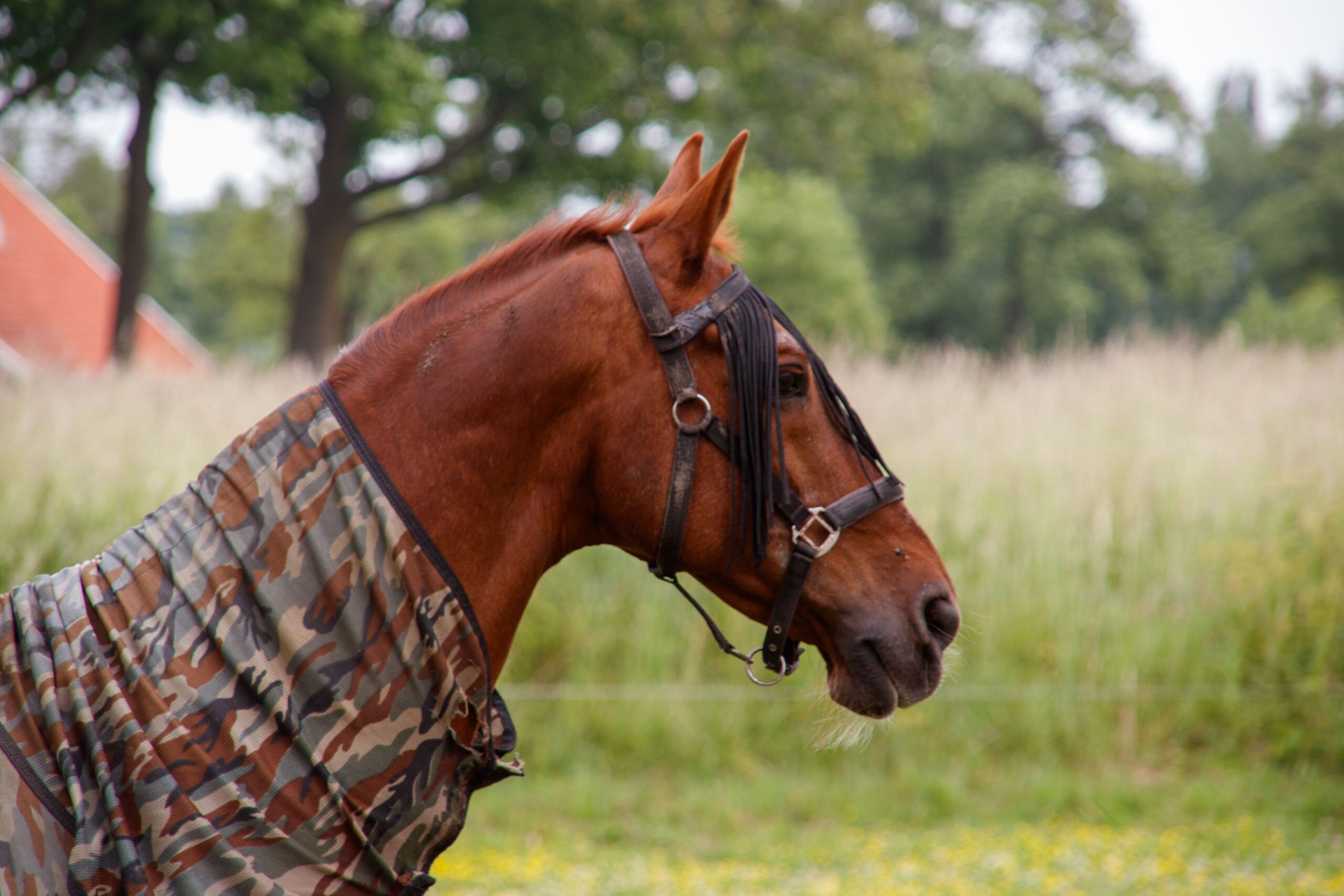
A turnout rug has a harder job than any other rug a horse owns: waterproof, tough, warm to the right degree, and cut to stay put while the horse gallops, bucks and rolls. This guide takes the decision in the order that actually matters.
Start from this horse’s turnout
Before any product, four things set the spec: what the weather does where the horse lives out, whether there is shelter in the field, how rough the horse is in company, and whether it is clipped and has lost its own insulation.
A sheltered, unclipped, quiet horse in a mild climate needs a light, tough, genuinely waterproof turnout and little else.
A clipped horse in an exposed wet field needs more fill, a neck, and a spare.
Waterproofing is the number that matters
The single spec that separates a turnout from every other rug is hydrostatic head, the height of a column of water the fabric resists before it leaks. The figure is quoted in millimetres, and a higher number means the fabric holds out longer before it leaks. Taped or welded seams matter as much: an unsealed seam leaks however good the cloth is.
A showerproof sheet is not a turnout. Buy a rug with a stated hydrostatic head, not a light shower sheet you are hoping will cope.
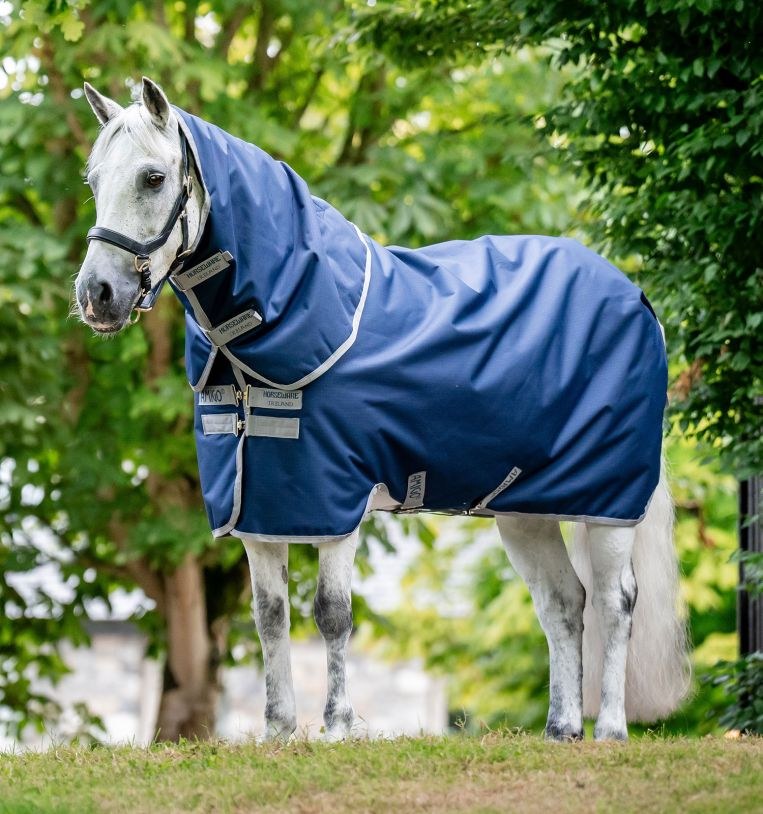 Horseware IrelandAmigo Ripstop 900D Plus 0g Rain SheetWaterproof, breathable 900D ripstop polyester outer, 0g: the rain layer.View at TRI Equestrian →
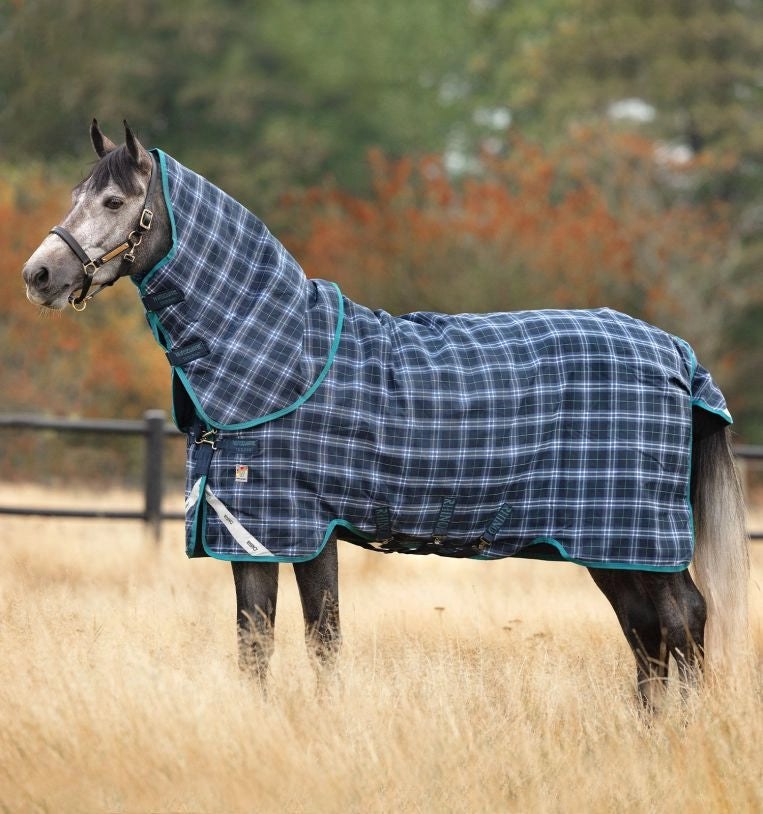 Horseware IrelandRhino Plus Medium Turnout 250g1000D polypropylene outer over a separate waterproof, breathable barrier layer.View at TRI Equestrian →
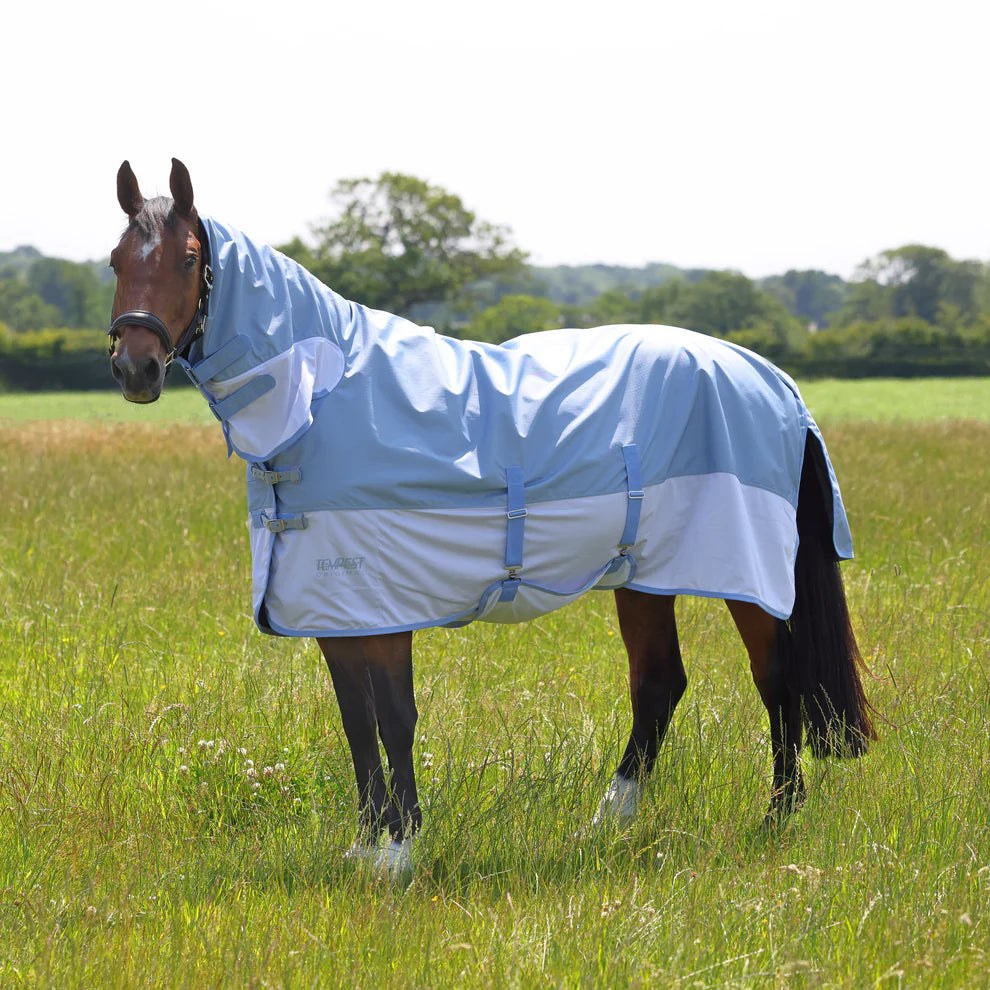 Shires EquestrianTempest Original Waterproof Fly RugA documented figure, on a fly rug: 3,000 mm waterproof and 3,000 g/m² breathable top section.View at TRI Equestrian →
Most makers publish "waterproof and breathable" without the millimetre figure. Where a number is documented we quote it. Where it is not, we give no figure.
Denier is toughness, fill is warmth
These two numbers get run together and they answer completely different questions. Denier is the thickness of the outer fabric’s fibres, its tear resistance, not warmth. Fill weight is grams of insulation per square metre, so compare the grams rather than the names.
Suitable for a calm, relaxed horse when turned out (Weatherbeeta).
Ripstop weave, for a horse that is hard on its rugs or breaks out (Weatherbeeta).
Quoted in mm: a higher figure means the fabric resists more water pressure.
Weatherbeeta’s turnout range: no fill, 50g, 100g, about 220g and 300g+, measured in grams per square metre (Weatherbeeta).
An MVP rating lets sweat escape. A warm rug that doesn’t breathe makes the horse damp from inside.
Rugging temperature table for the Mediterranean
Night temperature is the number to watch. The table reproduces the turnout temperature guide of a UK retailer (Country & Stable, 30 September 2024), which notes that clipped horses lose their natural insulation and may need extra warmth. Slip a hand under the rug behind the wither in the morning: comfortably warm is right, damp or hot means too much.
| Night temperature | Turned out, clipped | Turned out, unclipped |
|---|---|---|
| 15 °C and above | No rug | No rug |
| 10 to 15 °C | No rug, a sheet or a lightweight rug (0 to 50g), depending on the weather | No rug |
| 5 to 10 °C | Lightweight (100 to 150g) | No rug, a sheet or a lightweight rug (0 to 100g) |
| 0 to 4 °C | Medium (200 to 250g) plus neck cover | No rug, lightweight or medium (150 to 200g) |
| 0 to -10 °C | Heavy (250 to 400g) plus neck cover and liner | Medium or heavy (200 to 300g) |
| below -10 °C | Heavy (300 to 500g) plus neck cover and liner | Heavy (300 to 400g) plus neck cover |
The weights are ranges from the retailer’s guide, not from a rug maker. Check the grams on the rug in front of you.
Horseware IrelandAmigo Ripstop 900D Plus 0g Rain Sheet900D ripstop, 0g: light and unlined, with liner loops for colder nights.View at TRI Equestrian →Horseware IrelandRhino Plus Medium Turnout 250g1000D, 250g Vari-Layer fill: the medium weight, for clipped horses or a genuine cold snap rather than the everyday Mallorca rug.View at TRI Equestrian →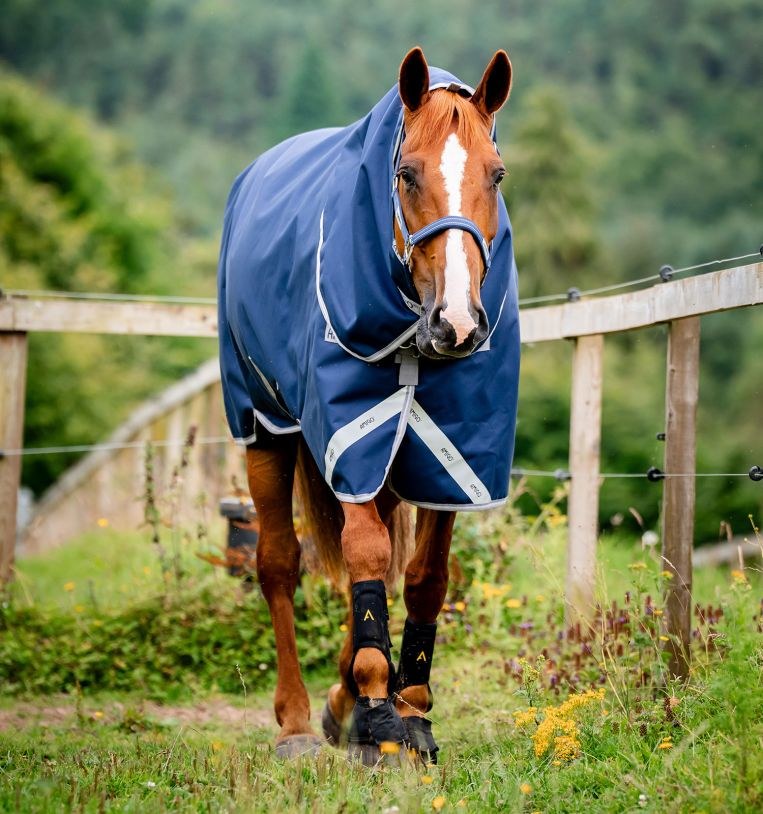 Horseware IrelandAmigo Bravo 12 Plus 400g1200D, 400g fill with a same-weight detachable hood: the heavyweight.View at TRI Equestrian →
The neck question
Turnouts come three ways, and the right one depends on how exposed the field is.
Standalone rug, cheapest and simplest. Fine for a horse with shelter.
Zips or clips on for flexibility. Buy the neck that matches the rug, they are not universal.
Covers the withers and crest fully, where wind-driven rain gets in first. Slightly higher rubbing risk.
Horseware IrelandAmigo Ripstop 900D Plus 0g Rain SheetDetachable hood: the neck comes off on mild days.View at TRI Equestrian →Horseware IrelandRhino Plus Medium Turnout 250gDetachable neck cover on the Surefit neck design.View at TRI Equestrian →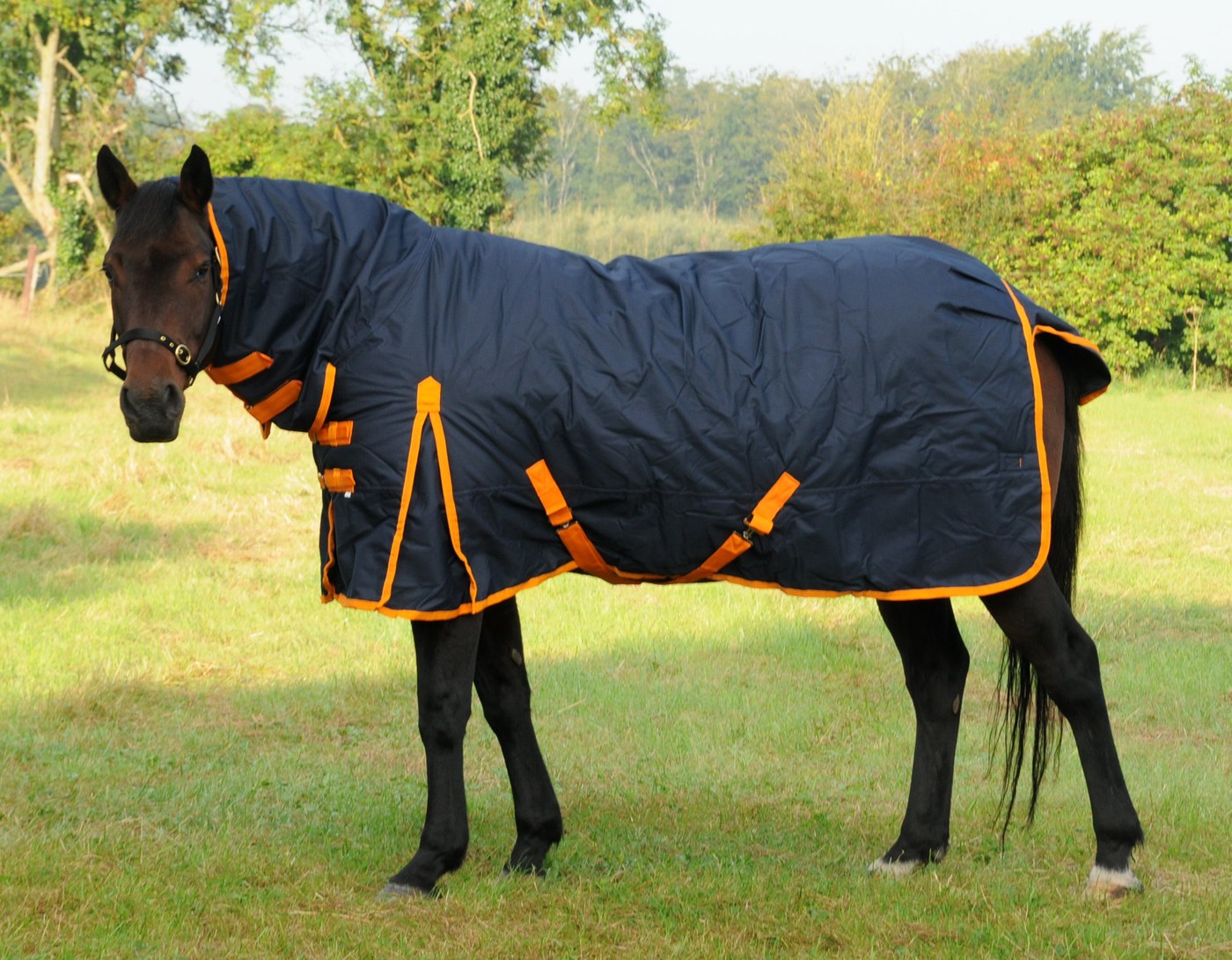 TRI EquestrianArkle 350g Full Neck TurnoutFull-neck design: the integrated combo, with fleece wither protection.View at TRI Equestrian →
Fit for turnout specifically
A stable rug can be a little generous because the horse mostly stands still in it. A turnout has to move with a horse that gallops, spins and scrambles up, and stay in place doing it. Look for a real shoulder gusset, a pleat of fabric that lets the shoulder swing, that is the difference between a rug that rubs the shoulder bald by midwinter and one that does not.
There are two sizing systems, UK/US body length and EU withers-to-tail, and mixing them puts you a size out. Confirm which a rug is sold in before ordering.
- Shoulder gusset present. No seam pressing on the withers
- Reaches the tail-top with the head down, covers the belly
- Tail flap fitted
- Cross-surcingles, not one tight roller
- Leg straps adjustable, removable, looped through each other
- Correct sizing system confirmed
How many rugs you actually need
Be honest about your climate before you buy a wardrobe. A sheltered, unclipped horse in a mild Mediterranean winter genuinely gets through on one lightweight turnout, perhaps with a 0g waterproof for wet but mild days. A clipped horse in work needs at least a light and a medium, and then a spare in the weight it wears most, because a soaked rug needs a day or two to dry and re-proof.
Two moderate rugs give you far more usable range than one heavy one, and a spare of your everyday weight is worth more than a third weight you will reach for twice a year.
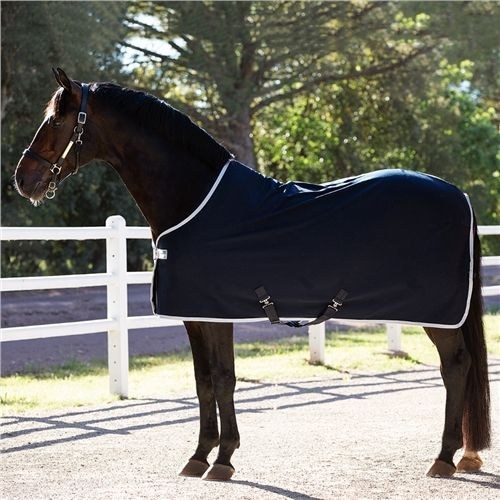 Horseware IrelandAmigo Jersey CoolerThe jersey cooler that wicks moisture after work or washing: the rug most horses here use first.View at TRI Equestrian →Horseware IrelandAmigo Ripstop 900D Plus 0g Rain SheetThe rain sheet for wet, windy nights.View at TRI Equestrian →
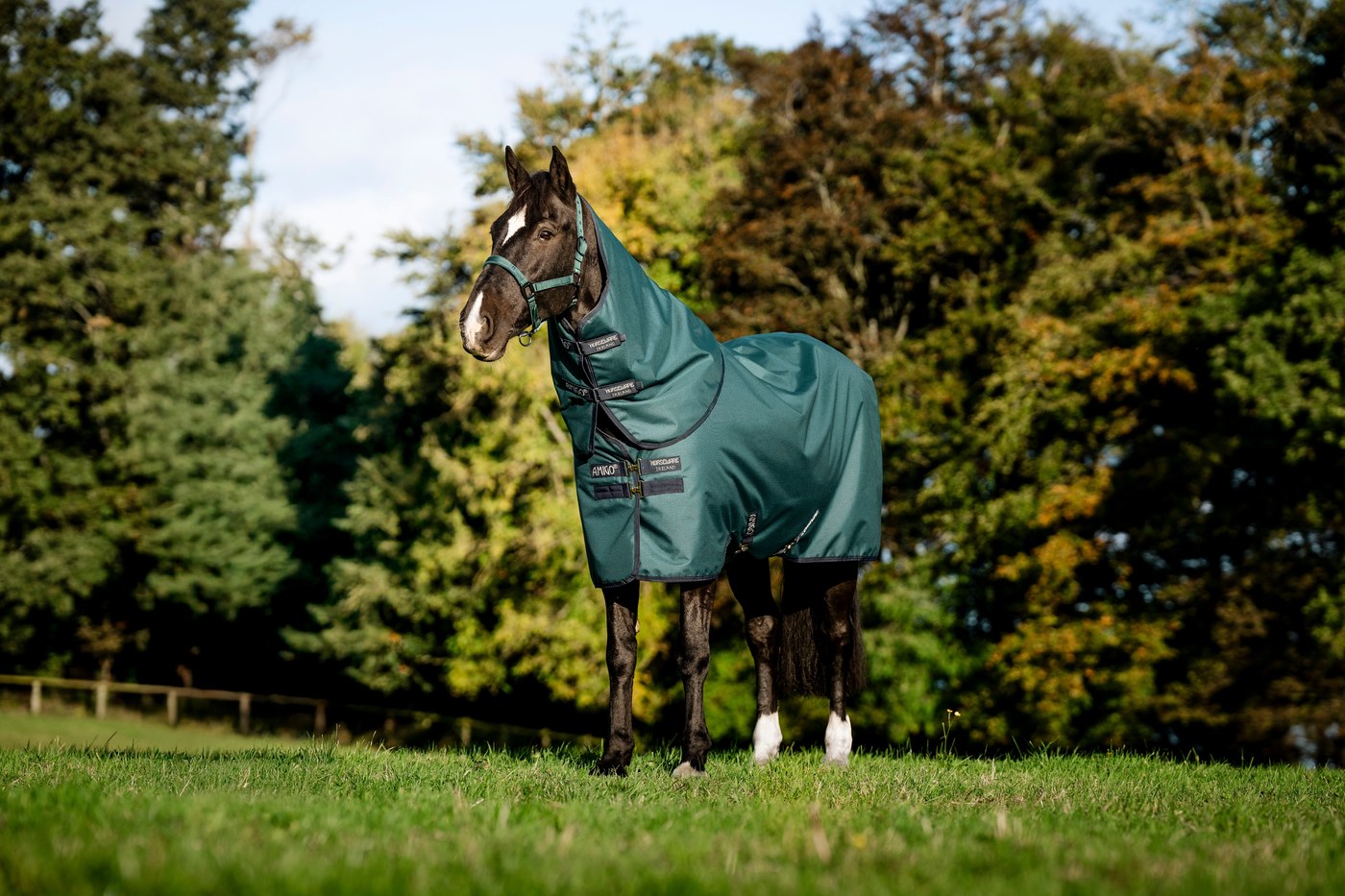 Horseware IrelandAmigo Ripstop 900D Plus 200g200g medium: the second rug, for clipped horses and the cold weeks.View at TRI Equestrian →
New, used, and the cost after the sticker
A good turnout is a multi-year purchase. A well-made 600–1200D rug with taped seams outlasts several cheap ones that delaminate and leak in a season. Used rugs can be a genuine bargain if you check them properly: seam tape intact, no flaking on the inside of the coating, all straps and clips present and working, then budget a wash and a re-proof before it goes on the horse.
Our turnout selection is filtered by hydrostatic head and seam construction first, then grouped by fill weight.
Two moderate turnouts and a spare will serve a horse better than one heavyweight bought “to be safe” and worn in the drizzle.
Set the spec from your situation first: weather, shelter, how rough the horse is, whether it is clipped.
Waterproofing is the key number: the hydrostatic head in mm, plus taped seams. Re-proofing is part of ownership.
Denier is toughness, fill weight is warmth. Separate decisions, and fill has no standard rating.
Neck: plain rug for a sheltered horse. Detachable or combo for exposed wet weather.
Turnout fit is about staying put in motion: shoulder gusset, correct depth, tail flap, cross-surcingles.
Most sheltered horses need one lightweight plus a 0g. Clipped working horses need a light, medium and spare.
Buy quality once. Check used rugs for seam tape and delamination. Budget an annual wash and re-proof.
General editorial guidance, not veterinary advice. Check any rug on the horse and monitor for rubs. Take decisions for a clipped or unwell horse with your vet.
 Horse Care
Rug Season Timeline: What to Do, and When
Does this horse need a rug at all, and how the numbers work.
 Horse Care
How to Prepare Your Horse for the Colder Months
Where the turnout rug fits in the wider winter picture.
 Buying Guides
How to Choose a Riding Helmet
Certification and fit first, the features are extras.