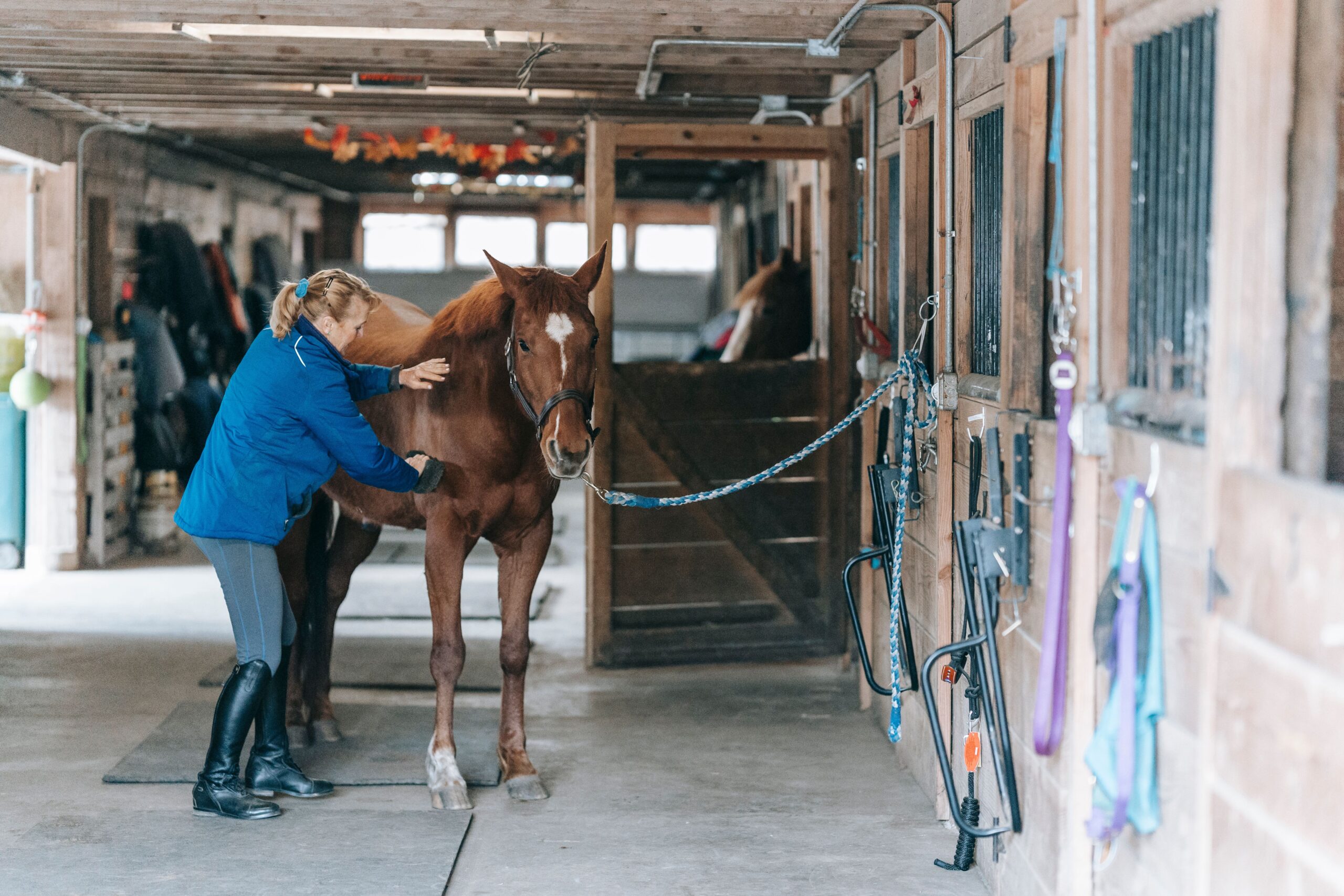
How to Prepare Your Horse for the Colder Months
The winter coat looks after itself.
Body condition, the change from grass to hay, water, skin and feet, the season’s worming, all work better done in the mild weeks before the first cold snap than in reaction to it.
Washing a leg every day keeps the skin permanently soft, and makes mud fever more likely, not less.
Start before the coat comes in
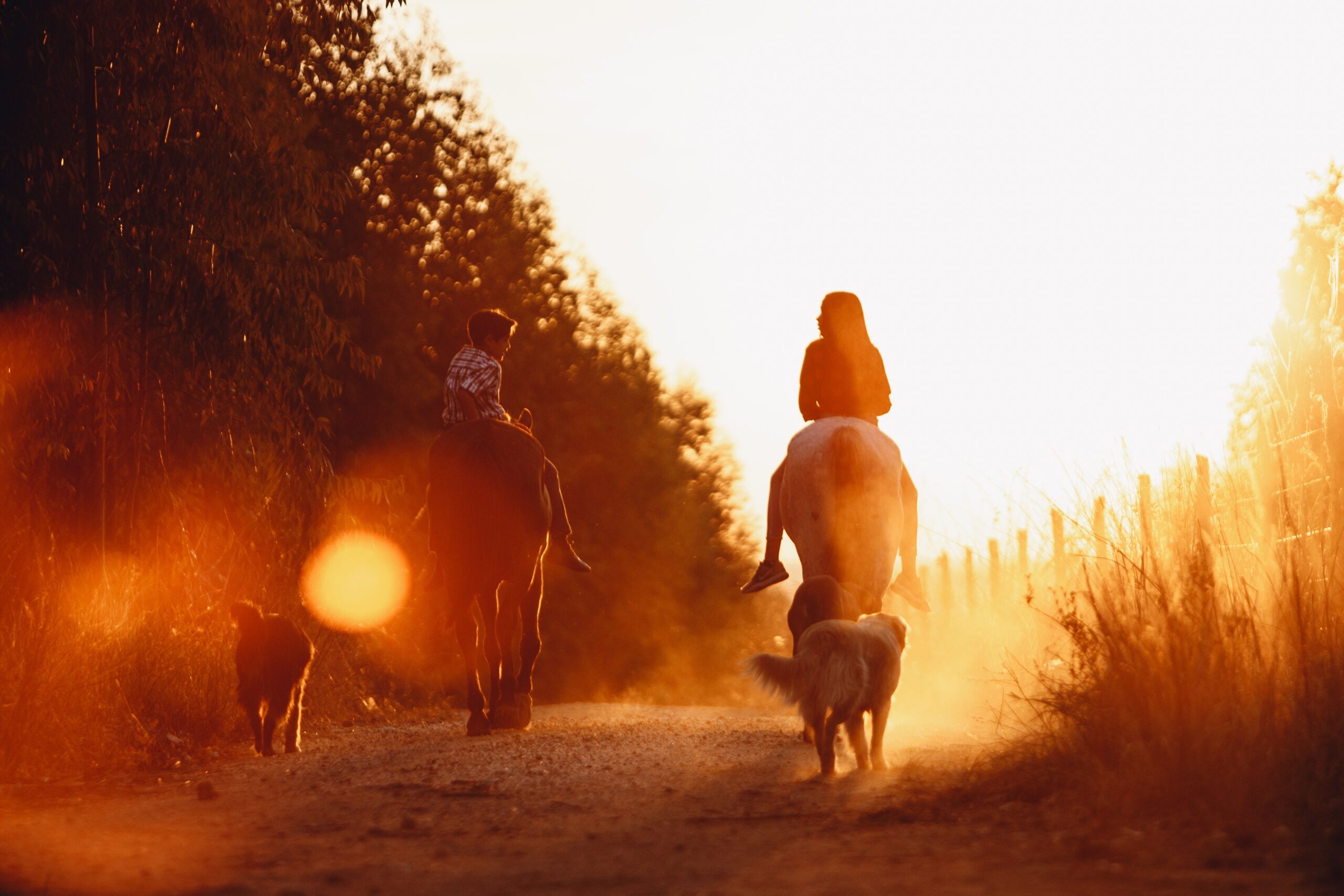
The winter coat is the part of preparing a horse for cold weather that you can watch happen, and it is the part that needs nothing from you. By the time it has fully come in (usually well into autumn), the jobs that actually decide how the next few months go are already behind schedule. Body condition, the shift from grass to conserved forage, water intake, skin and feet in the wet, the one worming treatment that is genuinely seasonal: none of it is difficult, and all of it is easier and safer done in the mild weeks before the first hard night than scrambled together afterwards. What follows is the order to do it in.
A thick winter coat is very good at hiding a horse that is quietly dropping condition. Weeks can pass before the eye picks it up, by which point you are feeding to recover ground rather than to hold it. The reliable check is by hand, not by sight: run a flat palm along the ribs, over the point of the shoulder, and either side of the tailhead every week or two through autumn, feeling for the amount of fat over the bone. Do it on the same horse in the same places often enough and you will notice a change of half a condition score long before it shows.
Aim to take most horses into winter carrying a little less than their summer weight rather than a little more. A modest fat reserve is useful going into a lean season. An overweight horse heading into months of reduced movement, with rich frosty grass still in the field, is carrying a laminitis and metabolic risk it does not need. A native-type good-doer that spends the winter unrugged and unclipped, drawing down some of that fat to keep itself warm, is using the season exactly as it is meant to be used, a point we make at more length in the rug guide.
The same early-autumn window is when to deal with the housekeeping that never looks urgent. Book the dentist: a horse that cannot grind its food efficiently wastes the forage it most needs in the cold. Book the farrier or trimmer so the feet are balanced and sound before the ground changes underneath them. Both belong in the diary for September or October, not December.
- ✓ Ribs, you should feel them under light pressure, not see them, and not have to press through a pad of fat
- ✓ Behind the shoulder, the flank crease should blend in, not bulge
- ✓ Either side of the tailhead, soft cover, no hard fat pads
- ✓ Along the crest, firm and thick is a metabolic warning sign, whatever the season
- ✓ Same hands, same spots, every week or two, you are tracking the trend, not scoring once
The feed change is a three-week job
As the grass stops growing, the horse’s diet moves from pasture to hay or haylage, and that is a larger change to the digestive system than it looks from the yard. The hindgut runs on a big population of fibre-fermenting microbes, and that population is tuned to whatever the horse has been eating for the last few weeks. Swap fresh grass for dry conserved forage abruptly and the microbes have to re-sort themselves. In the gap, the horse is more prone to loose droppings and to colic. Work on ponies moved suddenly between grass and hay shows the gut flora starts shifting within a day or two and re-stabilises within a few more, but “re-stabilises” is not the same as “no disruption,” and colic risk is known to rise with any sudden change of feed.
So make it gradual, over two to three weeks. If the horse is stabled at night, start putting hay out in the field while there is still grass, so the ratio tips slowly. If it lives out, bring hay into the paddock early and let the horse choose between that and the dwindling grazing, which has the side benefit of taking pressure off a field that is about to stop recovering.
Forage is also the horse’s own central heating. Fermenting hay in the hindgut throws off a steady flow of heat, far more than the same number of calories fed as hard feed, which is why a horse with hay in front of it around the clock rides out a frost so much better than one on a restricted ration. How much extra to feed in a cold snap, and why an extra section of hay often beats an extra rug, is covered in the rug guide.
Autumn grass is not the soft option
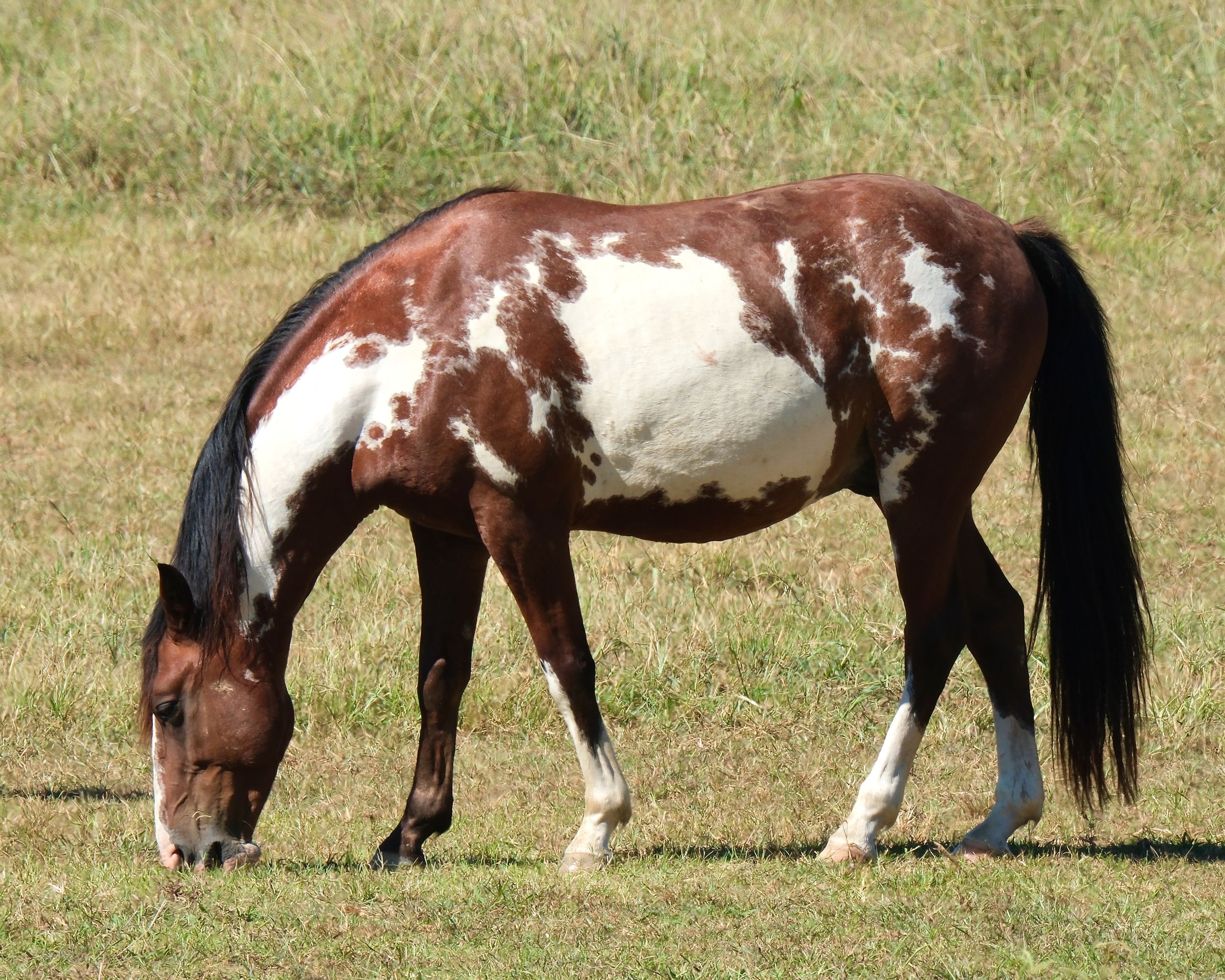
It is easy to relax about grazing once the field looks tired, shorter, less green, obviously past its summer best. The sugar content tells a different story. When nights turn cold enough to slow or halt growth while the days are still bright, the plant keeps photosynthesising but cannot spend what it makes, so it stockpiles non-structural carbohydrate, fructan and simple sugars, in the base of the stem. A frost sharpens the effect further: frosted grass can hold a spike of sugar for a day or more, and the level is often highest on a cold, sunny morning.
For a horse or pony that is laminitis-prone, overweight, or has EMS or PPID, that makes a bright frosty autumn one of the higher-risk grazing stretches of the year rather than a lull. The rule of thumb from equine nutritionists is to be cautious about turning such horses onto pasture when nights are dropping below roughly 5 °C and the days are sunny, especially first thing, after a frost. A grazing muzzle, a bare fenced-off “sacrifice” area, or simply turning out later in the day once sugars have fallen are the usual ways to manage it.
The autumn field looks past its best. For a laminitis-prone horse, a bright morning after a frost is one of the worst times to turn out on it.
Water: the problem starts in the trough
Horses drink less when water is cold, and the fall is not marginal. When trough water drops close to freezing, daily intake can collapse to a few litres, well under what a horse eating dry hay needs to keep its gut contents moving. A long-standing study at the University of Pennsylvania’s New Bolton Center found ponies drank around 40 % more when offered warmed water instead of near-freezing water. Voluntary intake is best somewhere around 5–18 °C.
The consequence of a horse quietly under-drinking for several days, on a dry winter diet, is impaction colic, a firm plug of partly digested forage that builds up over days or weeks, not overnight. It is one of the most common winter colics and one of the most preventable, which is why water is worth more attention in January than almost anything else on this list.
Take the chill off the water if the yard allows it. Break and lift ice out at least twice a day rather than tipping fresh water on top of a shrinking ice lid. Give free access to salt (a plain block, or a measured daily spoon of loose salt in a feed), so the horse has a reason to seek water out rather than just tolerate it. And for a stubborn winter non-drinker, soaking or well-dampening the hay puts water in through the feed.
- ✓ Aim for water around 5–18 °C, not straight-off-the-mains cold
- ✓ Remove ice twice daily, don’t just top up over it
- ✓ Salt block or daily loose salt so the horse actively drinks
- ✓ Soak or dampen hay for a poor drinker
- ✓ Know your horse’s normal, a sudden drop in drinking is an early colic warning
Skin and feet in the wet
Cold, dry, still weather is easy on a horse. Wet is not. Skin that stays soaked for hours softens and loses its barrier, and once that barrier is broken, opportunist organisms (Dermatophilus congolensis among them), move in and produce the scabbing and soreness of mud fever, more properly called pastern dermatitis. Feathered legs, pink-skinned white legs, and any leg that spends its day in a churned gateway are the first to go.
The management is about the water, not the mud. Cut the hours the horse stands in it: rotate the gateway, put hardcore or matting on the worst-worn ground, use a drier sacrifice area through the wettest spells. When legs do get plastered, either let the mud dry and brush it out, or hose it off and then dry the leg thoroughly, a leg left damp under a boot or a layer of barrier cream is worse off than a leg left muddy. Washing every single day keeps the skin permanently soft and makes the problem more likely, not less.
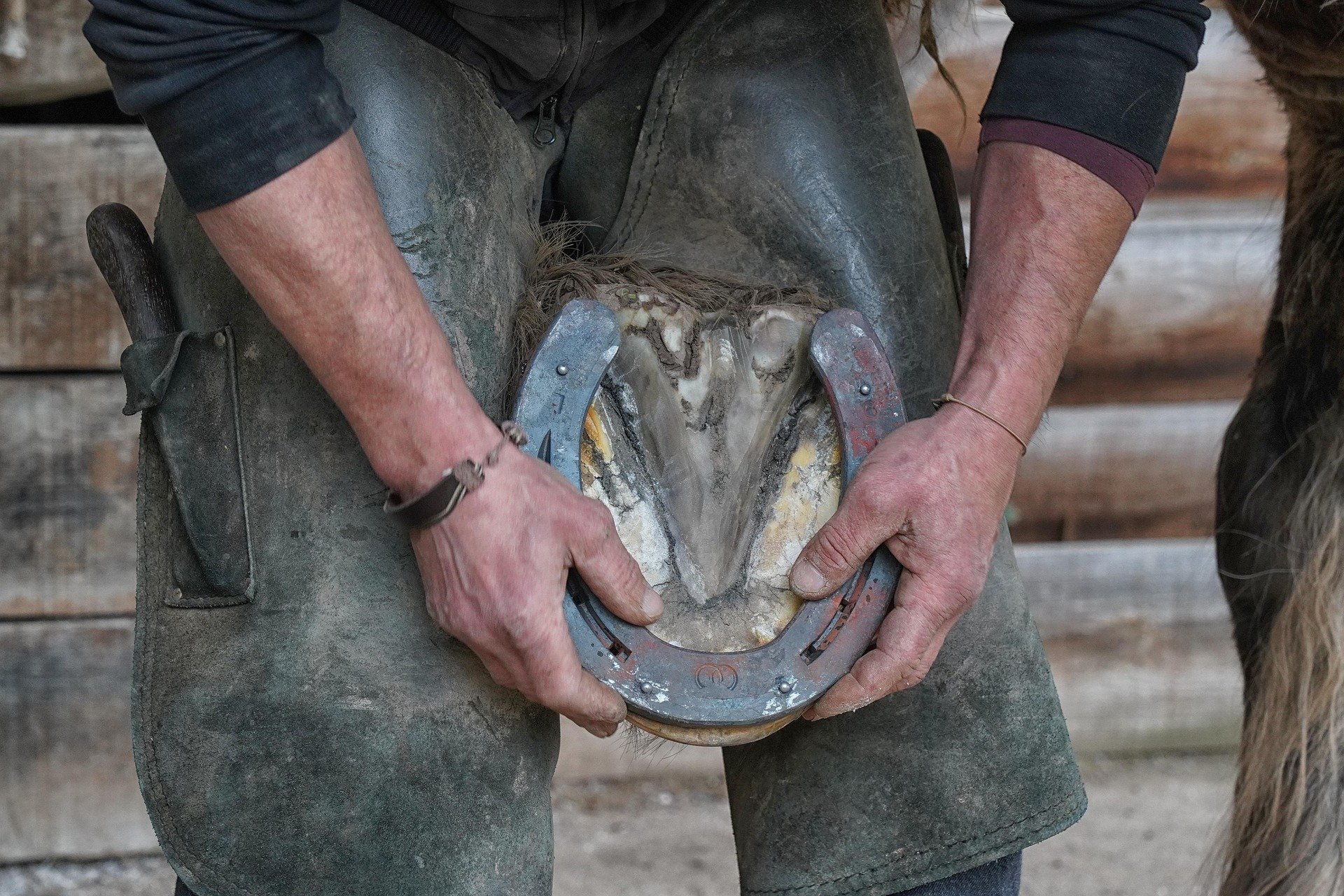
Feet change in the wet too. Permanently damp horn is softer: it holds shoes less well, chips and flares more, and the frog is more prone to thrush. Keep the farrier or trimmer cycle going right through winter instead of stretching it, pick the feet out daily to catch thrush early, and get any hoof-balance problem sorted before the going turns deep, a marginal foot copes far worse in mud. We go into hoof care properly in a separate guide.
The worming that’s timed to the season
One worming job is genuinely tied to the calendar. Small redworm (cyathostomin) larvae burrow into the gut wall in late autumn and lie dormant there through the winter, where a faecal egg count cannot see them. If large numbers emerge together in late winter or early spring, they can do severe damage, sudden weight loss, diarrhoea, colic, occasionally death. The standard response is a single dose of moxidectin in late autumn or early winter, the only licensed single-dose treatment for the encysted stage, timed for when temperatures are consistently falling. Guidance often points to daytime temperatures staying below about 6 °C.
Because this is a treatment a worm-egg count cannot inform, it has traditionally been given on the calendar rather than on a test, though a blood test for small redworm is now available, and a low-risk horse in a well-managed, closed group with a history of low counts may not need dosing at all. Autumn is also the usual point for a tapeworm treatment (praziquantel, or a double dose of pyrantel), ideally guided by a saliva or blood test.
Work to your vet’s or a suitably qualified adviser’s plan for your yard. Resistance to the handful of wormers we still have is real and increasing, and moxidectin in particular is one to use sparingly, in most cases no more than once a year.
Shelter, ground and the dark
The most useful piece of winter infrastructure is somewhere to get out of the weather. A field shelter, a thick hedge with a bank behind it, a stand of trees, any of them lets a horse turn its back on wind-driven rain, which is the combination that actually strips heat out of a horse. Dry, still, cold air it handles well on its own (again, the rug guide has the detail). If you have a choice of fields, the one with a natural windbreak matters more in winter than the one with the better grass.
Then the ground. Winter turnout destroys the parts of a field that take the most traffic, the gateway, the strip along the fence, the ground around water and hay. Poached, boot-sucking mud is hard on legs and harder on the field’s recovery in spring. Rotating access, fencing off the wettest corners, moving feed and water positions through the season, and accepting one small sacrifice area that takes the damage so the rest does not, are all jobs to do before it turns rather than after.
Last, the dark. Short days squeeze every task into a rush at each end, usually in poor light, and it becomes easy to stop actually looking at the horse. Try to see it in daylight at least at weekends, keep a working torch by the gate or in the rug bag, wear hi-viz for any roadwork on a winter hack, and check rugs and legs with your hands because you cannot see them properly.
A Mallorca note. Winters here are mild by northern-European standards, which makes it easy to skip all of the above. But a mild average hides sharp individual nights, a clear sky after a warm day, especially inland toward the Tramuntana, can drop close to freezing. The temptation to do none of it is greater precisely because the average looks so mild.
A mild average hides sharp individual nights. The list does not get longer on the island. It just gets compressed into a shorter, less predictable window.
Done in the mild weeks
Condition-score by hand every week or two. Book the dentist and the farrier for early autumn. Start the grass-to-hay change over two to three weeks. Agree encysted-redworm timing with your vet. Sort shelter, drainage and a sacrifice area while the ground is still firm.
The daily routine
Warm or de-iced water, checked twice a day. Hay available around the clock in a cold snap. Legs and rugs checked by hand every day. Turnout decisions made with frost and morning sun in mind. A torch that works, and eyes on the horse in daylight when you can.
- The coat looks after itself. Start the real work (condition, feed, feet, teeth), in the mild weeks before it finishes coming in.
- Check body condition by hand weekly through autumn, and aim to go into winter slightly lean rather than slightly fat.
- Change grass to hay gradually over two to three weeks so the hindgut microbes keep up. Abrupt changes raise colic risk.
- Frosty autumn grass can be higher in sugar than summer grass, a real laminitis risk on bright cold mornings.
- Cold water gets left in the trough. Under-drinking over days causes impaction colic. Warm it, de-ice it twice daily, add salt.
- Wet, not cold, drives mud fever and soft feet, reduce standing time in mud, dry legs properly, keep the farrier cycle going.
- The encysted-small-redworm dose (moxidectin) is a seasonal, calendar-timed treatment, plan it with your vet.
General editorial guidance, not veterinary advice. Worming programmes, laminitis management and any horse that is old, underweight, clipped or unwell should be handled with your own vet and a parasite-control adviser who knows your yard.
Rug Season Timeline: What to Do, and When
Horse Hoof Care: What Owners Should Actually Know