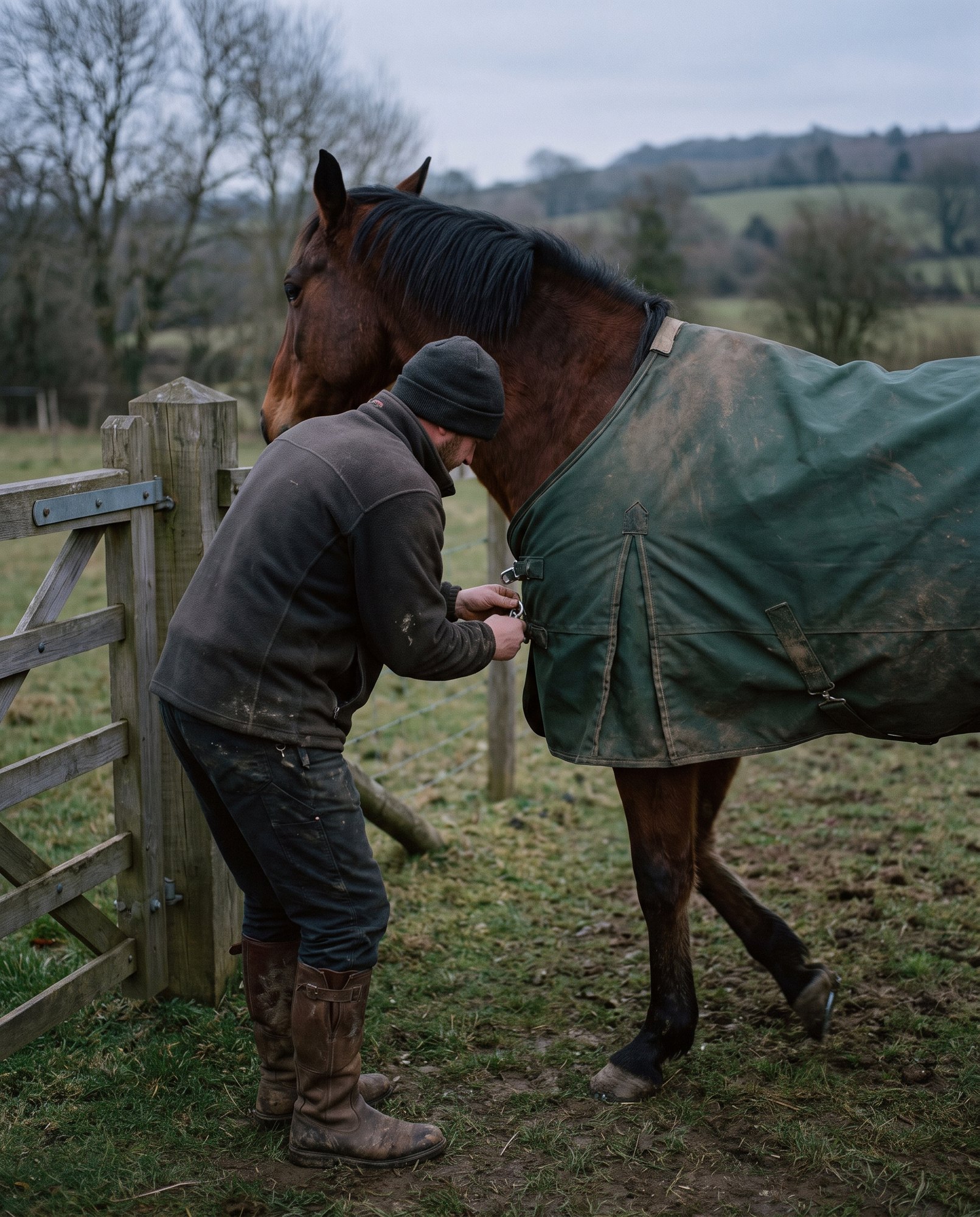
Autumn Rugging Checklist
Five things to check before a rug goes on, and five after.
A short, printable list for the weeks when the first rain arrives and the rug question comes up every evening. It assumes you have read why most Mallorca horses need less than the range suggests.
Answer section one honestly first. For many horses here, the list ends there for now.
Run sections three and five every time the rug goes on or comes off.
Does This Horse Need One?
- ✓Unclipped, healthy, acclimatised, with shelter from wind and rain: usually no rug in autumn
- ✓Clipped for work: yes, and properly, once it is clipped
- ✓Old, underweight, fine-coated or unable to hold condition: yes, and watched closely
- ✓No real shelter in the field: a light waterproof earns its place on wet, windy nights
- ✓If none of the above apply, the rug is for you, not the horse. That is allowed, just know it
Read the Weather, Not the Date
- ✓Rain forecast with wind: the main autumn trigger for a light waterproof on a horse that needs one
- ✓Dry and still, even at 8°C: an unclipped horse copes without
- ✓Warm afternoon after a cool morning: a rug left on all day means a sweating horse by two o’clock
- ✓First cold snap after a warm spell: the horse has not adapted yet. Watch it, do not automatically rug it
- ✓Forecast checked the evening before, not guessed at seven in the morning
- ✓Rugging temperature table: which fill at which night temperature
Before It Goes On
- ✓Is the coat dry? A rug over a wet or sweaty coat flattens it and traps damp against the skin. Use a cooler first or wait
- ✓Is the horse warm at the base of the ears and dry under the mane? Cold ears and a damp neck mean it is already chilled
- ✓Is the rug itself dry inside? A rug left on a wet floor goes on wet
- ✓Straps, clips and stitching intact, no loose surcingles that can catch a leg
- ✓Is this the lightest rug that does the job? Start light. Add weight only when the horse tells you
Fit & Size
- ✓Measured from the centre of the chest, along the side, to the point of the buttock, in centimetres
- ✓Converted to feet and inches with the size tool on any rug page in our Shop & Gear, not by guessing
- ✓Neckline sits in front of the withers without pulling. Shoulders free enough to graze without rubbing
- ✓Leg straps crossed between the hind legs, loose enough for a hand’s width, not hanging
- ✓Belly surcingles adjusted so a flat hand fits, on both sides
After It Is On
- ✓A hand under the rug at the shoulder and the flank once a day: warm and dry is right. Damp or hot is too much
- ✓Rug off and coat checked for rubs at the shoulder, wither and hip at least every couple of days
- ✓Weight and condition checked by hand every week. A rug hides a horse quietly losing weight
- ✓Rug off on warm days rather than left on out of habit
- ✓A second rug or liner available so a wet one can dry. A wet rug is worse than none
The Autumn Rug Shelf
- ✓A 0g waterproof rain sheet: the rug most Mallorca horses that need one will wear most
- ✓A cooler or wicking rug for drying a wet or sweaty horse before turnout or overnight
- ✓A light or medium fill (100g to 250g) only for a clipped horse or a cold, wet spell
- ✓A heavyweight (350g and up) rarely, and only for a clipped horse in a genuinely cold week
- ✓A dry place to hang whichever one is off: a rug rail or hooks, not the stable door
The lightest rug that keeps the horse dry is almost always the right one. Add weight when the horse asks for it, not when the shop does.
Most unclipped horses with shelter need no rug in a Mallorca autumn. Clipped, old and fine-coated horses are the real exceptions.
Rain and wind are the triggers, not the calendar. A wet, windy night in the low teens is harder than a dry, still one much colder.
Never rug a wet horse, check under the rug daily, and start with the lightest rug that keeps the horse dry.
General guidance, not veterinary advice. Take rugging decisions for an old, clipped, underweight or unwell horse with your vet, and check any new rug on the horse for fit and rubs.
Which Turnout Rug Does Your Horse Actually Need?
The question before the rug, answered for this climate.
Rug Season Timeline: What to Do, and When
The rug year in five phases, not one October decision.
Rugs & Turnout
From a 0g rain sheet to a heavyweight, with the weights decoded.