Sixteen Hours of Chewing: How a Horse Digests, and Where Supplements Fit
A small stomach, a long gut and a fermentation vat at the end of it.
Most digestive trouble in horses starts with how they are fed, and most of it is fixed there too. What the gut is built for, the four feeding habits the research keeps pointing at, and an honest ladder for the products on the shelf.
Forage, meal size, short gaps and water do most of the work; supplements come after that, and the evidence behind them ranges from solid to thin.
What the gut is built for
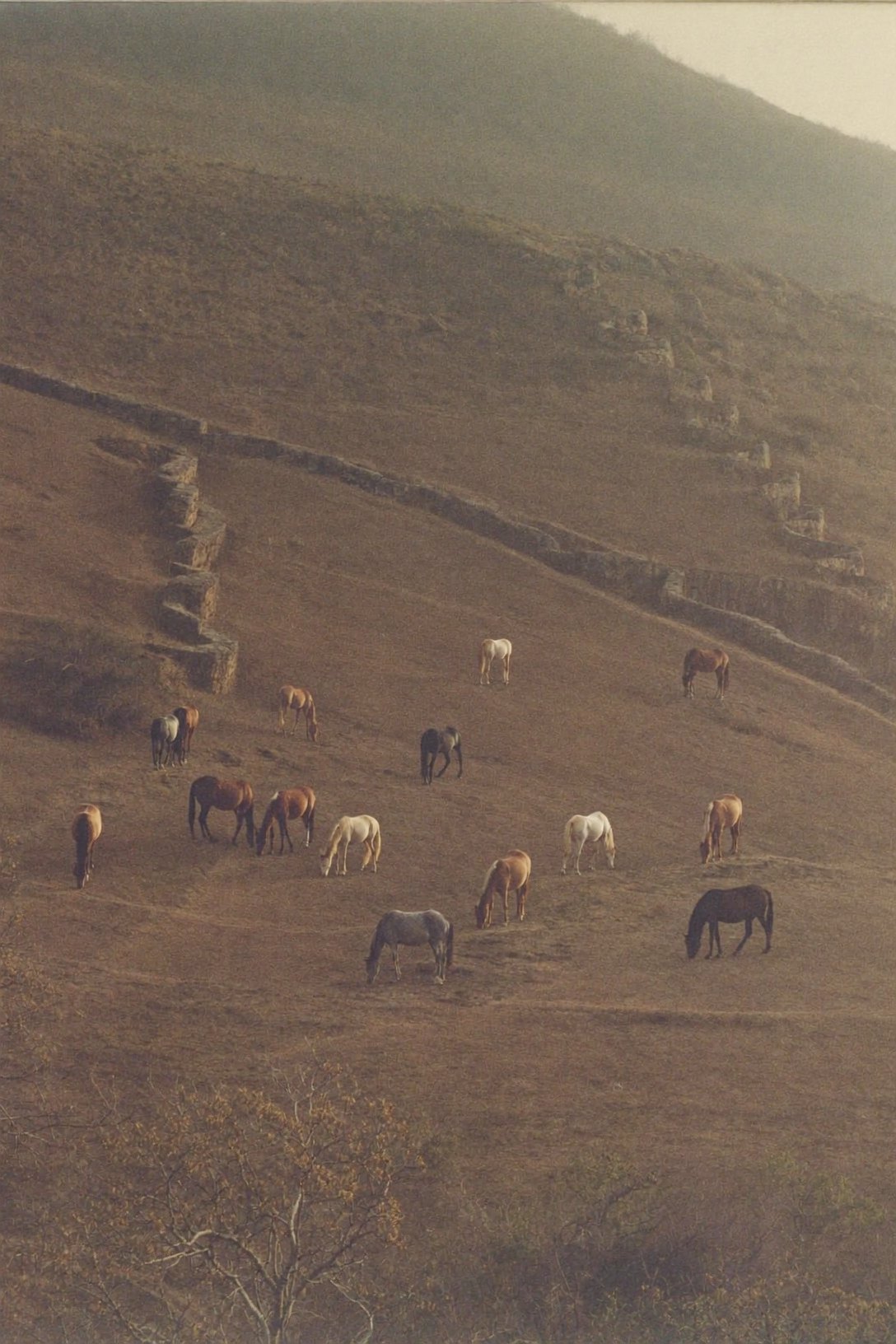
A horse is a grazer that evolved to eat small amounts of fibrous plants for most of the day – free-living horses spend in the region of sixteen hours a day foraging. The digestive tract follows from that. The stomach is small, the small intestine is long and does the enzymatic work on starch, sugar, protein and fat, and the large intestine – the caecum and colon, together called the hindgut – is a fermentation chamber where microbes break down fibre into volatile fatty acids that the horse absorbs as energy.
Two consequences run through everything below. The system is designed for a steady trickle of fibre, not for two large meals. And anything the small intestine does not digest, above all starch and sugar from a big hard-feed meal, travels on to the hindgut, where it ferments fast, produces acid and changes the microbial community.
The stomach: small and never off
A horse secretes stomach acid continuously, whether or not there is food in the stomach. What protects the upper, non-glandular part of the stomach is chewing: saliva, which is only produced while the horse chews, is alkaline, and a mat of fibre in the stomach keeps the acid below. Remove the chewing for long enough and the acid reaches tissue that has no defence against it.
That is why the most consistent findings on gastric ulceration are about management. In a Danish study of 201 horses, the risk of ulcers in the squamous (upper) part of the stomach rose when the gap between forage meals was longer than six hours, when straw was the only forage, when a meal carried more than 1 g of starch per kg of bodyweight, and when there was no water in the turnout paddock. The European consensus statement on equine gastric ulcer syndrome draws on the same findings and sets a floor: at least 1.5 kg of hay dry matter per 100 kg of bodyweight a day, ideally free choice, otherwise in four to six meals. Many vets and nutritionists add a small forage meal, such as chopped alfalfa, shortly before exercise; the reasoning is physical – a fibre mat limits acid splashing onto the upper stomach while the horse works – though it has been tested less directly than the rest.
Starch: the size of the meal matters
Starch is not the enemy; an oversized meal of it is. The small intestine can only digest so much starch per meal, and the working limit most nutritionists use comes from the same research: no more than about 1 g of starch per kg of bodyweight per meal, and about 2 g per kg per day. For a 500 kg horse that is 500 g of starch in a meal – roughly 1.3 to 1.7 kg of a cereal-based mix with 30 to 40 % starch, and the bag’s analysis tells you which end you are at.
Horses that need more energy than that allows are usually better served by more meals, better forage, oil or fibre-based feeds than by a bigger bucket. The order matters too: the consensus statement notes markedly more ulceration in stabled horses given grain an hour before their hay, so the forage goes in first.
Grass, fructans and the autumn flush
Grass stores energy as sugars and fructans, and fructans in particular are not digested by the horse’s own enzymes; they pass to the hindgut and ferment there. Rapid intake of sugar- and fructan-rich grass is a recognised trigger for laminitis in susceptible horses and a common reason for loose droppings and colic around turnout changes.
On Mallorca the pattern is the reverse of northern Europe’s: months of dry hay and little grazing, then a flush of fresh growth after the first autumn rains and again in spring. The management is the same everywhere – change forage and turnout gradually, over about two weeks, keep horses with a laminitis history or EMS on restricted grazing, and remember that sunny, cool days after rain are when grass holds the most sugar.
Water and work
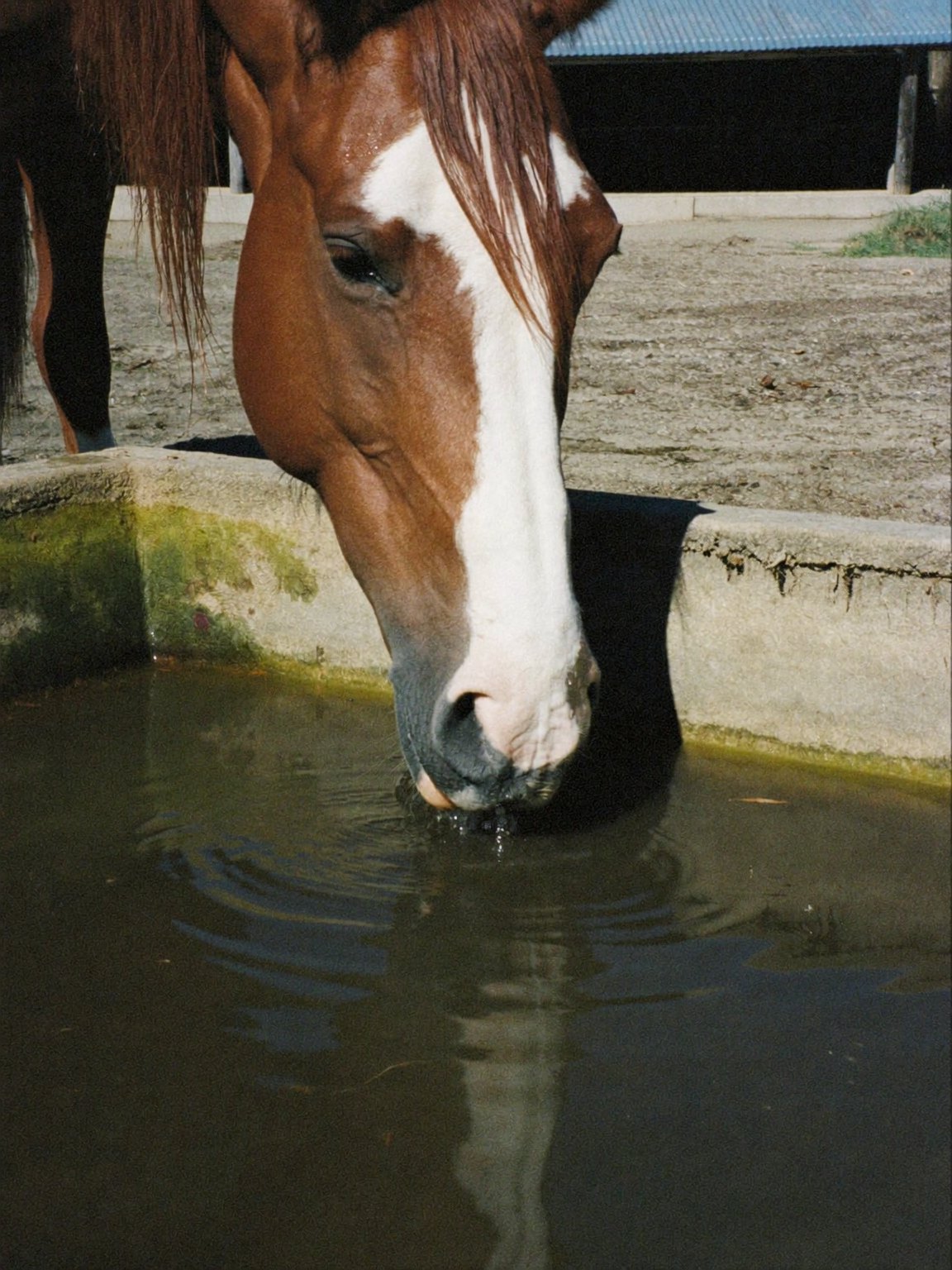
A horse at rest in mild weather drinks in the region of 25 litres a day; in summer heat and work the figure rises steeply, and the water carries the fibre through the gut. Too little water is linked to impaction colic, and the Danish ulcer study found that simply having water available in the paddock mattered. A clean trough that is actually full in the afternoon is one of the cheapest pieces of digestive care there is.
Around exercise, the order is: forage in the hours before, a small forage meal shortly before work, no large grain meal in the few hours before hard exercise, and water freely after the horse has cooled. Sweat takes salt with it, and in real heat that has to be replaced; the details, and when electrolytes are genuinely needed, are in our piece on sweat.
Where supplements fit
Once the feeding is right, a digestive product can be a reasonable addition. The shelf is wide, and the evidence behind it is uneven. From strongest to weakest:
Salt and electrolytes in real sweat. The need is physiological and well documented; the only question is whether a given horse is sweating enough to need more than a salt lick.
Probiotics and yeasts. Results depend on the strain and the dose; evidence for yeast cultures improving fibre digestion is more consistent than for bacterial probiotics, and a 2014 review in the Journal of Veterinary Internal Medicine found the case for probiotics in horses still limited. None has been shown to prevent colic.
Digestive enzymes. A newer route: supplying enzymes so more starch and fructan is digested before the hindgut. The best-documented product is an enzyme-rich barley malt extract sold as EquiNectar. Studies in racehorses and pastured horses have measured changes in faecal pH, the faecal metabolome and the microbial community; the studies are small, mostly without a comparison group and co-authored by the company’s founders, and no controlled clinical trial has shown fewer colics or laminitis cases. A plausible, measurable idea, not a proven treatment – the retailer page sets out the data.
Antacids and gastric buffers. Calcium carbonate and magnesium or aluminium hydroxide raise stomach pH, but for roughly two hours after a dose. Pectin-lecithin complexes have mixed results: one controlled study found less severe ulcers after feed stress, another found no preventive effect. They can be part of a plan; they are not a treatment for diagnosed ulcers, which is a prescription medicine’s job.
Activated charcoal and clays. Activated charcoal has a real use: in suspected poisoning, at doses of 1 to 2 g per kg of bodyweight, given under veterinary direction. The small daily amounts sold for routine ‘digestive support’ are a different proposition with little evidence behind them, and charcoal can bind medication given by mouth. It is not a product we feature.
When it is a vet’s question
Some signs are not a feeding problem to solve with a supplement: colic signs such as pawing, rolling, looking at the flank or not passing droppings; diarrhoea; weight loss without a clear reason; a horse that stops finishing its feed or becomes girthy and sour in work. Gastric ulcers are diagnosed by gastroscopy and treated with prescription medicine, and the most useful thing a supplement label can do in any of these cases is stay on the shelf until a vet has seen the horse.
For every other horse, the order is the same as it has always been: enough forage, short gaps, sensible meals, water where the horse is, gradual changes. A supplement belongs at the end of that list, and a good one says so on its own label.
The gut was built for a steady trickle of fibre. Most of what goes wrong with it starts when we feed it something else.
- Forage for as much of the day as possible; gaps between forage meals over six hours raise ulcer risk.
- Keep starch to about 1 g per kg bodyweight per meal and 2 g per kg per day; split big rations.
- A small forage meal before work, water in the paddock, and gradual changes to grass and forage.
- Supplements come after management; evidence ranges from solid (electrolytes in real sweat) to thin (routine charcoal).
- Colic signs, diarrhoea, weight loss or suspected ulcers are a vet’s question first.
General editorial guidance from published veterinary research. It does not replace an examination: a horse with colic signs, diarrhoea, weight loss or suspected ulcers needs a vet.
What Does Your Horse Actually Need From Feed & Supplements?
Up to Fifteen Litres an Hour: What Sweat Takes With It