Three to Ten Times: Horses and Heat on Mallorca
If you can handle the heat, so can your horse. That is what most of us believe. The measurement says otherwise.
A horse is three to ten times more susceptible to heat stress than a person, according to Equine Guelph at the University of Guelph. On Mallorca, where July and August sit above thirty degrees for weeks, that number decides when the ride happens, where the horse stands at midday and how quickly a warm afternoon becomes a veterinary problem. What the figure means, why the horse’s body works against it, the island timing that follows from it, and the signs that mean water first and the vet second.
The horse heats up faster and cools down slower than you. Ride early or late in high summer, give shade, air and water all day, and treat fast breathing that does not settle as an emergency.
What three to ten times means
The figure comes from Equine Guelph, the horse-health programme of the University of Guelph in Canada, and it is a comparison of susceptibility: for the same conditions, a horse moves into heat stress far sooner than the person riding it. It is not a comfort index. A rider who feels fine at eleven in the morning in August is not evidence that the horse is fine; the two bodies are on different curves.
The practical consequence is that the human sense of a hot day is a poor instrument for deciding whether a horse should work. The thermometer, the humidity and the horse’s own breathing are better ones, and on Mallorca they are needed from June to September, not only on the days that feel extreme.
Why the horse loses
Two things work against the horse. The first is scale: a five-hundred-kilo animal has far less skin per kilo of body than a seventy-kilo person, and skin is where heat leaves. The second is muscle: the working muscle of a horse produces heat in enormous quantity, and most of that heat has to be carried by the blood to the skin and lost through sweat. A horse sweats well, better than almost any other large animal, but the sums are still against it in humid heat, when sweat stops evaporating and stops cooling.
Add a dark coat in full sun, a horse that is unfit or carrying weight, and a rider who keeps going because the horse is still willing, and the margin disappears. Horses rarely stop themselves; that decision is the rider’s.
A horse that is still willing is not a horse that is still cool. Willingness is the last thing to go.
Island timing
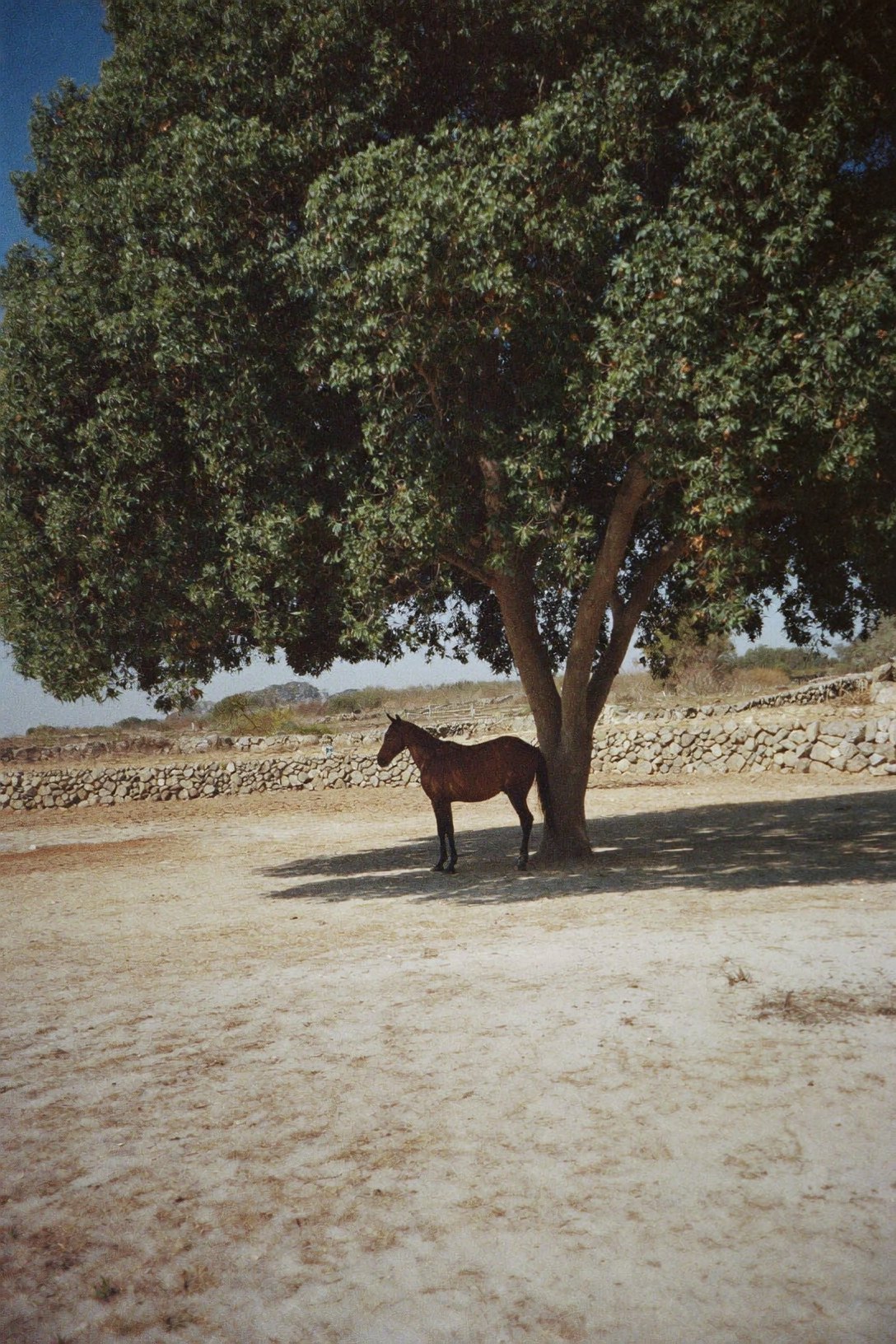
On Mallorca the summer answer is the hour, not the effort. From late June to early September most yards on the island ride before nine in the morning or after seven in the evening, when the sun is off the arena and the air moves. Midday is for shade, water and nothing else. Carob and pine give the best shade on a paddock; a shelter with two open sides gives moving air; a field with neither is not a summer field.
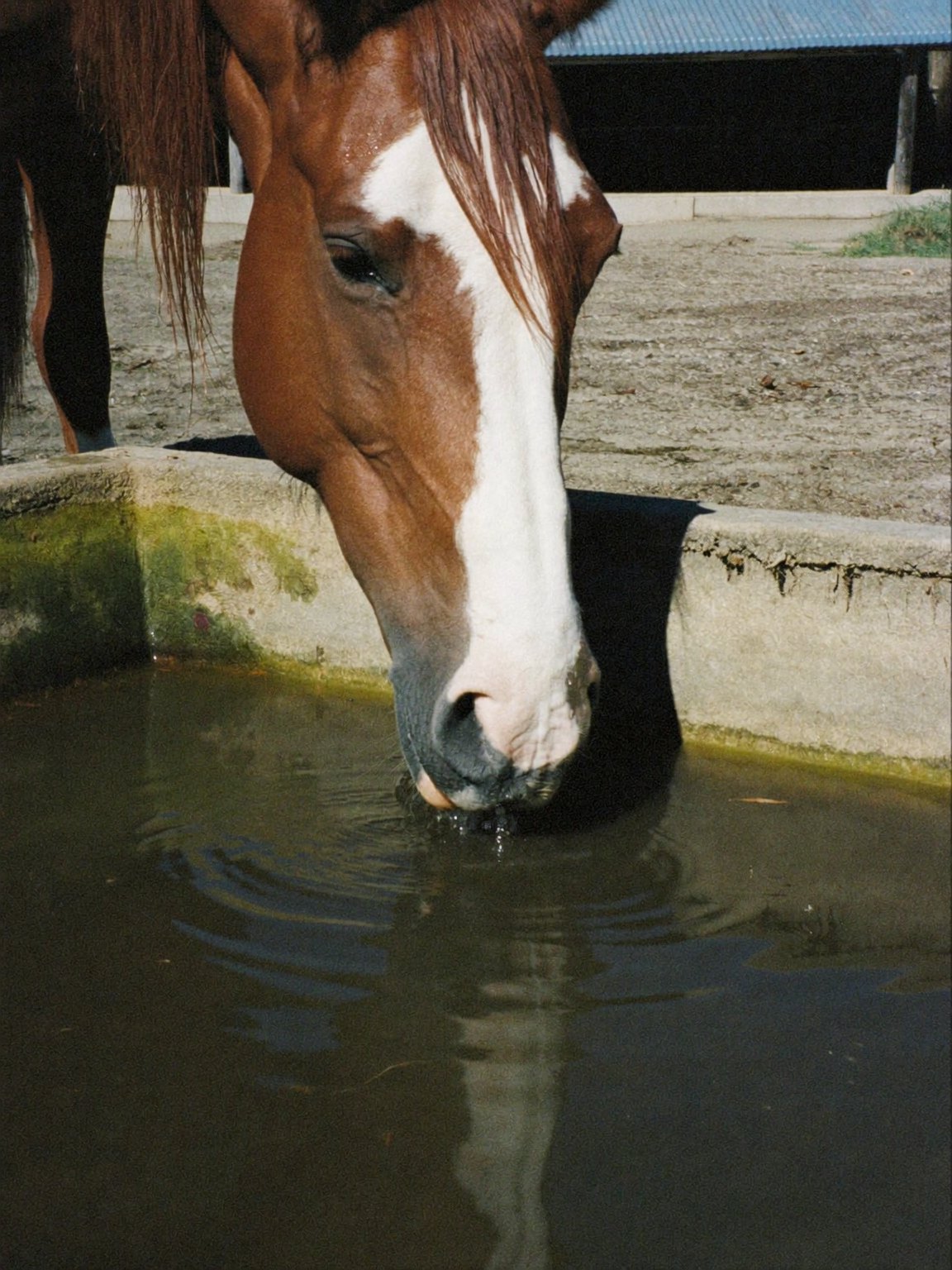
Water within reach all day, not twice a day, and checked in the afternoon when the trough is warm and the horse drinks less of it. A hose to wet the ground under the shade helps more than it looks. A horse that is clipped, or one that is stabled through the hottest hours and turned out at night, is on a routine many island yards have used for decades; it is the sensible one.
Dry heat at thirty-four degrees is one thing; the same temperature with the humidity that sits over the island before a September storm is another, because sweat stops evaporating. On those days the morning ride is shorter and the walk home is longer.
The signs and what to do
Breathing that stays fast for more than a few minutes after the horse stops, nostrils flared and flanks heaving. Sweat that is weak, patchy or absent when it should be pouring. A horse that is dull, slow to respond, stumbling or unwilling to move. Skin that stays tented when pinched, gums that are dark or dry. Any of these on a hot day is heat stress until proven otherwise.
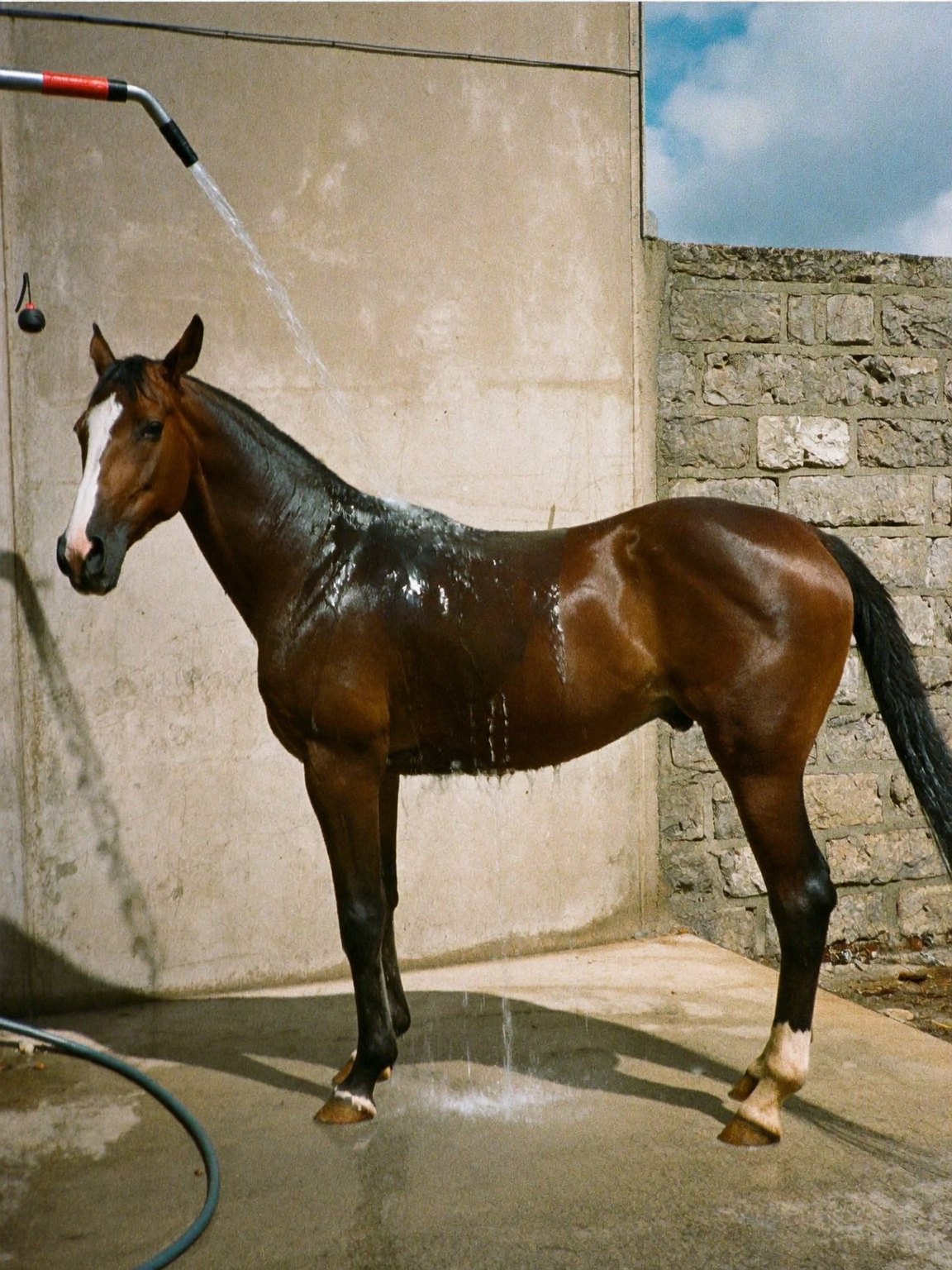
What to do is simple and immediate: stop, get the horse into shade, and put cold water on the large muscles, neck, chest and hindquarters, and keep it coming while somebody calls the vet. The cooling article in this series covers why continuous water beats pouring and scraping. Do not wait to see whether the breathing settles; cooling first and the phone second is the order that works.
Breed, coat and condition
Lighter breeds cope better with heat than heavy ones: an Arabian or a Thoroughbred sheds heat more easily than a heavy warmblood or a draught type, and the island’s own horses, the Mallorquín and the Iberian crosses, are built for the climate in a way a cob imported from a wet country is not. That is a management fact, not a judgement of the horse. The heavier horse needs the earlier ride, the better shade and the shorter summer.
Condition matters as much as breed. A fit horse produces less heat for the same work and cools faster afterwards; a horse carrying extra weight does the opposite. Summer on Mallorca is a good reason to keep a horse fit through the spring and lean through the summer, and to leave the demanding work for October.
The rider’s sense of a hot day is the wrong instrument. The horse is on a different curve, and it will not stop itself.
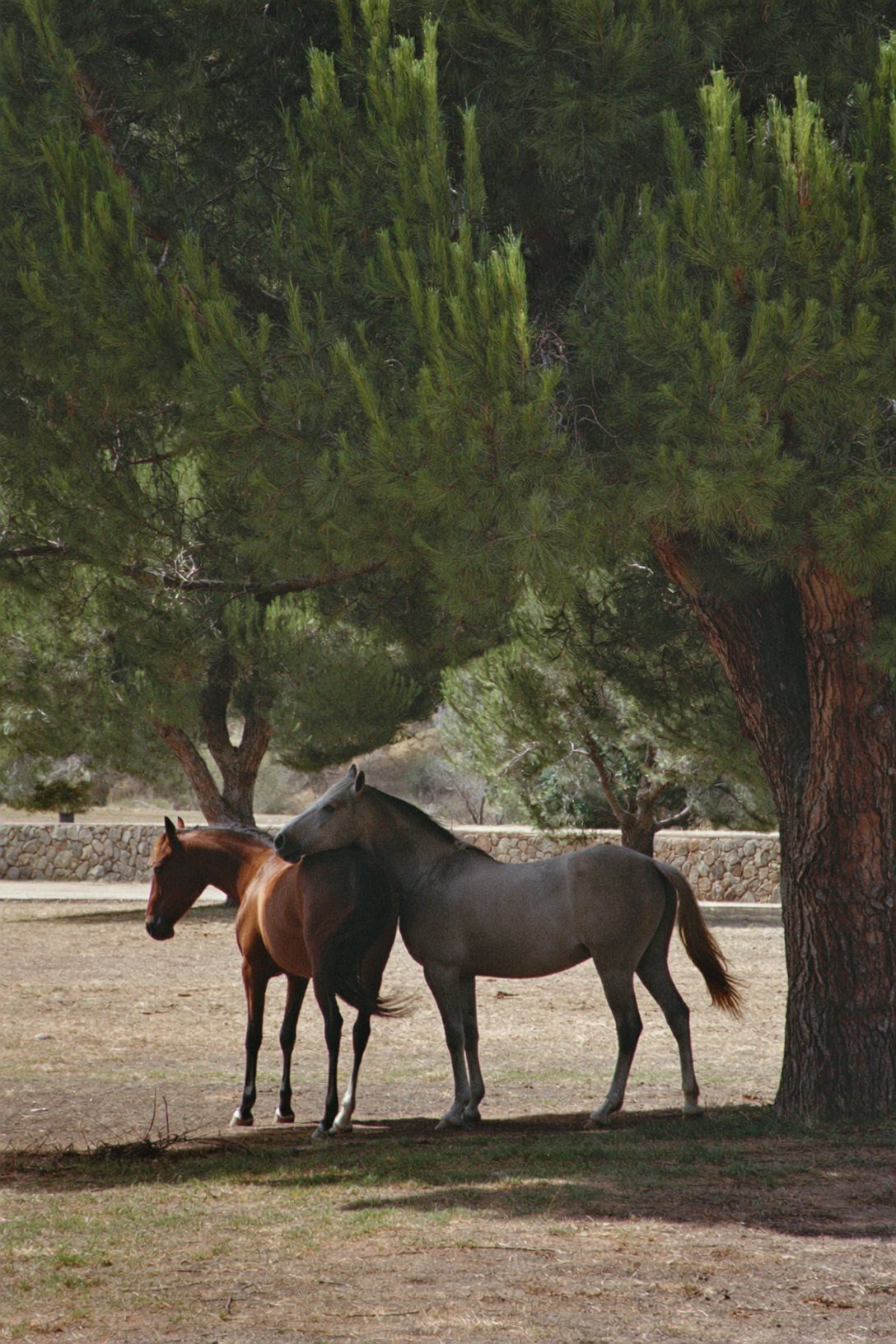
- A horse is three to ten times more susceptible to heat stress than a person (Equine Guelph, University of Guelph).
- Less skin per kilo and heat-producing muscle mean the horse heats faster and cools slower, especially in humid air.
- On Mallorca in July and August: ride before nine or after seven, shade and moving air at midday, water within reach all day.
- Fast breathing that does not settle, weak or absent sweat, dullness or stumbling: cold water on the big muscles at once, then the vet.
- Heavier breeds and unfit horses need the earlier ride and the shorter summer; keep the demanding work for October.
General editorial guidance, not veterinary advice. A horse with fast breathing that does not settle, weak or absent sweating or dullness on a hot day needs cooling at once and a vet the same hour.