Fly and Sun Protection for Horses: Rugs, Masks and Sweet Itch Cover
On Mallorca the fly season is long and the sun is strong. The kit that copes with both is simpler than the shelf suggests.
Fly rugs, fly masks, sweet itch rugs and sun protection all sit on the same shelf and solve different problems. This guide explains what each one does, what mesh, UV and zebra print actually mean on a label, and how to work out which combination your horse needs for a Mallorca summer that runs from spring well into autumn.
A fine-mesh fly rug and a fly mask cover most horses through most of the season.
A horse that reacts to midge bites needs a sweet itch rug on before the season starts, and a conversation with the vet.
Most owners buy fly protection the week the flies arrive and take it off the week they seem to go. On Mallorca that is a long stretch, and the sun is doing damage on the same days the flies are. The useful way to think about it is not one rug for summer but a small kit that covers the insect, the light and, for some horses, an allergy.
The season you are dressing for
On the island, flies and midges are active from spring until well into autumn, with the worst of it in the warm, still evenings. Horse-flies and stable flies bite. House flies and face flies irritate eyes, nostrils and wounds. Midges are tiny, most active at dawn and dusk, and are the insects behind sweet itch. The sun is a separate problem on the same days: pink skin on muzzles and white markings burns, and pale coats bleach. A horse turned out through a Mallorca summer therefore needs three things covered: biting and nuisance insects on the body, the eyes and face, and exposed skin.
- Biting flies on the body, worst in warm, still weather
- Face flies and dust around eyes and nostrils
- Midges at dawn and dusk, the trigger for sweet itch in sensitive horses
- Direct sun on pink skin, white markings and pale coats
Fly rugs: mesh, fit and coverage
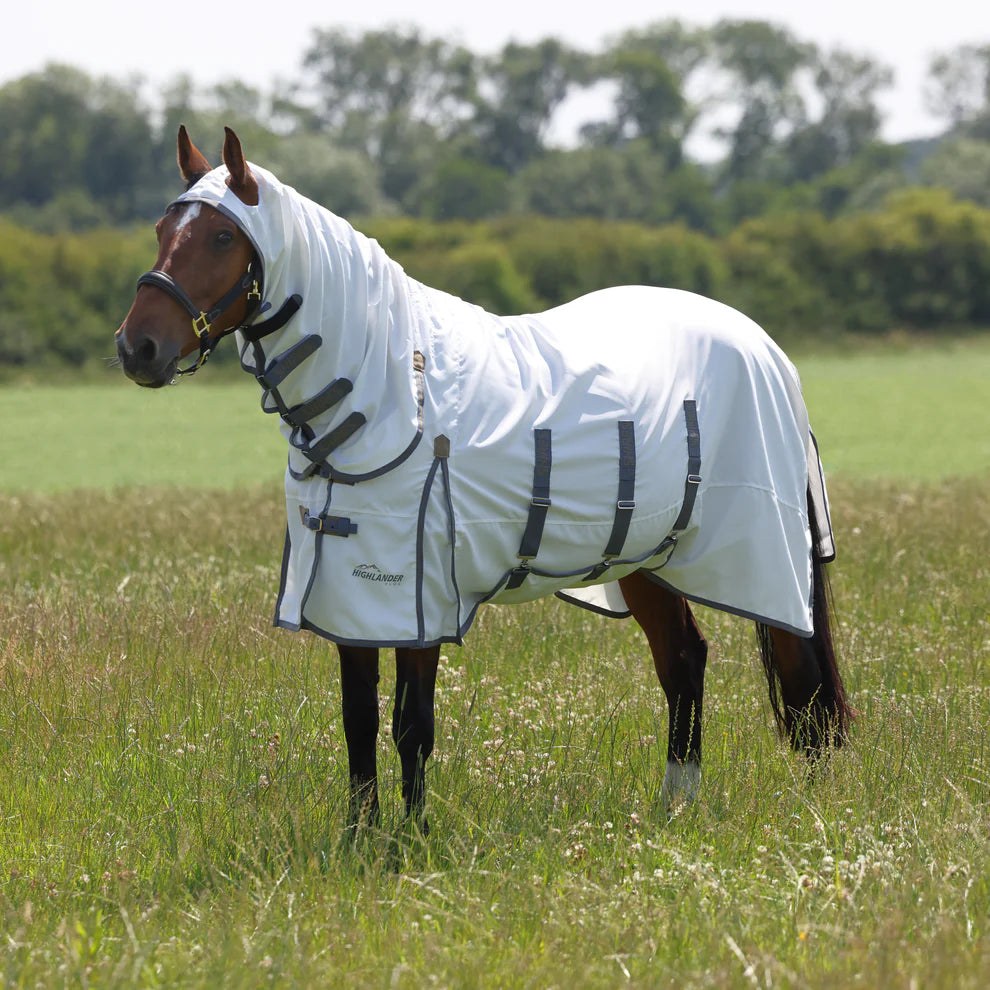
A fly rug is a fine, light mesh sheet that stops flies landing on the body while letting air through. The mesh matters more than anything else: it must be fine enough to keep small insects out and open enough to breathe, which is why the good ones feel almost like a net. A full-neck or combo version covers the neck, which flies love. A belly flap covers the underside. Many makers state a UV protection figure for their mesh, which is useful for pale horses and for keeping a dark coat from bleaching. Zebra print is not a fashion: a 2019 study found that striped coats received markedly fewer horse-fly landings than plain ones, which is why several makers now offer it. On days that bring showers, a fly rug with a waterproof top panel keeps a horse dry without switching to a heavy rug.
The finer the mesh and the more of the horse it covers, the fewer places a fly can find. Fit decides whether the horse keeps it on.
 BucasBuzz-Off Zebra Full NeckFine mesh in the zebra print, full neck, belly pad and large tail flap.View at TRI Equestrian →
 Horseware IrelandAmigo Bug Buster Fly RugLightweight mesh with 65% UV protection and an extra-wide belly flap.View at TRI Equestrian →
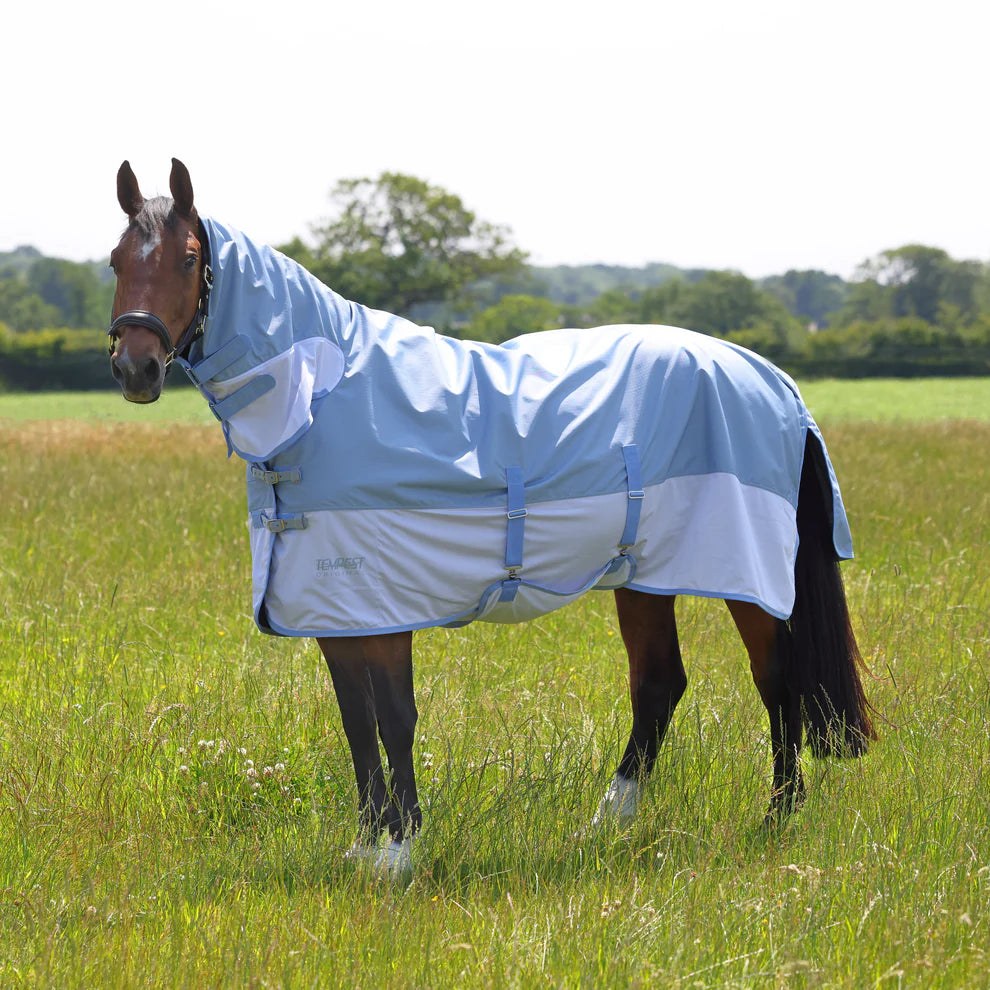 Shires EquestrianTempest Original Waterproof Fly RugWaterproof 600D ripstop top (3,000 mm) over quick-dry mesh sides: the combo for showery warm weather.View at TRI Equestrian →
Fly masks and the eyes
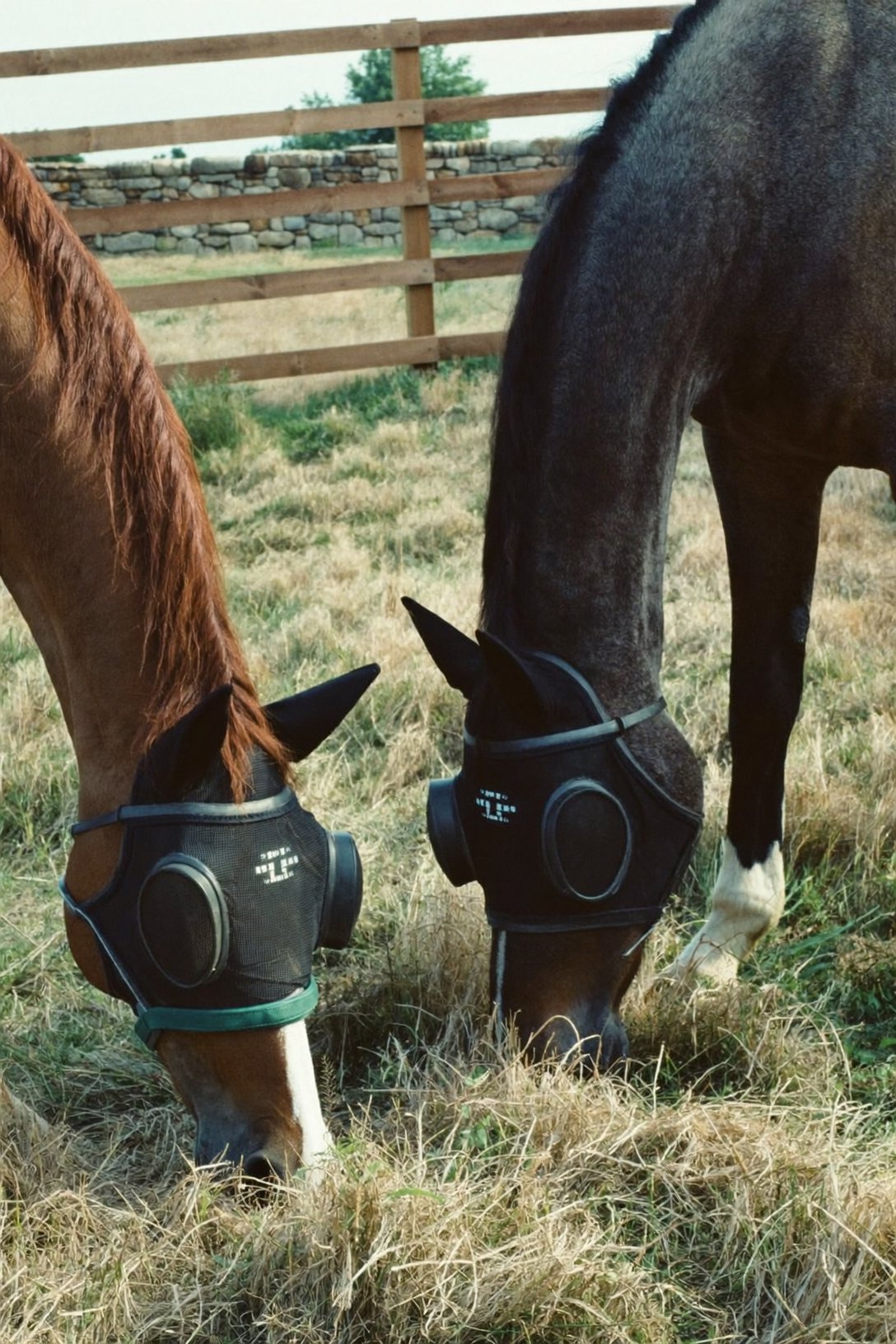
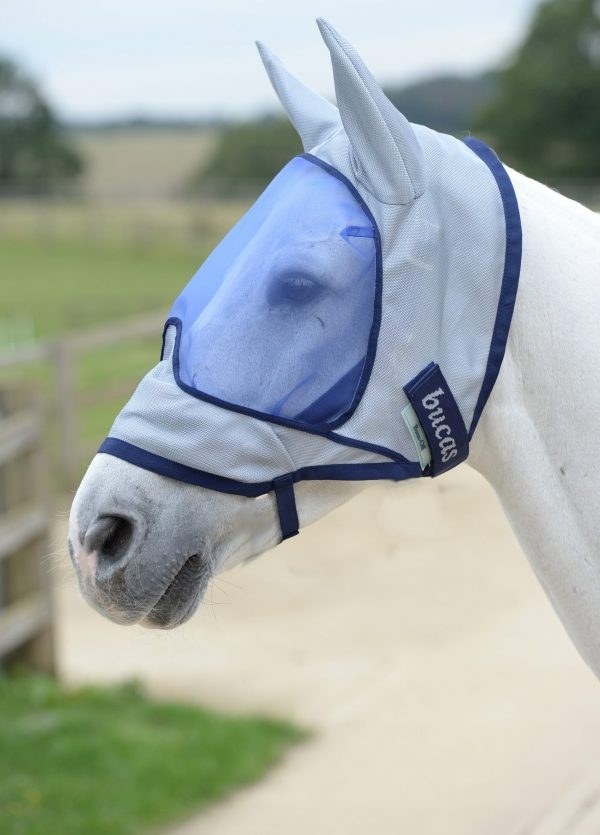
A fly mask is the part of the kit that earns its place fastest. It keeps flies away from the eyes, where they cause weeping, irritation and infection, and most masks also carry a UV rating that protects the eyes and the skin around them. Versions with ears keep midges out of the ears. Versions with a nose flap shade a pink muzzle. The mask must sit clear of the eye, with the mesh held away by darts or a stiffened shape, and it must come off every day so you can check for rubbing at the cheek and under the jaw. A mask that is put on in April and looked at in September has usually left a mark.
Sweet itch is a different problem
Sweet itch is not a fly nuisance but an allergic reaction to the bites of midges. Affected horses rub the mane, tail and belly raw, and the problem returns every season. Management is about preventing the bites rather than treating the itch afterwards: a sweet itch rug covers far more of the horse than a fly rug, with a fine, close-woven fabric from ears to tail and a belly section, and it needs to go on before the midges arrive and stay on through the season. Stabling at dawn and dusk, when midges are most active, helps. Because this is a skin condition with a medical side, the diagnosis and any treatment belong with your vet. The rug is the part you can control.
- Closer-woven fabric that midges cannot bite through, rather than open mesh
- Full coverage: neck, ears, belly and tail flap as standard
- On early, before the season, and worn throughout it
- Checked daily for rubbing, because it is worn far more than a fly rug
Sun and pale skin
Sunburn shows up first on pink muzzles, white blazes and socks, and on greys and other pale horses. A fly mask with a nose flap is the simplest shade for the muzzle. A fly rug with a stated UV rating protects the back and, in full-neck form, the neck. For skin that still burns, sun protection products made for horses exist and are used on the muzzle and around the eyes. Use products intended for horses and follow the label. A horse that burns repeatedly on the same patch, or whose skin changes in a way that is not simple sunburn, should be seen by a vet, since some skin changes on pale horses need attention beyond shade.
Fitting, checking and care
Fly rugs and sweet itch rugs are sized like turnout rugs, in the same feet-and-inches or centimetre system, so a horse that wears a 6’3″ turnout usually wears the same in mesh. Our product pages carry a converter and a measuring guide. Fit matters more in a light rug than a heavy one, because mesh that flaps invites rubbing and tears. Check the shoulders, the withers and the tail flap after the first few days. Mesh washes at low temperatures and dries fast, do not tumble it. Repair small tears early, because flies find a hole in a day and a horse turns it into a rip in a week.
A fly rug that fits and comes off for a daily check will do a whole season. One that flaps will be in the bin by July.
Start with a fine-mesh fly rug and a fly mask that fits. Add a sweet itch rug, early and with your vet involved, if your horse reacts to midge bites. Add shade and horse-specific sun protection for pink skin. Check everything daily.
General editorial guidance, based on manufacturers’ published construction and fit information and standard equine welfare advice. Sweet itch and any persistent skin change should be assessed by a vet.