Cooling a Hot Horse: Keep the Water On
Hose, scrape, repeat. Scraping pulls the heat off. That is the habit on almost every wash bay. The measurement says scraping does not speed up cooling.
In 2020 a Japanese research team led by Yuji Takahashi compared five ways of cooling Thoroughbreds after work in hot, humid conditions and published the results in the Journal of Equine Veterinary Science. Continuous hosing with cold water cooled the horses fastest. Whether the water was scraped off or left on made no significant difference; scraped horses tended to take slightly longer. Walking and a fan were the slowest. What the study did, what it found, what it means on a Mallorca wash bay in August, and the one thing the scraper is still good for.
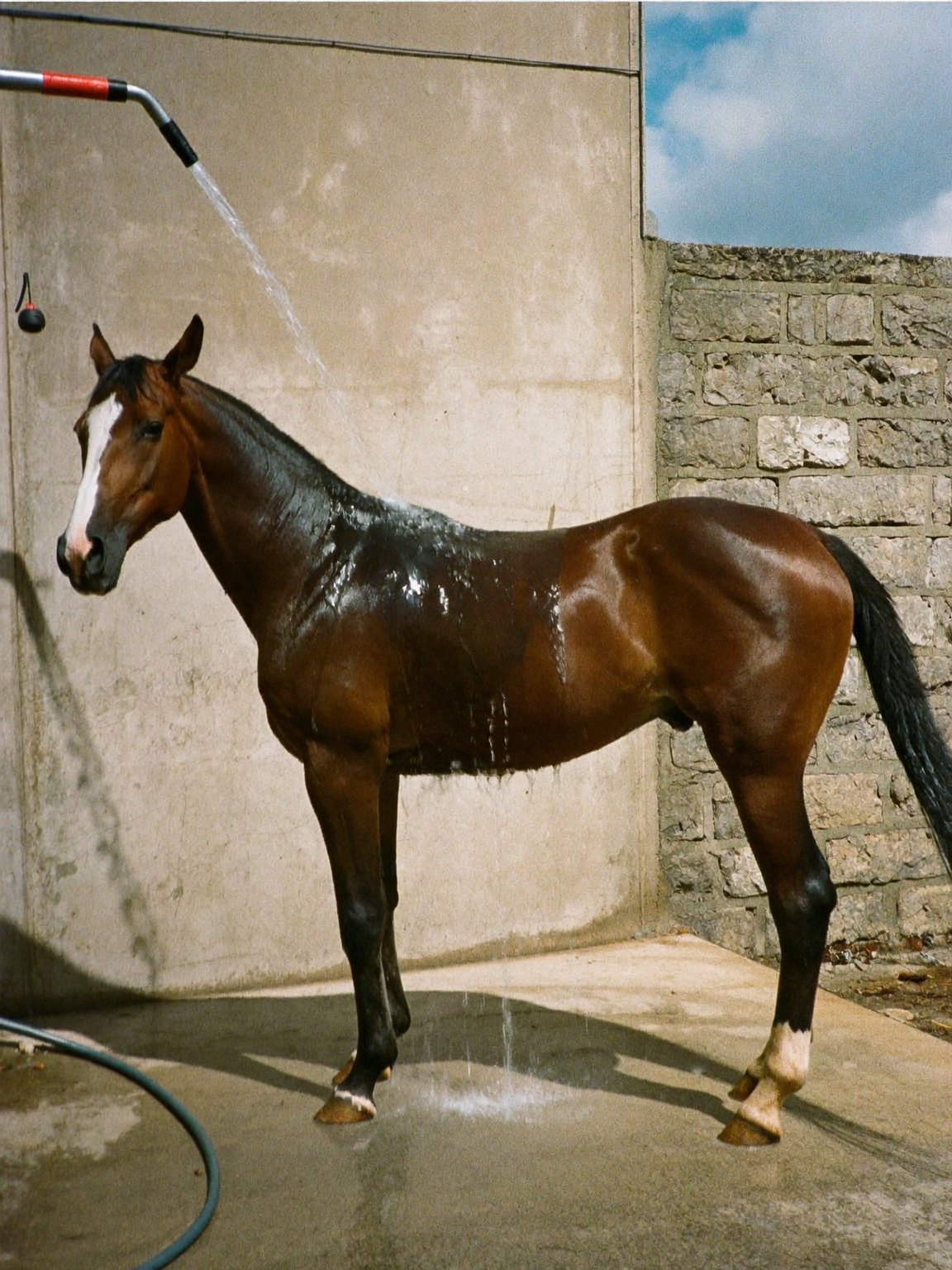
Keep the hose running over neck, chest and hindquarters until the breathing settles. Pouring, waiting and scraping is the slow version of the same thing.
What the study did
Takahashi and colleagues took five Thoroughbreds and exercised them on a treadmill in hot and humid conditions until the temperature in the pulmonary artery reached 42 degrees. They then cooled them by one of five methods and measured how fast it fell: walking only; a fan; intermittent cold water (about 10 degrees) while walking, scraped off; the same with the water left on; and continuous tap water (about 26 degrees) while the horse stood.
It was a small, controlled comparison: five horses on a treadmill in a wet-bulb globe temperature (WBGT) of 31.8 degrees, run until they were properly hot. That comes close to a sport horse after hard work on a summer afternoon, but it is not the same situation, and five horses are few.
What it found
Continuous water was the clear winner. The horses under the running shower cooled fastest, faster than the intermittent methods. Cold water left on the horse and cold water scraped off did not differ significantly; if anything, the scraped horses took slightly longer to get below 39 degrees (P = 0.06, not significant). Walking alone and the fan were the slowest.
Water left on and water scraped off did not differ significantly. The scraper was never the cooling.
Why scraping does not matter
The old reasoning was that water sitting on the coat warms up and insulates the horse, so it must be removed before the next application. The measurement shows the warm film is not the problem: what cools the horse is the constant exchange of warm water for cold at the skin, and the fastest way to get that is to never stop. Scraping between applications interrupts the exchange without adding anything. Whether cold water on hot muscle causes cramp or tying-up was not examined in the study.
The scraper keeps one job: at the end, once the breathing has settled and the horse is going back to a stable or a paddock, scraping the surplus off means the horse dries faster and the wash bay is not walked through the yard. That is a tidiness argument, not a cooling one.
The wash-bay routine
After a summer ride on Mallorca, straight to the wash bay before the untacking is finished if the horse is blowing. Hose running, not the bucket. Neck, chest, between the front legs, the hindquarters and the inside of the thighs, where the big blood vessels sit near the skin. Keep the water moving over the horse and keep it coming, and watch the breathing rather than the clock. When the flanks stop heaving and the nostrils settle, the job is done; a last pass with the scraper and the horse goes to shade with water.
A horse that does not like the hose is cooled the same way with buckets thrown continuously, one after the other, rather than one bucket and a wait. Cold tap water is enough; the island’s summer tap water is not cold, and the study used tap water. Ice is not needed for a horse that is merely hot; it belongs to the emergency below, and even then water in quantity beats ice in small amounts.
A fan helps a horse standing in a stable through a hot afternoon, because moving air lets sweat evaporate. It is a poor substitute for water on a horse that has just worked. Use the fan after the hose, not instead of it.
When cooling is an emergency
A horse whose breathing does not settle within minutes of stopping, that sweats weakly or not at all, or that is dull, wobbly or unwilling to move, is in heat stress. Then the routine above becomes an emergency: shade, water on the big muscles continuously, and somebody on the phone to the vet while it runs. Do not stop cooling to wait and see. The heat article in this series covers why a horse gets there so much faster than the person riding it.
For the ordinary hot horse, the study’s message is a relief. The fastest method is also the simplest: a hose, a tap and no interruptions.
The fastest cooling method is also the simplest one. A hose, a tap and no interruptions.
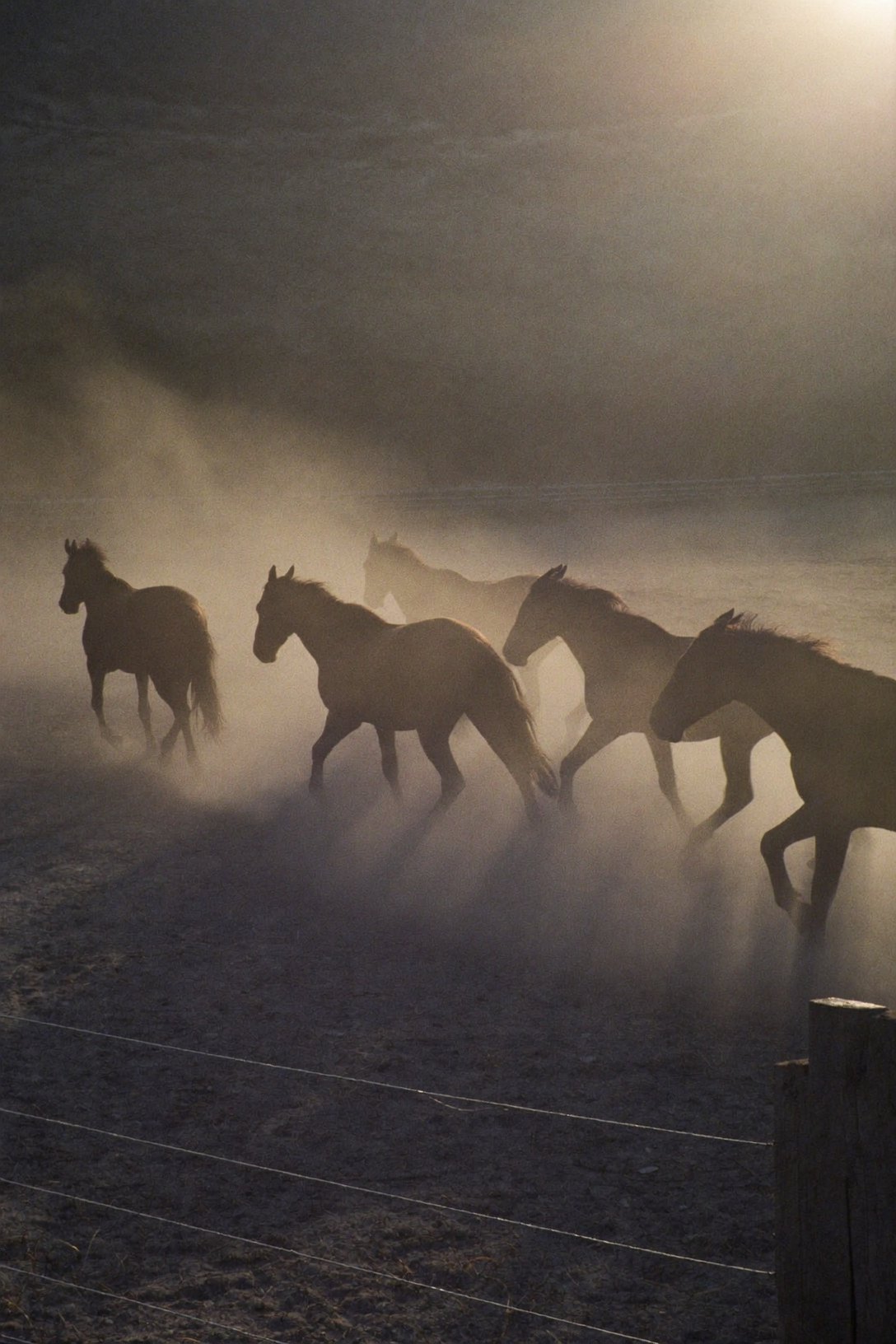
- Takahashi et al. (J Equine Vet Sci, 2020) compared five cooling methods on Thoroughbreds in hot, humid conditions.
- Continuous hosing with cold water cooled fastest; water scraped off and water left on did not differ significantly; walking and a fan were slowest.
- Keep the hose running over neck, chest and hindquarters until the breathing settles; the scraper is for drying at the end, not for cooling.
- Cold tap water on a hot, working horse was used directly in the study; ice is not needed for a horse that is merely hot.
- Breathing that does not settle, weak sweat, dullness: continuous water and the vet on the phone while it runs.
General editorial guidance, not veterinary advice. A horse whose breathing does not settle, that sweats weakly or is dull after work in the heat needs continuous cooling and a vet at once.