The Hoof After the Summer: Hard Ground, Dry Horn
By the end of September a horse on Mallorca has spent five months on ground that barely saw rain. The foot shows it: chipped edges, fine cracks, a sole that feels every stone on the track. What to look for now, what the farrier can do about it, how to protect a foot on stony going, and where hoof dressings fit in.
Read the feet now, keep the farrier cycle short, protect the sole on stony ground, and avoid daily wet-and-dry cycles.
What a dry summer does to horn
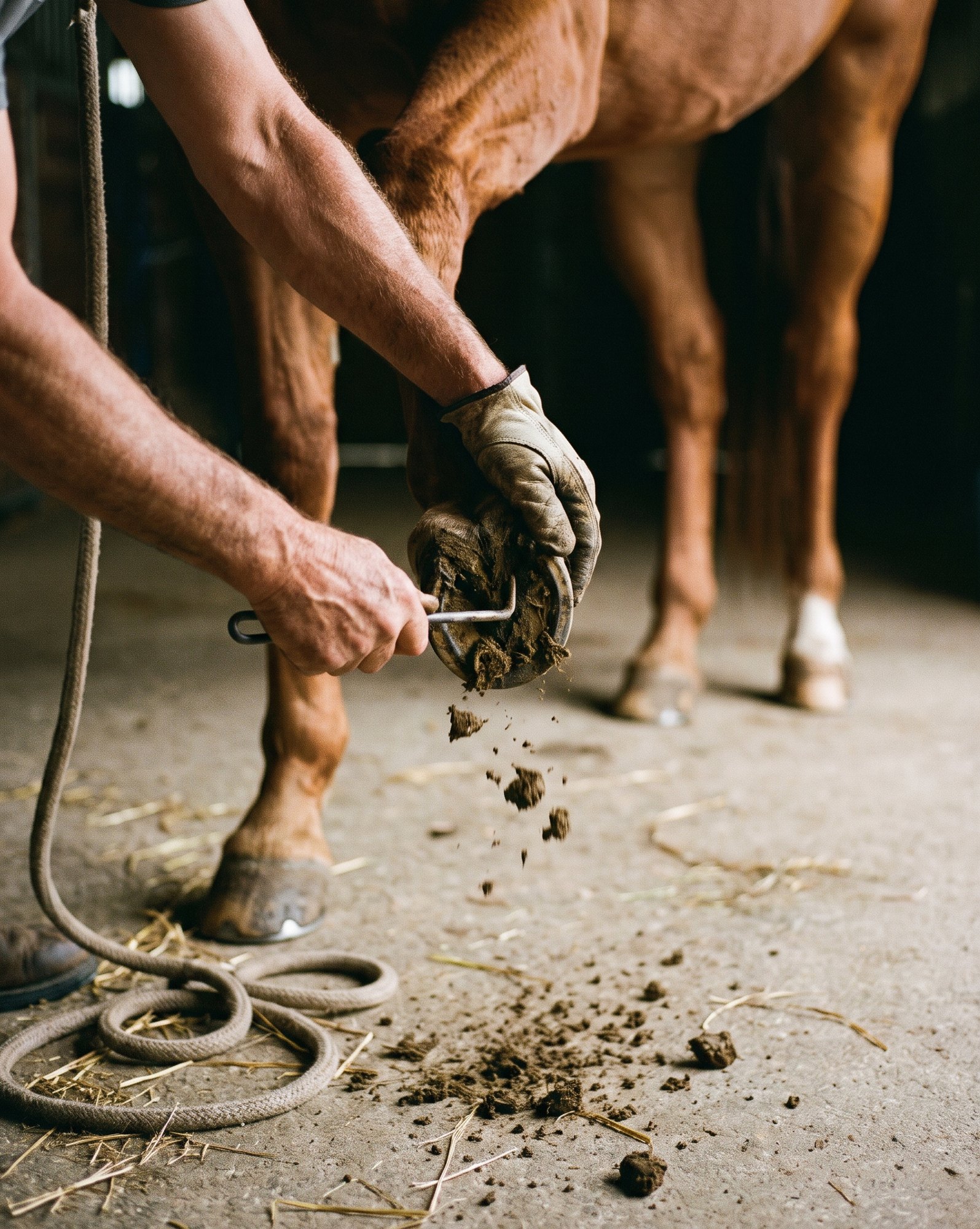
Horn holds water, and it behaves differently with too much or too little of it. The farrier Travis Burns, MSc, CJF, puts it plainly in The Horse: prolonged exposure to water or excessive dryness both weaken hoof horn. After a Mallorca summer the second of the two is the problem. The wall turns hard and loses some of its flexibility, the edges chip where the foot meets stony ground, and fine cracks open at the toe and quarters.
This is the season the foot is at its driest. In a few weeks the first autumn rain will reverse the picture, and the soft, wet foot brings its own problems, covered in Abscess Season. A foot that goes into the wet season with a tidy wall and no open cracks handles that change better.
What to check now
Pick the feet out and look at them in good light, from below and from the side. Four things matter at this time of year.
- Chips at the edge of the wall. A few small chips on a barefoot horse are ordinary wear. Chips that run up into the wall, or a toe that keeps breaking away, mean the foot needs attention before the next scheduled visit.
- Cracks. Shallow surface cracks, the kind that start at the ground and stop short, are common after a dry summer and mostly cosmetic. A crack that starts at the coronet, or one that runs the full depth of the wall and moves when the horse loads the foot, is a farrier matter now.
- Sole bruising. Red or purple staining in the sole, or at the angle of the heel, shows where stones have done their work. A horse that shortens its stride on the track and looks comfortable in the sand arena is telling the same story.
- The white line. A widened, stretched or crumbling white line lets grit in, and the rain that follows will carry it further. Worth pointing out to the farrier.
The year-round basics of reading a foot, from the digital pulse to what a balanced foot looks like, are in Horse Hoof Care: What Owners Should Actually Know.
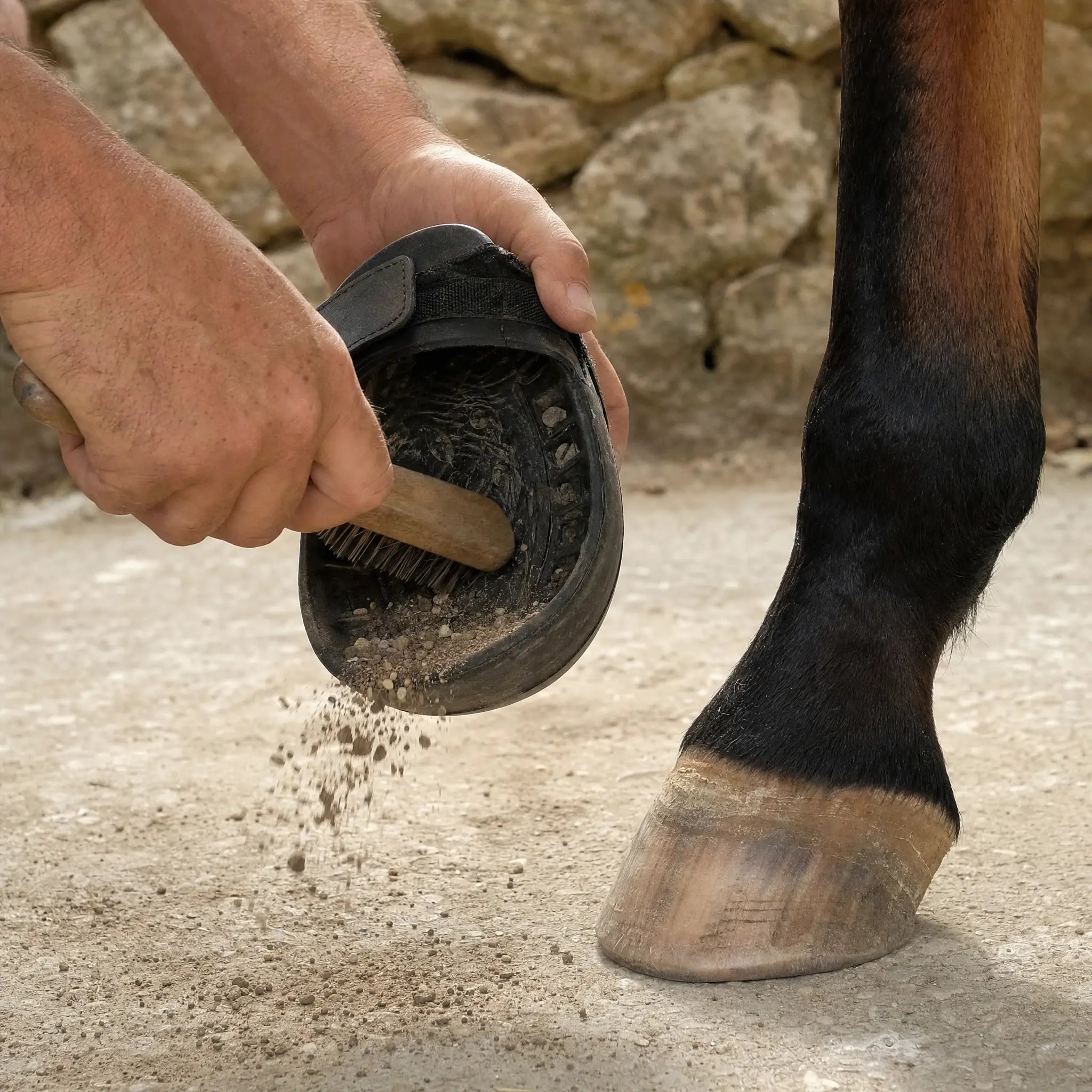
 In the shopShires EquestrianEzi-Groom Hoof Pick with Brush – RedView at TRI Equestrian →Affiliate link · Sold and shipped by TRI Equestrian. EU delivery €25, free from €150 (according to the retailer, checked 27.09.2026).
 The full basketThe hoof courseReady packed, above the retailer's free-delivery threshold, every item swappable.See the basket →
The farrier cycle in autumn
A dry, brittle wall chips most where it is long. Keeping the cycle short, usually four to six weeks for a horse in regular work, keeps the wall short and the balance intact, and it gives the farrier the chance to deal with a crack before it grows. Cracks can be managed with a targeted trim, with shoeing and, where needed, with a patch; which of these a foot needs is the farrier’s call.
The same applies in reverse to lost shoes. A brittle wall holds nails less reliably, and on the island a lost shoe can mean days before the farrier is back. Keeping to the cycle through October is the cheapest protection.
Protecting the sole on stony ground
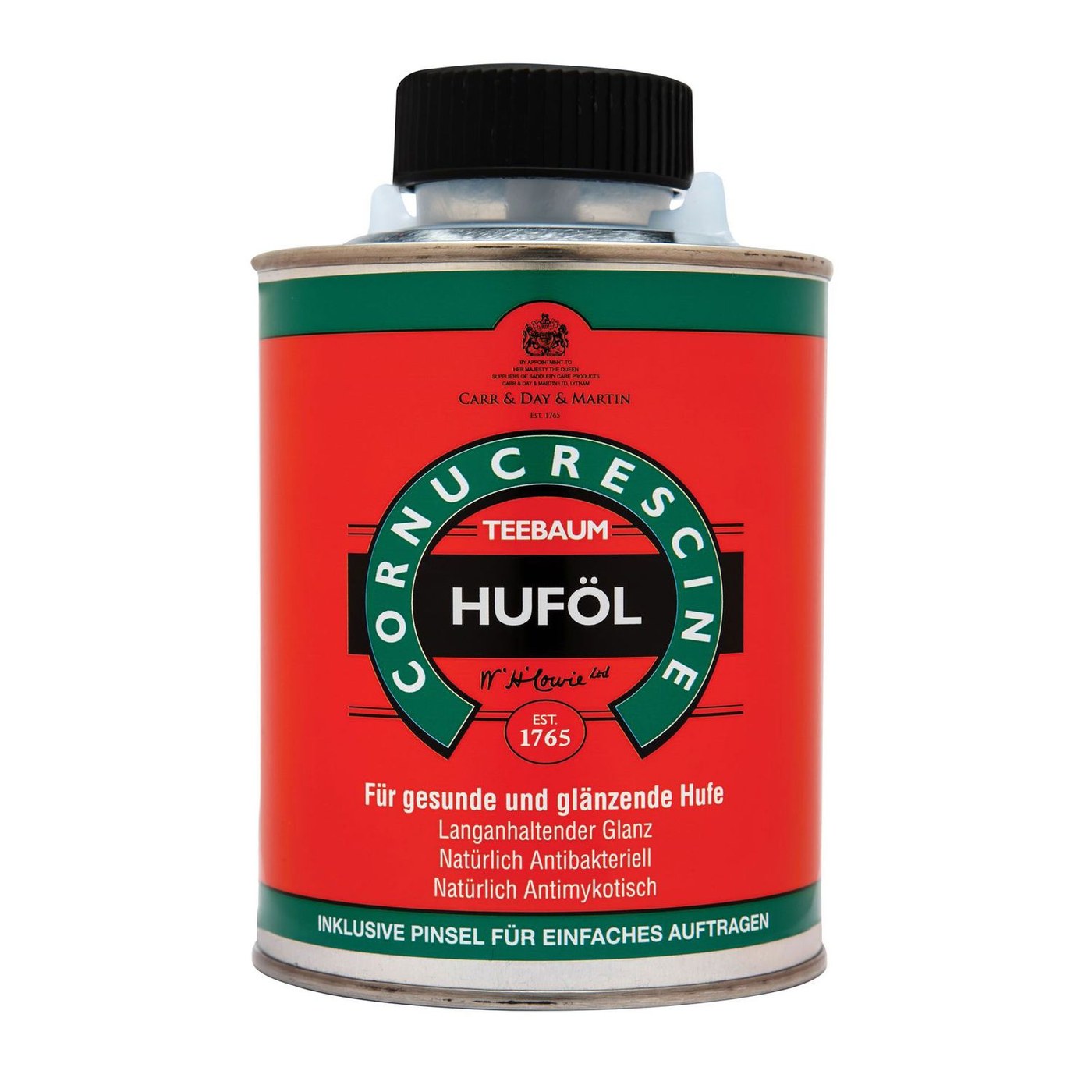
Many of the island’s riding tracks are stone, gravel and hard-baked earth. A barefoot horse that copes well in the arena can be footsore on them after a dry summer, and a shod horse can bruise the sole where the shoe does not protect it.
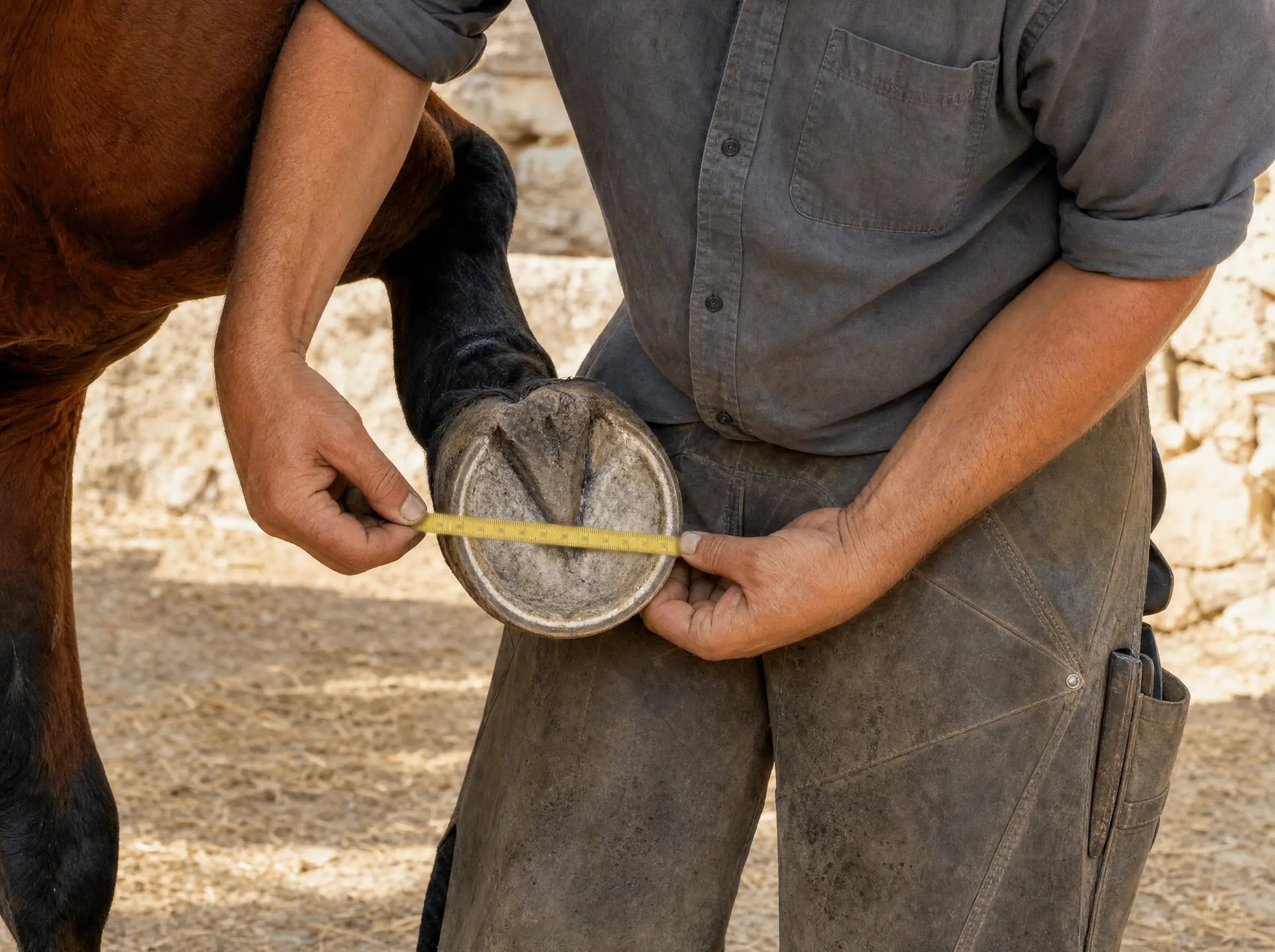
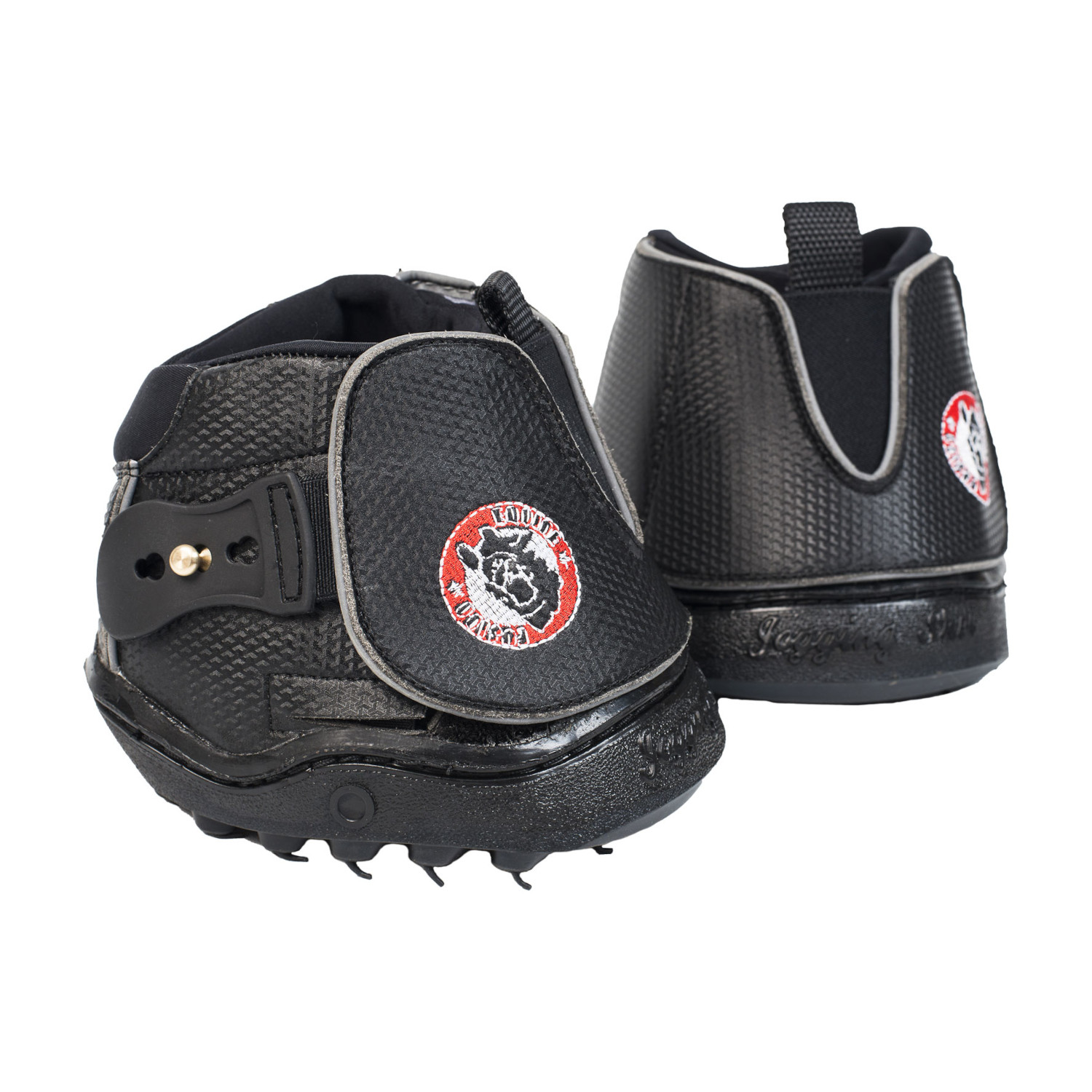
For the barefoot horse, hoof boots are the usual answer for stony rides: the foot stays barefoot in the field and gets protection where the ground demands it. Fit matters more than brand, so measure the freshly trimmed foot and follow the maker’s size chart. For the shod horse with bruised soles, farriers can fit a pad under the shoe, often with a soft packing beneath it.
Which option suits a particular foot is a question for the farrier or equine podiatrist. On Mallorca, the equine podiatrist and farrier Rafael Forteza, profiled in our Mallorca Hub (Rafael Forteza: Farrier and Podiatry on Mallorca), lists barefoot work and glue-on shoes among his services, alongside therapeutic shoeing (provider information).
Hoof dressings, honestly
The shelf of hoof oils, balms and hardeners is long, and the evidence behind them is mixed. In the same The Horse article, Burns describes a hoof moisturiser as a help for dry, cracking horn and a hardener for weak, brittle horn. Both are long-term support, not a repair: they do not close a crack that is already there.
The more important rule concerns water. As veterinarian Amy Rucker explains in The Horse, moisture expands the hoof wall and it contracts again as it dries. Repeating that cycle every day, hosing the legs after every ride and letting the feet bake again an hour later, strains the wall more than steady dryness does. If a horse stands in water at the trough or is hosed daily, a dry place to stand afterwards matters more than any product.
 In the shopKeratexKeratex Hoof Moisturiser – 500 mlView at TRI Equestrian →Affiliate link · Sold and shipped by TRI Equestrian. EU delivery €25, free from €150 (according to the retailer, checked 27.09.2026).
 AlternativeCarr & Day & MartinCDM Vanner & Prest Hoof Oil – 500mlView at TRI Equestrian →Affiliate link · Sold and shipped by TRI Equestrian. EU delivery €25, free from €150 (according to the retailer, checked 27.09.2026).
Next summer’s foot starts now
Hoof wall grows at roughly 6 to 10 mm a month, and a whole new capsule takes nine to twelve months to reach the ground. Whatever changes now, a new trim routine, a feed change, a supplement, shows in the foot over seasons, not weeks. If the feet are poor year after year, that is a conversation with the vet or an equine nutritionist before it is a product decision.
 In the shopHorse FirstHorse First Hoof First Horse Supplement – 750 gView at TRI Equestrian →Affiliate link · Sold and shipped by TRI Equestrian. EU delivery €25, free from €150 (according to the retailer, checked 27.09.2026).
 AlternativeTRMTRM Biotin Equine Hoof Condition Supplement – 1 kgView at TRI Equestrian →Affiliate link · Sold and shipped by TRI Equestrian. EU delivery €25, free from €150 (according to the retailer, checked 27.09.2026).
Before the rain
Two small preparations pay off in October: a hoof-soaking sock and a poultice in the tack room before the first abscess, and the farrier’s and vet’s numbers where the yard can see them. The rest of the wet season is in Abscess Season.

- After a dry summer the wall is hard, chips at the edges and shows fine cracks. Check the feet in good light now.
- Surface cracks are common; a crack from the coronet or through the full wall belongs with the farrier now.
- Keep the farrier cycle at four to six weeks through the autumn; a short wall chips less and holds a shoe better.
- On stony tracks, hoof boots protect a barefoot horse; a pad under the shoe protects a bruised sole.
- Dressings support horn over time; daily wet-and-dry cycles do more harm than a dry foot.
The Horse, “Horse Hoof Capsule Conditions” – Travis Burns, MSc, CJF, on moisture, dryness, cracks, hardeners and moisturisers: thehorse.com (retrieved 27.09.2026)
The Horse, “4 Horse Hoof Hardening Tips” – Amy Rucker, DVM, on moisture expanding and contracting the wall: thehorse.com (retrieved 27.09.2026)
EquiMallorca, Horse Hoof Care: What Owners Should Actually Know (growth rate, farrier cycle, crack types)
EquiMallorca, Abscess Season: The Wet-Weather Hoof on Mallorca
Rafael Forteza service list: provider websites as documented in the Hub profile (podologiaequina.es, herradormallorca.com)
General editorial guidance, not veterinary advice. Lameness, heat in the foot, a strong digital pulse or a crack that bleeds need the farrier or vet the same day. Product links on our page are affiliate links; the price is the same for you.