Riding Boots for Autumn and Wet Conditions: Tall, Paddock, Yard and Rubber
The boot you ride in and the boot you muck out in should not be the same boot.
Autumn is when a summer’s dust turns to mud and the question stops being which tall boot looks best and becomes which footwear survives the season. This guide sorts riding boots by what they are for, explains what waterproof actually means on a boot, and says where a rubber boot makes sense.
Ride in a leather boot with a heel. Do the yard in a waterproof boot, keep them apart.
Waterproof leather buys you the wet weeks. Rubber buys you the puddles, at the cost of breathability.
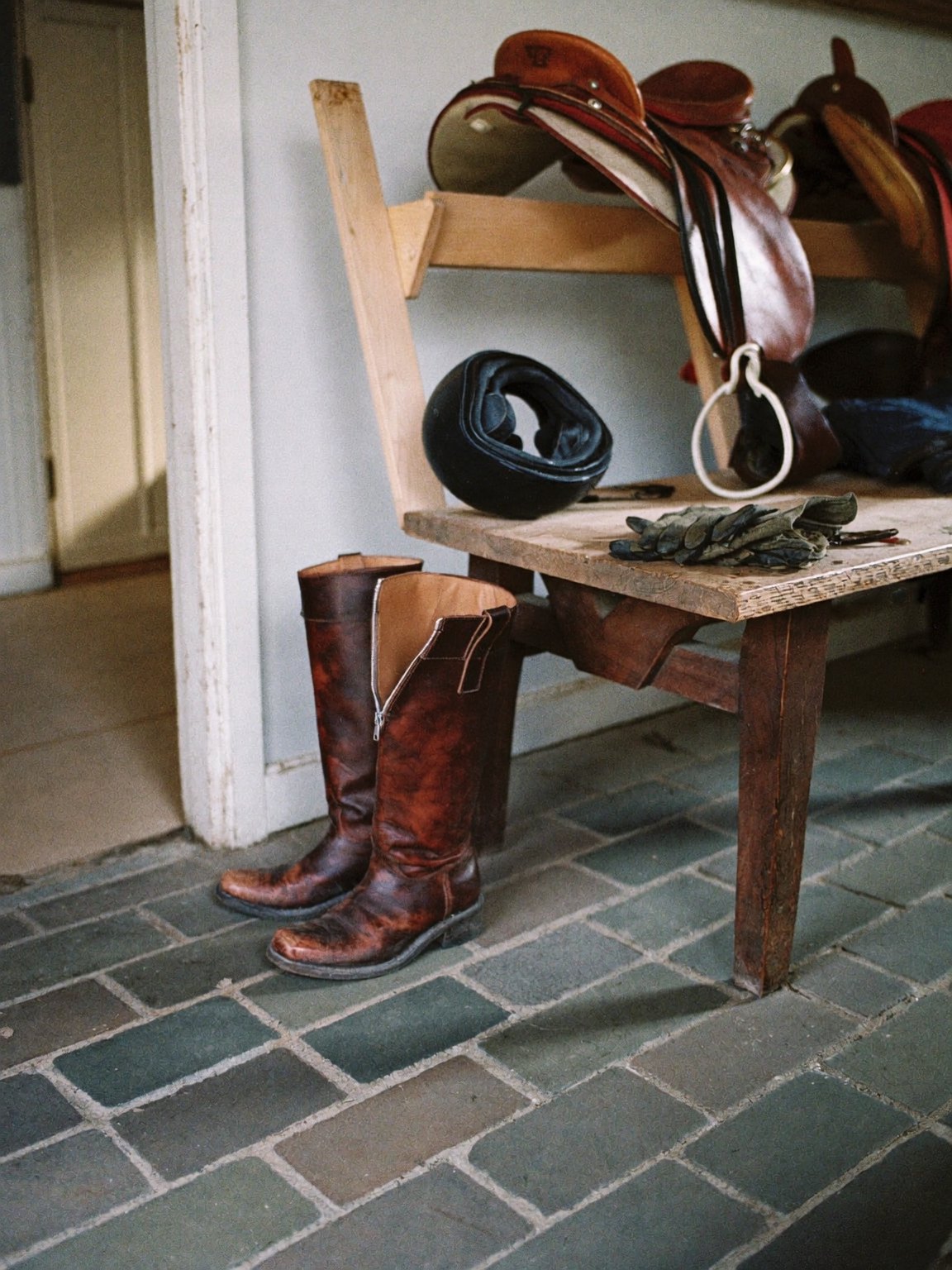
Most riders arrive at autumn with one good pair of leather boots and use them for everything. By November the zips are stiff with grit, the leather has dried hard from repeated soakings and the boots that were the outfit have become the problem. The fix is not a better boot. It is the right number of boots.
Four jobs, four boots
Riding footwear does four different jobs: riding in an arena, riding out on tracks and roads, working on the yard in mud and water, and standing around in the wet. No single boot does all four well. A tall leather boot is superb for the first, fine for the second, poor for the third and ruined by the fourth. The rest of this guide takes the types in turn. The decision is usually two pairs, one for the saddle and one for the ground, rather than one expensive pair for everything.
- A defined heel of roughly two to three centimetres, so the foot cannot slide through the stirrup
- A sole slim and smooth enough to leave the stirrup freely in a fall
- No deep lugs or wide toe box that can wedge in the iron
- Enough ankle flex to keep the heel down without fighting the boot
Tall boots: field or dress
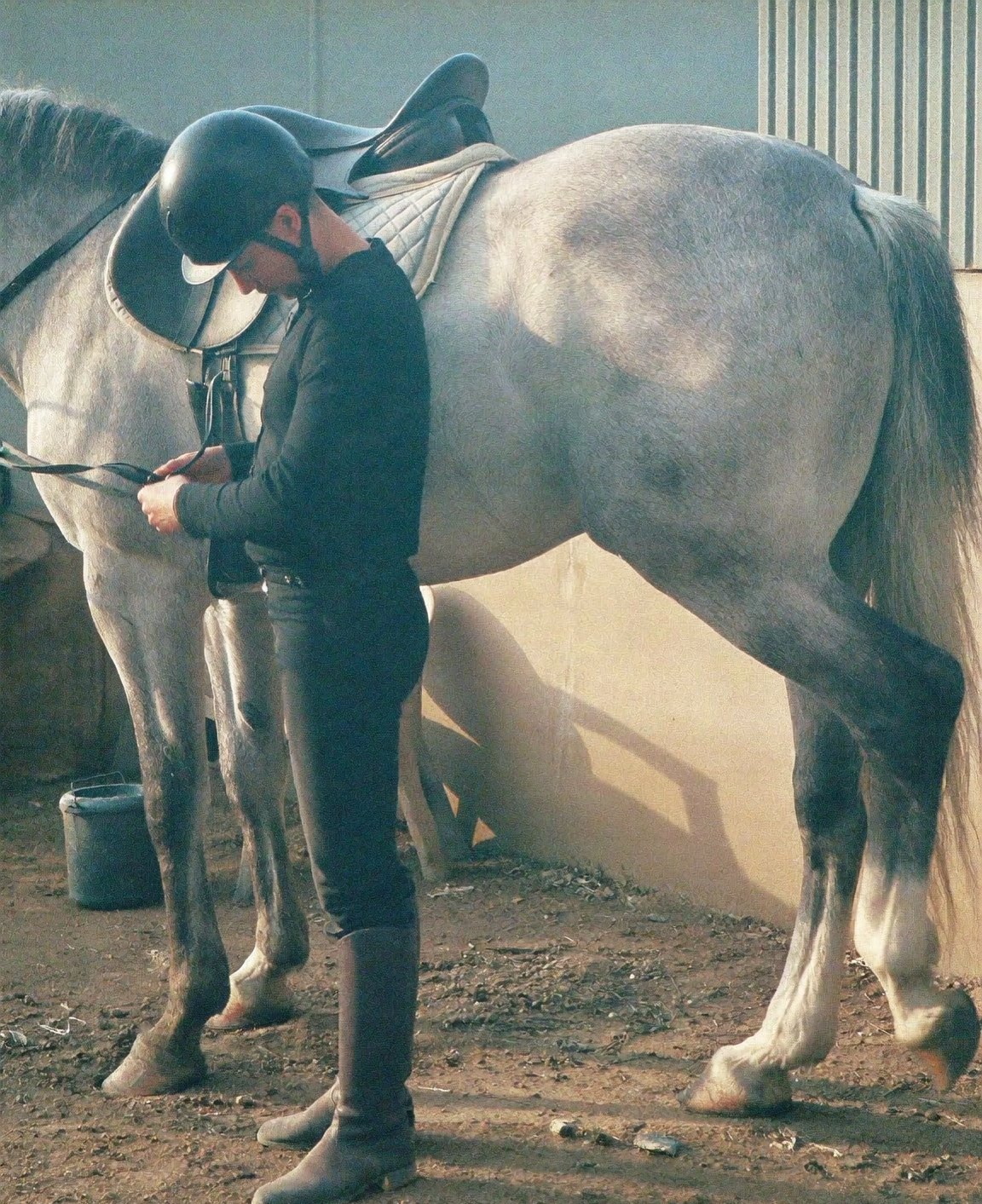
Tall leather boots come in two cuts. Field boots have laces at the ankle, which lets the ankle flex and the heel drop. They are the jumping and eventing boot and the more forgiving of the two for everyday riding. Dress boots have no laces and a stiffer, cleaner line. They are the dressage boot and take longer to break in. Both need a proper fit in height and calf as well as foot, which is why our Ariat and EGO7 pages carry a size converter and a calf guide rather than a single number. In autumn a tall boot is at its best in the arena and on dry hacks. It is not the boot to feed in, wash a horse in or cross a flooded gateway in.
A tall boot is an arena boot that tolerates the yard. It is not a yard boot that happens to look good in the arena.
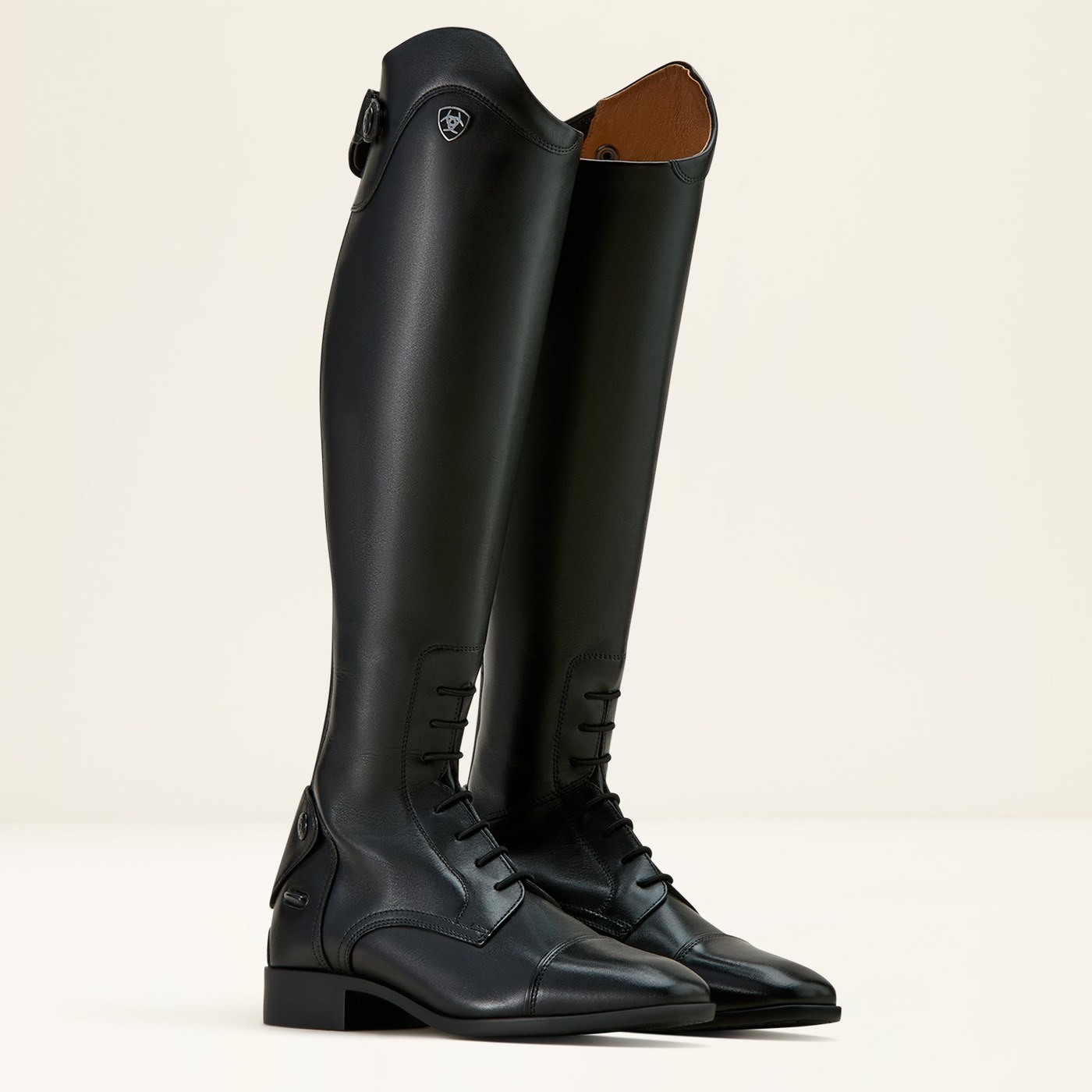
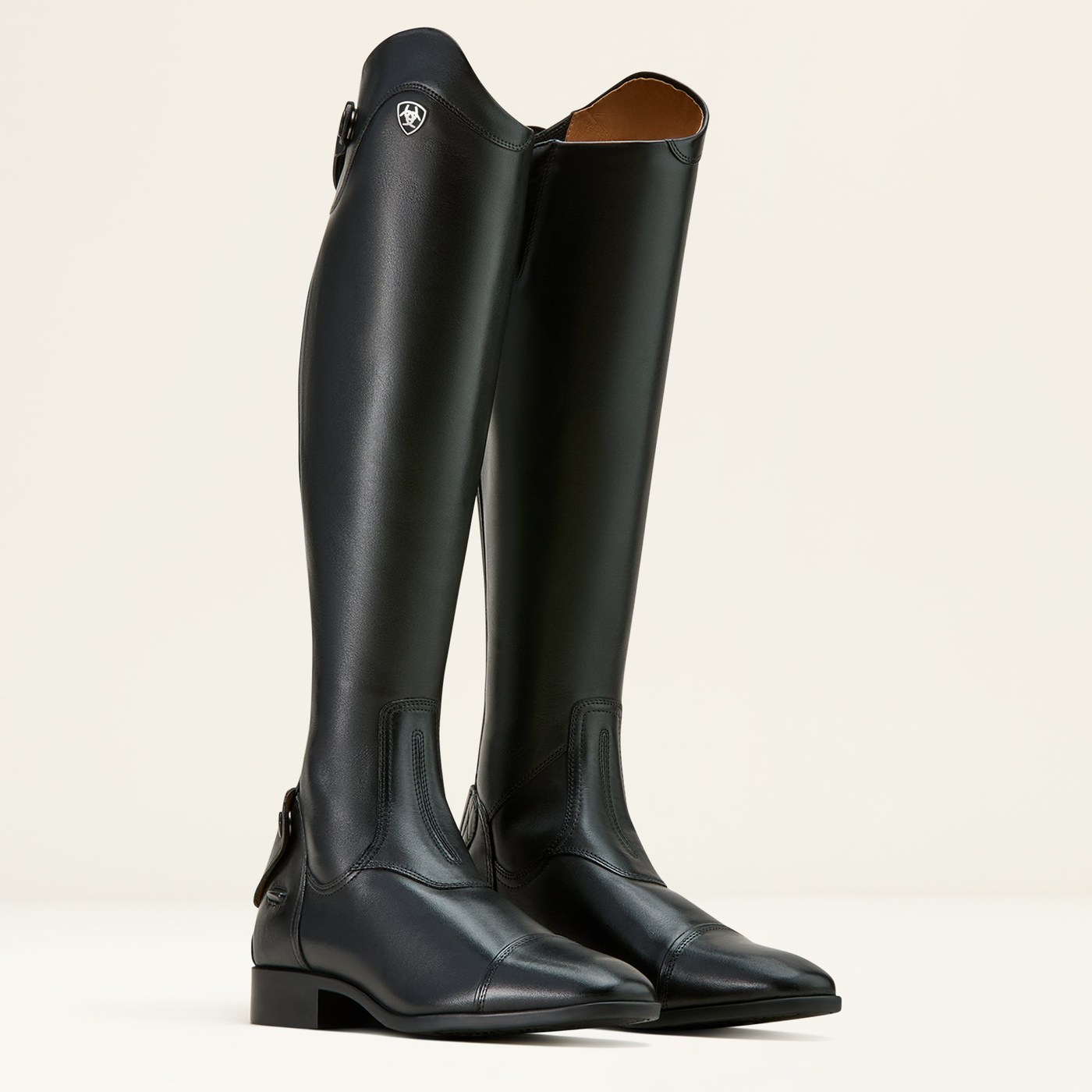
Paddock boots and half chaps
An ankle-height paddock boot with a separate half chap does the same job as a tall boot for a fraction of the cost and with far more flexibility. The boot goes on and off in seconds, the chap protects the calf from the leather, and on the ground you can walk, drive and muck out without the stiffness of a tall shaft. For a rider who spends more time at the yard than in the saddle, or who rides several horses a day, a good paddock boot is often the better main boot, with the tall boots kept for competition. Zip paddock boots are the everyday choice. Laced ones give a closer fit for narrow feet. In the wet season a paddock boot is still leather and still needs drying and care, but it recovers from a soaking faster than a tall shaft does.
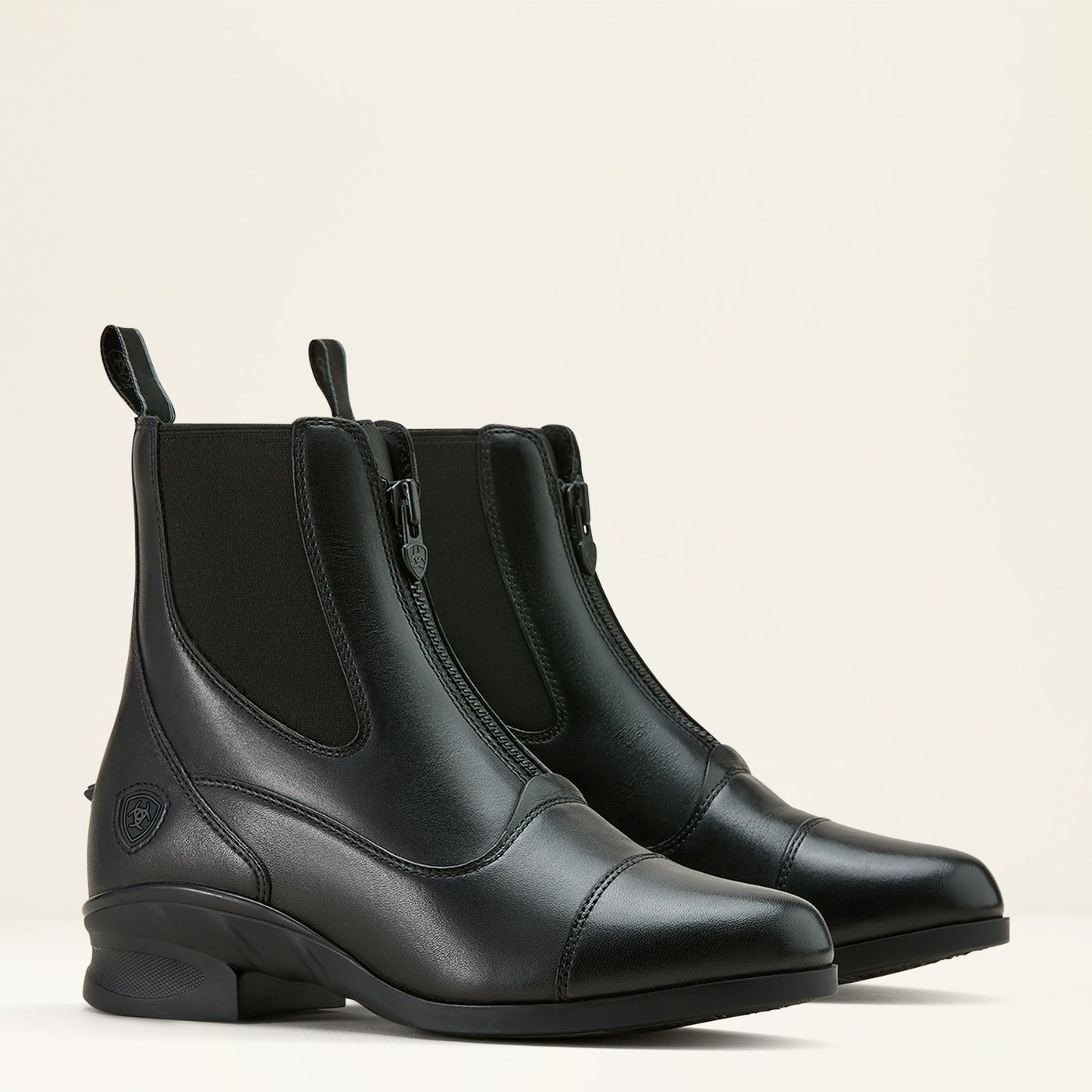
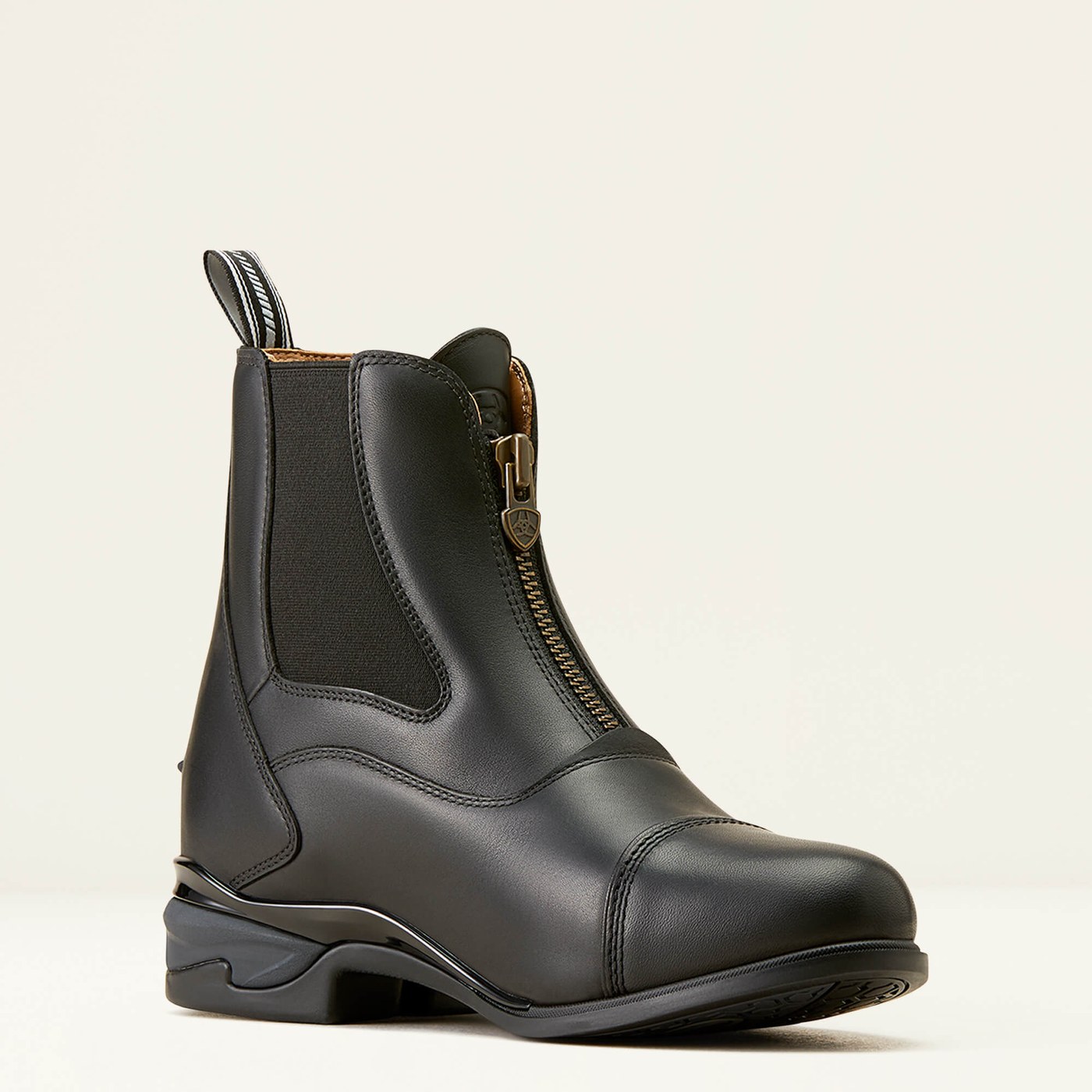
Yard and country boots
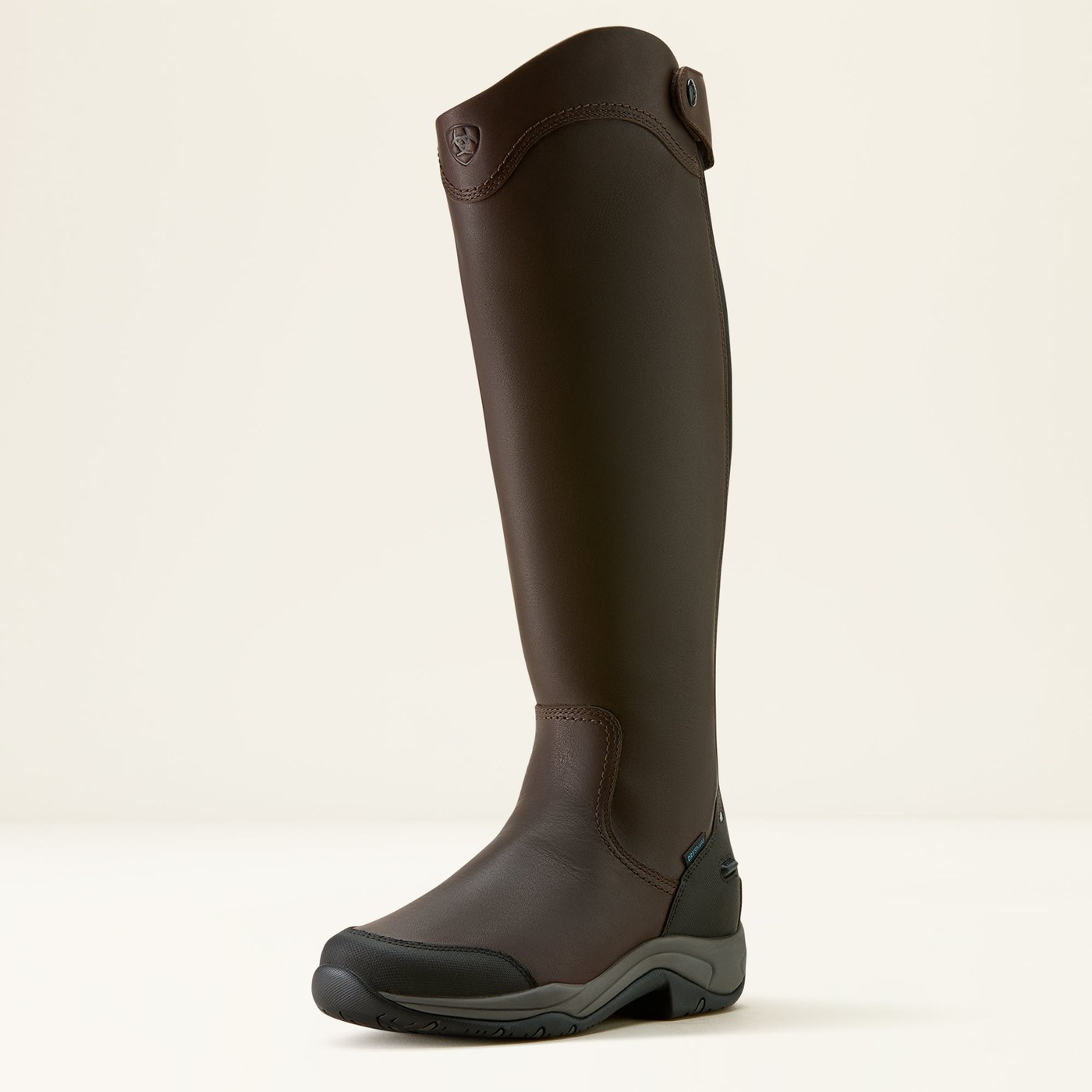
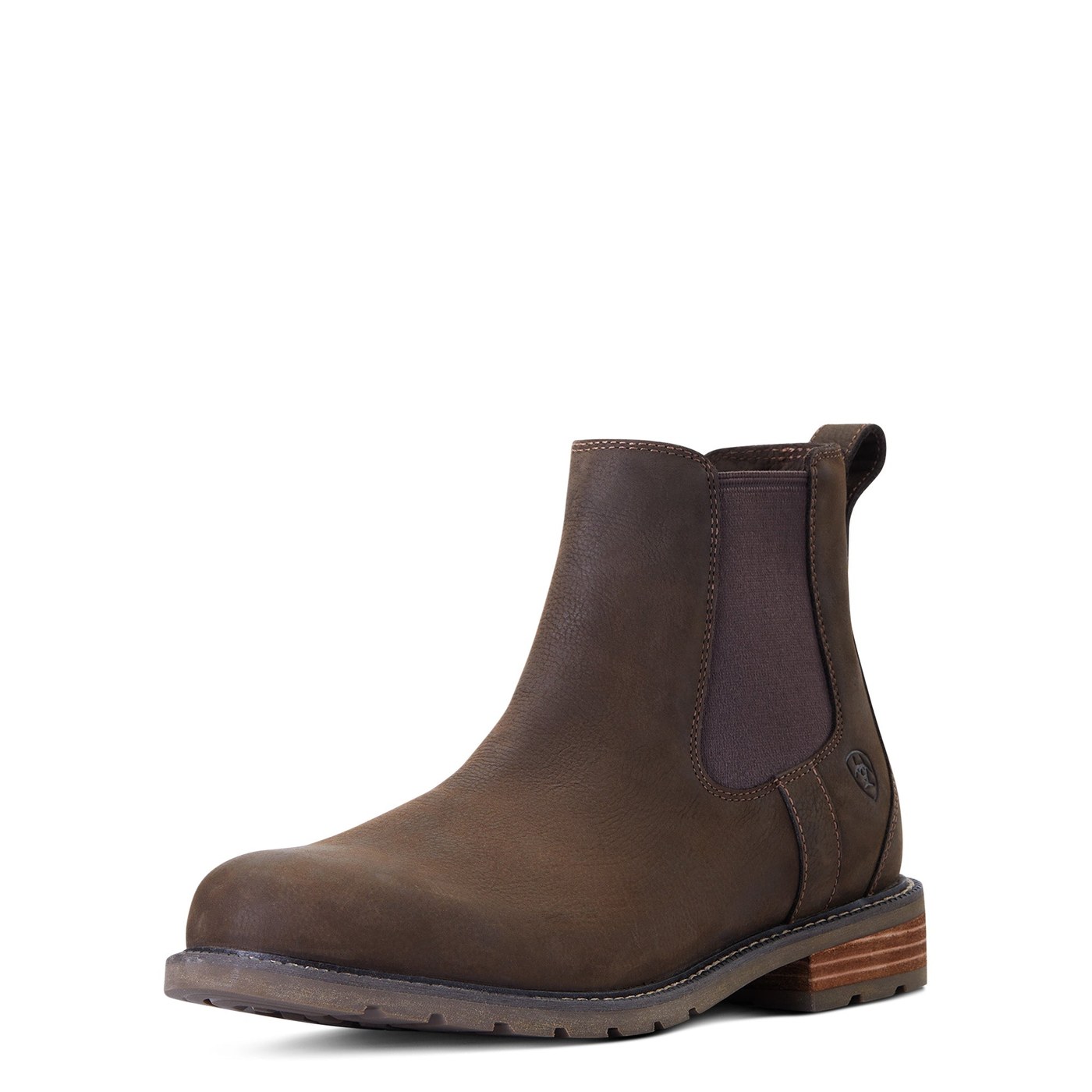
This is the boot that saves the other two. A waterproof yard or country boot is built with a membrane bonded inside the leather, so water that soaks the surface does not reach the foot, while the boot still breathes better than rubber. Tall versions keep trouser legs dry through wet grass and puddles. Ankle and Chelsea versions are quicker on and off for a quick check on the horses. The trade-off is that a membrane boot is warmer than an unlined leather boot, which matters less in a Mallorca autumn than it would in July. Most country boots have enough heel to hack in, so one waterproof tall boot can cover the yard and the wet-weather ride, leaving the leather riding boots for the arena.
- A bonded membrane (Ariat call theirs H2O) keeps water out through the leather. Seams and zips are the weak points
- Waterproof leather still needs cleaning and conditioning, or it dries stiff and cracks at the flex point
- Full-grain leather with a waxed or oiled finish sheds water longer than a smooth dress leather
- A rubber rand or reinforced toe stops the leather soaking from the ground up
Where rubber makes sense
Rubber riding boots are the autumn search term of the season for a reason: they are cheap, completely waterproof and indifferent to mud. They are the right boot for wet yard days, flooded fields and short rides in the rain. They are the wrong boot for anything long or warm, because rubber does not breathe and a foot that sweats in a rubber boot is a cold, damp foot an hour later, and they offer little ankle support. If you buy one, buy it locally where you can check the calf fit, choose a model with a proper riding heel rather than a wellington sole, and treat it as the third boot, not a replacement for leather. Our current riding boots edit covers leather tall, paddock and waterproof country boots. A rubber boot is the one category where a local shop will serve you better than any online selection.
Sizing and care in the wet
Measure before you buy. For a tall boot that means foot length, calf circumference at the widest point over breeches, and the height from the floor to the back of the knee, all in centimetres. The converters on our Ariat pages turn those into the brand’s UK sizing. For any leather boot in the wet season the routine is the same: brush mud off before it dries, wipe salt marks with a damp cloth, dry slowly and away from heaters, stuff with newspaper if soaked, and condition the flex points every few weeks. Zips get a dry brush and a little silicone. A boot treated this way lasts several wet seasons. A boot dried on a radiator lasts one.
Two pairs of boots, each doing its job, outlast one pair doing both.
Ride in leather with a heel, work in a waterproof boot, and keep rubber for the days when nothing else will do. The number of boots matters more than the price of any one of them.
General editorial guidance, based on manufacturers’ published construction and sizing information and standard riding safety advice. Try boots on with the breeches and socks you ride in wherever possible.