A Riding Outfit That Works: What Makes It Good Beyond the Aesthetic
The equestrian look is having a moment. Most of it was designed for a reason.
Breeches, a fitted top, tall boots, a helmet: the outfit that fills every feed each autumn is also, piece by piece, a set of solutions to real problems. Here is what each part actually does, what to look for when you buy it, and how the same clothes get you from the stable to the saddle and back.
Every piece of a riding outfit has a job: grip, stretch, protection, sun or rain. Buy for the job and the look tends to follow.
Why riding clothes look the way they do
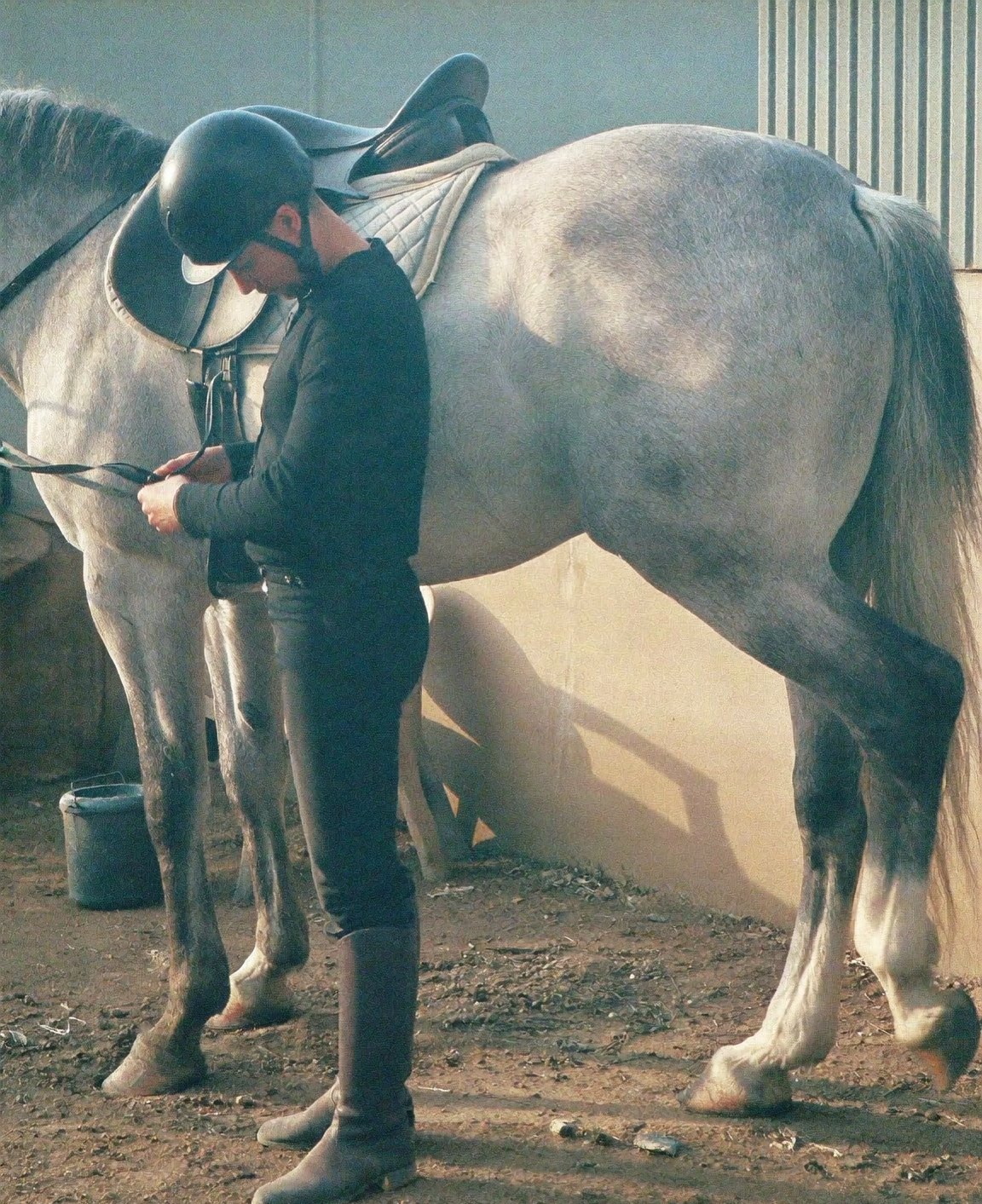
Riding clothing is one of the few wardrobes where almost every detail is functional first and became a style second. Breeches are cut close because loose fabric bunches under the leg and rubs. Riding tops are long in the back because the rider leans forward. Tall boots exist because stirrup leathers pinch calves. The look that circulates every autumn under names like equestrian aesthetic or weekend equestrian is, underneath, a hundred years of small practical decisions.
That matters when you buy it. A piece that copies the look without the function, a breech with no stretch, a boot with a heel too shallow to sit in a stirrup, a jacket that cannot be ridden in, looks the part and fails at the yard. The reverse is also true: kit that does the job well almost always ends up looking right, because the shape follows the movement.
Breeches: grip, stretch and where they wear
The two decisions in a pair of breeches are the grip and the fabric. Grip is either at the knee (knee patch) or across the whole seat and inner leg (full seat). Full-seat silicone grip holds you in the saddle, which dressage riders and nervous riders often like and jumping riders sometimes find too sticky. Knee patches give a lighter feel and more freedom to move. Neither is better, they suit different riding.
Fabric decides how the breeches feel on a warm day, and on Mallorca that is most days. A four-way stretch fabric with some breathability keeps its shape and does not cling when you sweat. Heavy cotton blends are comfortable in a northern spring and miserable in a Mediterranean September. Check the inner leg seam: a flat, offset seam is the difference between a pair you forget you are wearing and a pair that rubs on a long hack.
Fit is close but not tight. You should be able to bend the knee fully, sit deep and reach the ground for a stirrup without the waistband dropping or the knee patch riding up above the knee. The knee patch sitting in the right place matters more than the colour.
Grip keeps you in the saddle. Stretch keeps you comfortable. Colour is a matter of taste, and taste is allowed.
Tops and layers for a warm climate
In a warm climate the top half of a riding outfit is more about sun and sweat than warmth for most of the year. A technical riding shirt with UV protection and mesh under the arms does more useful work on Mallorca in September than any jacket, and long sleeves are often cooler in the sun than short ones. Show shirts, cut close with a stand collar, are competition wear, but the good ones are built from the same breathable fabrics and get worn every day by riders who like the look.
Layers earn their place in autumn. The useful combination is a light, stretchy mid-layer that can be ridden in, a hybrid or softshell rather than a puffer, with a genuinely waterproof shell that goes over it when the rain comes. An insulated jacket, the quilted one in every autumn photograph, is warm and looks the part, but on the island it is a December garment, and one that most riders take off before they get on.
Two details worth checking on any riding jacket: can you raise your arms to the horse’s head without the hem riding up to your ribs, and does the back sit long enough to cover the waistband when you are in the saddle.
Boots and half chaps
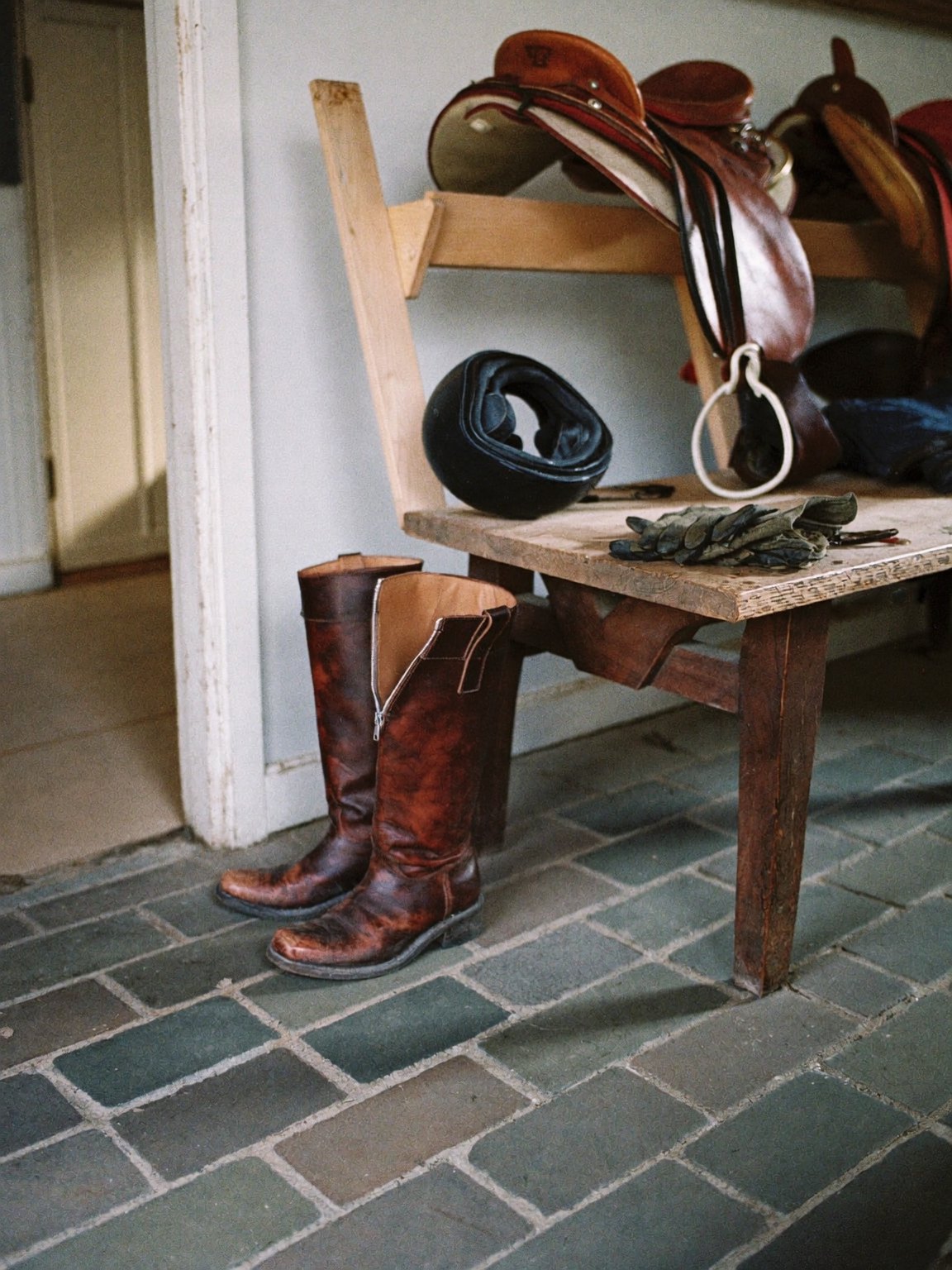
Tall boots and paddock boots with half chaps do the same job: they protect the inside of the calf from the stirrup leather and give the leg a clean line against the saddle. Tall boots are the classic and the competition standard. Paddock boots with chaps are cheaper, easier to get on and off, and better for a rider who spends as much time on the ground as in the saddle.
Whichever you choose, the heel matters. A riding boot needs a defined heel, roughly two to three centimetres, so the foot cannot slip through the stirrup, and a sole slim enough to leave the stirrup freely. A fashion boot with a chunky sole is the wrong tool, however good it looks. For autumn and the wet weeks, our riding boots guide goes into the difference between leather, waterproof leather and rubber, and why a separate yard boot for chores makes riding boots last.
The helmet, and what the standards mean
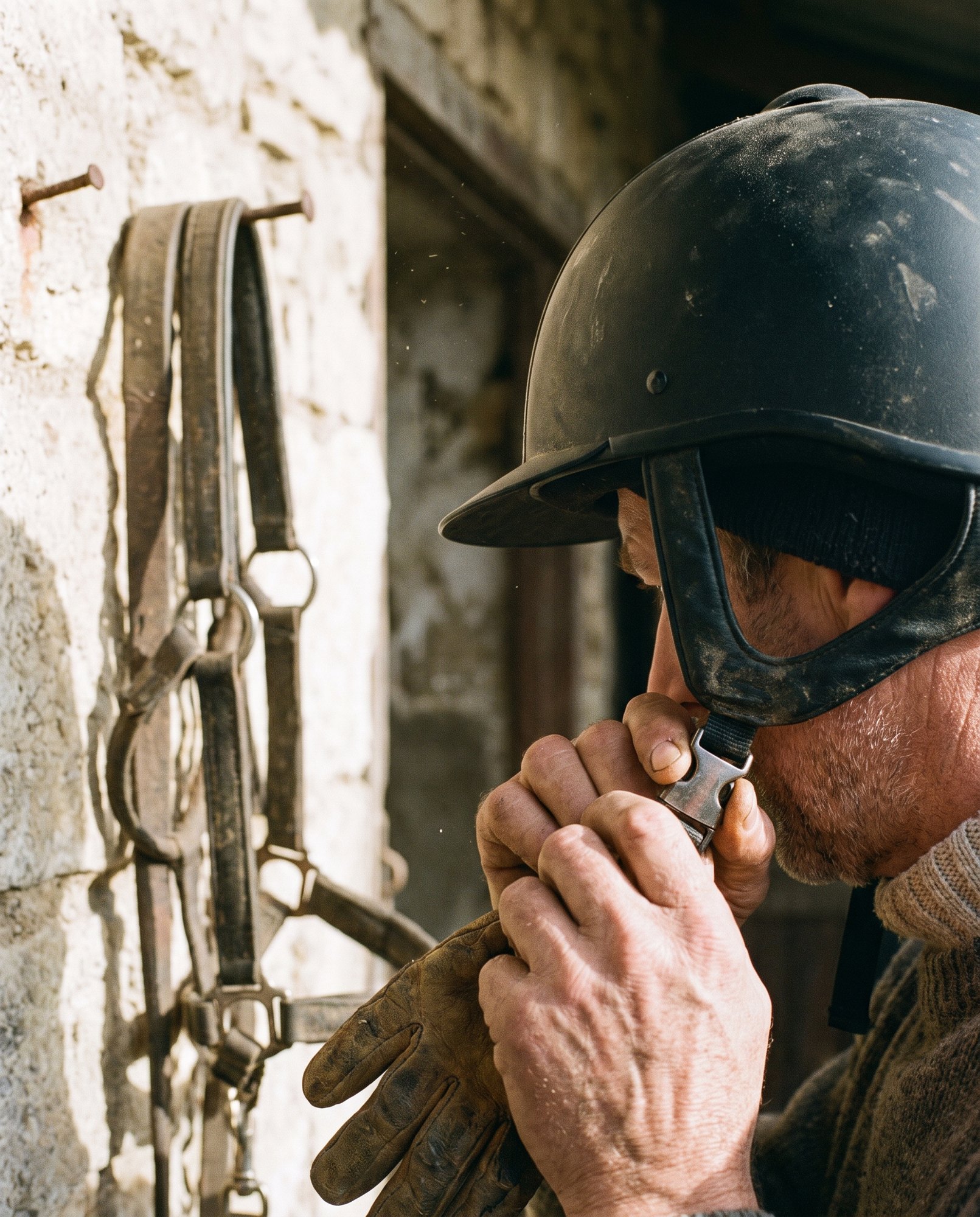
A helmet is the one piece of the outfit where the aesthetic argument has to lose every time it conflicts with fit or standard. A helmet should meet a current recognised standard, VG1 01.040 2014-12, PAS 015:2011 or ASTM F1163 among them, and the label inside tells you which. It should sit level, snug enough that it does not move when you shake your head with the strap undone, and low enough on the forehead that a finger fits between brow and brim.
Beyond that, choose for the climate. Ventilation channels and a removable, washable liner make more difference to whether a helmet gets worn on a hot afternoon than any finish. Matte shells and leather-look finishes are style choices. They change nothing about protection. Replace a helmet after any real impact and, most manufacturers advise, after a few years of use regardless, because the liner materials degrade. Our two helmet guides go through fit and standards in detail.
Stable to saddle: one outfit, two jobs
Most riders do not change between mucking out and riding, and the outfit should cope with that. The sensible pattern is a small number of pieces that work in both places: breeches that survive a wheelbarrow, a riding shirt that dries fast, a mid-layer that can be tied around the waist, and two pairs of footwear, a yard boot for the ground and a riding boot for the saddle. The helmet lives on the hook at the tack room door, not in the car, so it is never the thing that gets forgotten.
That is the whole of the practical version of the equestrian aesthetic: a few well-chosen pieces, each with a job, worn until they are properly broken in. The photographs follow.
The pieces below connect each part of the outfit to the next step: the riding boots guide for the wet season, the helmet guides for fit and standards, and the Rider Clothing edit where the shirts, layers and gloves we discuss are selected and explained.
Riding clothes became a style because they worked first. Buy them in that order.
- Nearly every detail of riding clothing is functional first: close-cut breeches, long-backed tops, defined heels, ventilated helmets.
- Breeches: choose knee patch or full seat for your riding, a four-way stretch fabric for a warm climate, and a flat inner seam.
- Tops: UV protection and breathability do more on Mallorca than warmth. A rideable mid-layer plus a real waterproof shell covers autumn.
- Boots: a defined heel and a slim sole are non-negotiable. Tall boots or paddock boots with chaps both do the job.
- The helmet is chosen on fit and standard, never on look. Ventilation and a washable liner decide whether it gets worn in the heat.
General editorial guidance. Helmet standards and fit advice summarise published guidance from standards bodies and manufacturers. Always check the label in the helmet itself and have fit checked in person where possible.