The Everyday Riding Kit: What Riders Actually Use, Again and Again
Not the long list of everything a horse could need. The short list of what gets touched every day.
Ask any rider what they would replace first if the tack room burned down and the answer is rarely the expensive thing. It is the hoof pick, the headcollar, the one good brush, the bag that goes to the yard and back. This is a piece about that short list: the kit that does the daily work, why each piece earns its place, and what can safely stay on the shop shelf.
A dozen things get used every single day. Buy those well, keep them in one bag, and most of the rest of the catalogue can wait.
Just want the list? The Everyday Riding Kit Checklist is the printable version of this piece.
Why the short list matters
There is always a longer list. A full tack room has a rack for every rug, a brush for every coat condition and a boot for every discipline, and a new owner can spend a serious amount of money before a single ride. The daily reality at most yards is far smaller. A horse is caught, its feet are picked out, it is brushed where the tack goes, tacked up, ridden, untacked, checked over and turned out again. The kit that does that is perhaps a dozen items, and it is the same dozen every day.
Buying that dozen well matters more than buying the rest at all. A headcollar that fits and a lead rope that does not burn your hand are used three hundred times a year. A specialist brush for show-day shine is used three times. This piece works through the daily kit by where it lives: on the horse, on the rider, in the bag and around the yard.
On the horse: headcollar, hoof pick, brushes
The headcollar is the most-used piece of tack a horse owns, and the most overlooked. It should fit so that two fingers slide under the noseband and the cheekpieces sit clear of the eye, with a throat strap that does not pull tight when the horse pulls back. A padded, adjustable nylon or leather headcollar with a matching lead rope is the everyday choice. A breakaway or leather crown piece is worth having on any horse that is tied up regularly, because a headcollar that will not give in a panic is the more dangerous kind. Keep a spare, because the day one breaks is never a convenient one.
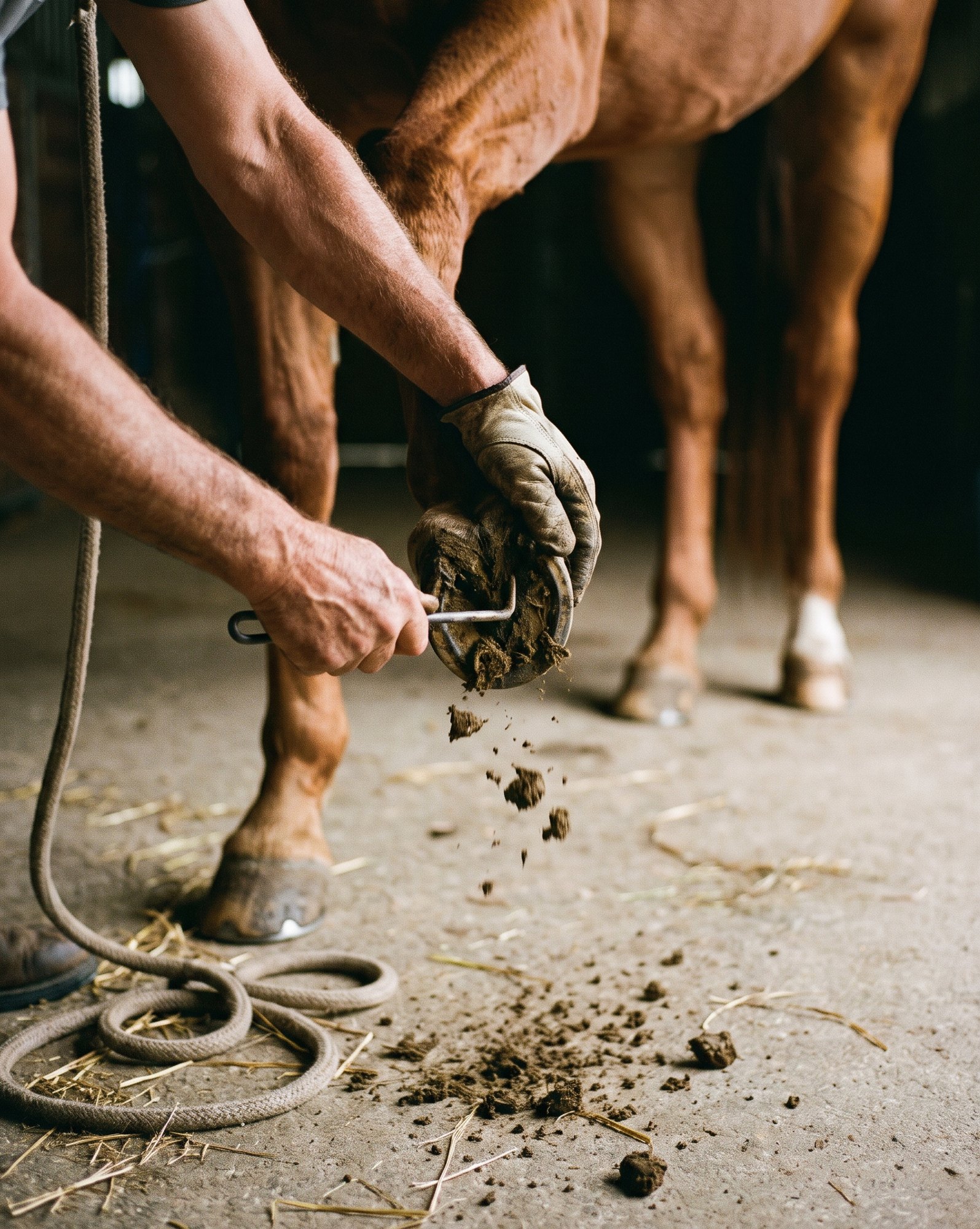
The hoof pick is the tool that is used more than any other, and one with a stiff brush on the back does two jobs: the pick clears packed dirt and stones, the brush clears the sole so you can actually see the frog and any early signs of thrush. It is also the cheapest thing in the kit, which is why most yards have four of them and can never find one. A hoof pick that lives in the grooming bag, and another on a string at the tie ring, solves that.
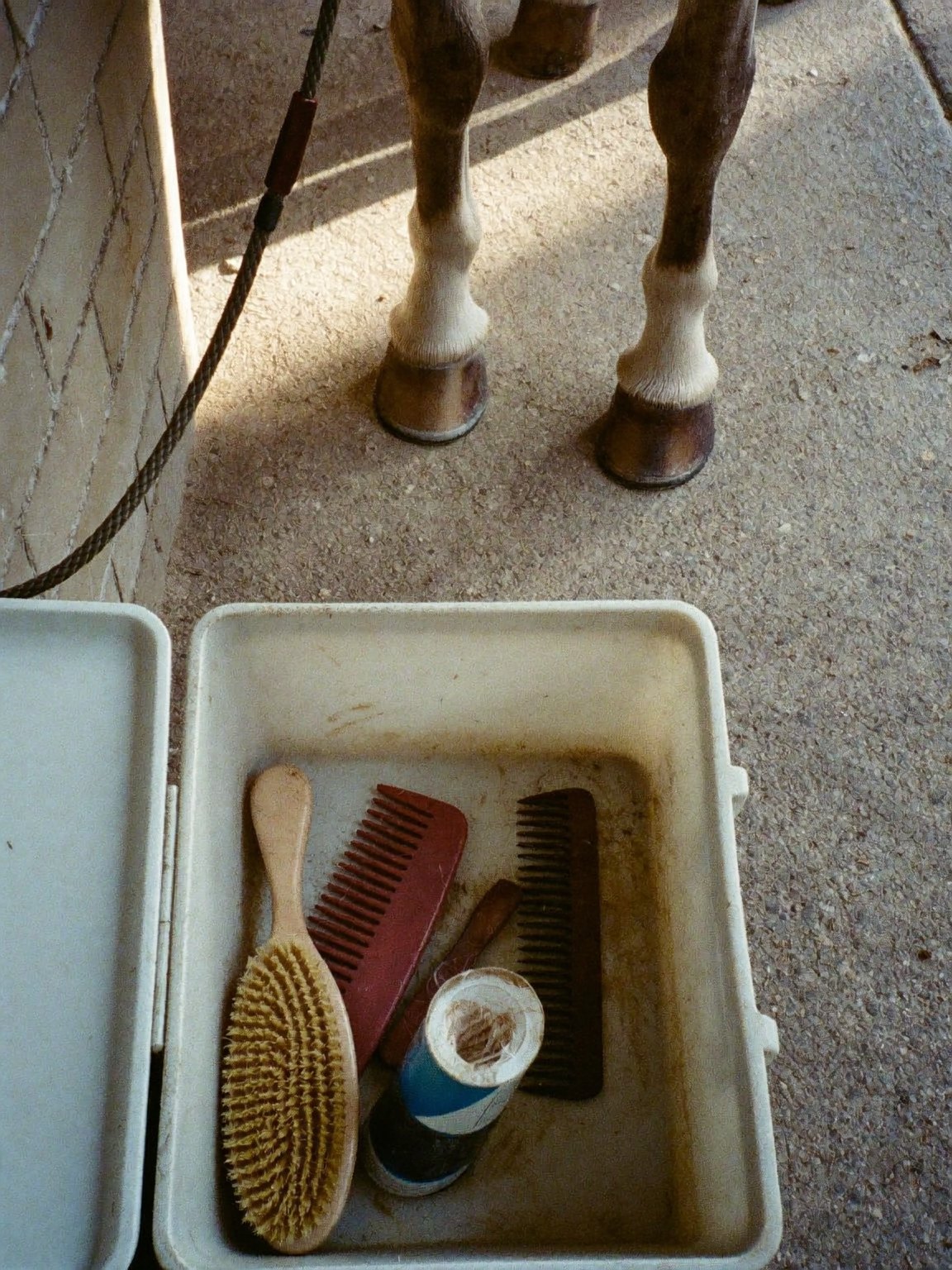
For brushes, the honest daily set is short: a rubber curry or mitt to lift dirt and loose hair, a dandy brush for mud and the heavy coat, a body brush for the areas where tack sits, and a sponge or cloth for eyes, nose and dock. Our grooming kit guide explains why a horse living out through autumn should be brushed less rather than more. The everyday version is to clean the tack areas properly and leave the rest of the coat its grease.
Three hundred uses a year for the headcollar, three for the show brush. Spend accordingly.
On the rider: helmet, gloves, boots
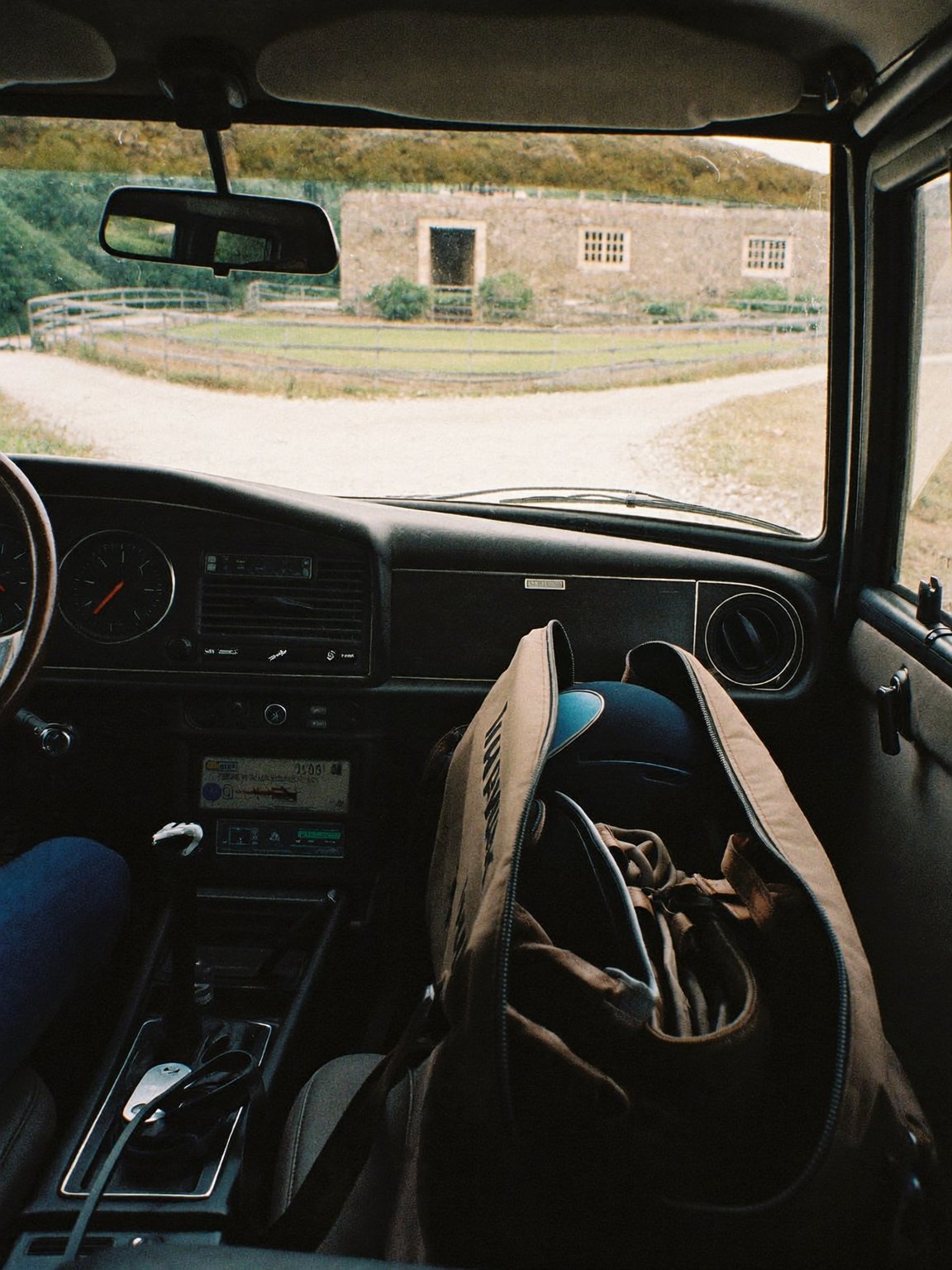
The rider’s daily three are the helmet, a pair of gloves and the boots. The helmet is not a place to economise on fit or standard, and it should live at the yard on a hook by the tack room door rather than in the car, so it is never the thing that gets forgotten on a warm afternoon. Our helmet guides cover fit and the standards to look for. The everyday point is simply that the helmet that gets worn is the one that is comfortable in the heat and always where you left it.
Gloves are the piece most riders skip until they wish they had not. A thin, grippy pair makes a real difference to reins that are wet, sweaty or slipping, and to hands that are cold at seven in the morning in October. In a warm climate a light, breathable glove with a touchscreen fingertip gets worn. A padded winter glove sits in a drawer.
Boots have their own guide, but the everyday principle is one pair for the ground and one for the saddle. A waterproof yard boot for chores and a leather riding boot for riding outlast a single pair doing both, and the riding boots stay fit for riding.
The bag, and what lives in it
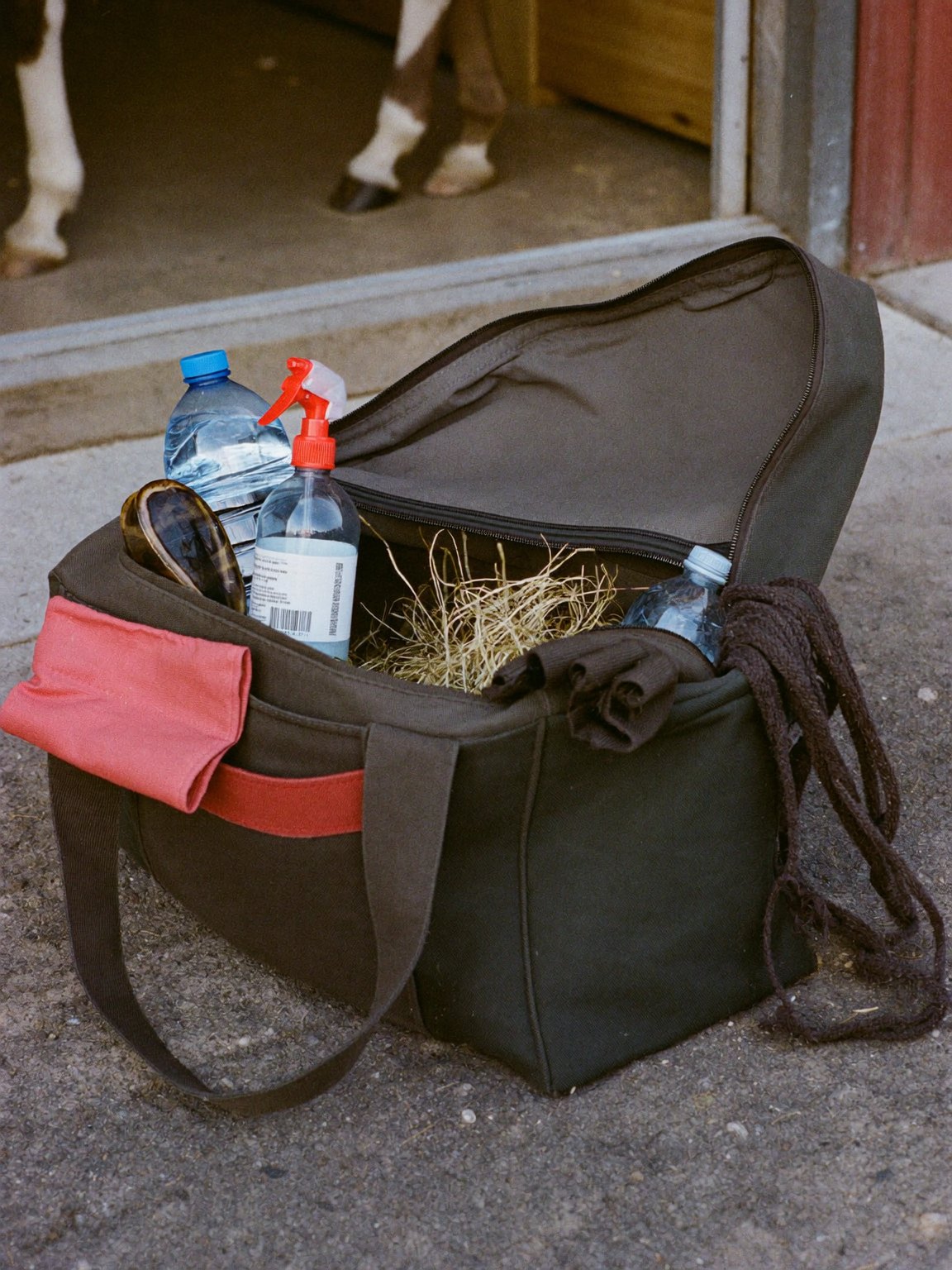
Most of the daily kit moves between car, yard and tack room, and the difference between a calm routine and a frantic one is often just a bag. A grooming bag or box that holds the brushes, the hoof pick, a sponge and a spare headcollar means one trip from the car, not three. For the rider, a second bag with gloves, a hat silk or spare hairnet, a bottle of water, sun cream through October, insect repellent for horse and rider and a small first-aid kit for both covers the things that are needed at the yard and never quite at home.
The test for whether something belongs in the bag is whether it has been used in the last two weeks. If it has not, it moves to the shelf. The bag is for the things that get touched every day.
Tack itself, saddle, bridle, girth and pads, is daily kit too, but it is chosen for the horse rather than bought as essentials, and our saddle fit and bridle guides cover it separately. Rugs are a decision, not an essential: see the rugging checklist for whether this horse needs one at all.
The yard: tubs, nets, hooks
The last part of the daily kit never leaves the yard. A flexible feed tub or two, a water bucket, a haynet with holes small enough to slow a greedy horse, a rug rail or a set of hooks so whatever came off the horse dries rather than lying on a wet floor, and a saddle rack so the saddle is not balanced on a door. None of it is expensive, and all of it is used every day. Our stable and yard guide goes through what genuinely earns a place, and what can wait.
A small thing that saves a great deal of time: a bin, a broom and a spare headcollar within reach of the tie ring, so the horse can be caught, cleaned around and turned out without anyone walking back to the tack room.
What can wait
Everything else in the catalogue can wait until there is a reason for it. A full set of leg boots waits until the horse’s work calls for them. A second saddle pad waits until the first one is in the wash and the horse is being ridden that day. A specialist coat-shine spray waits, probably, forever. The point of the short list is not that the rest is bad, only that it is not daily, and the daily kit is where a small amount of money and care goes furthest.
The Everyday Riding Kit Checklist below is the short list on one page, for the tack room wall or the boot of the car.
The checklist condenses this article to a single printable page. The grooming, stable and yard, helmet and boot guides linked below go into each piece in detail, and the Shop & Gear categories show the selection our editorial team has made, explained rather than just listed.
The kit that matters is the kit that gets touched every day. Buy it well, keep it in one bag, and let the rest of the catalogue wait.
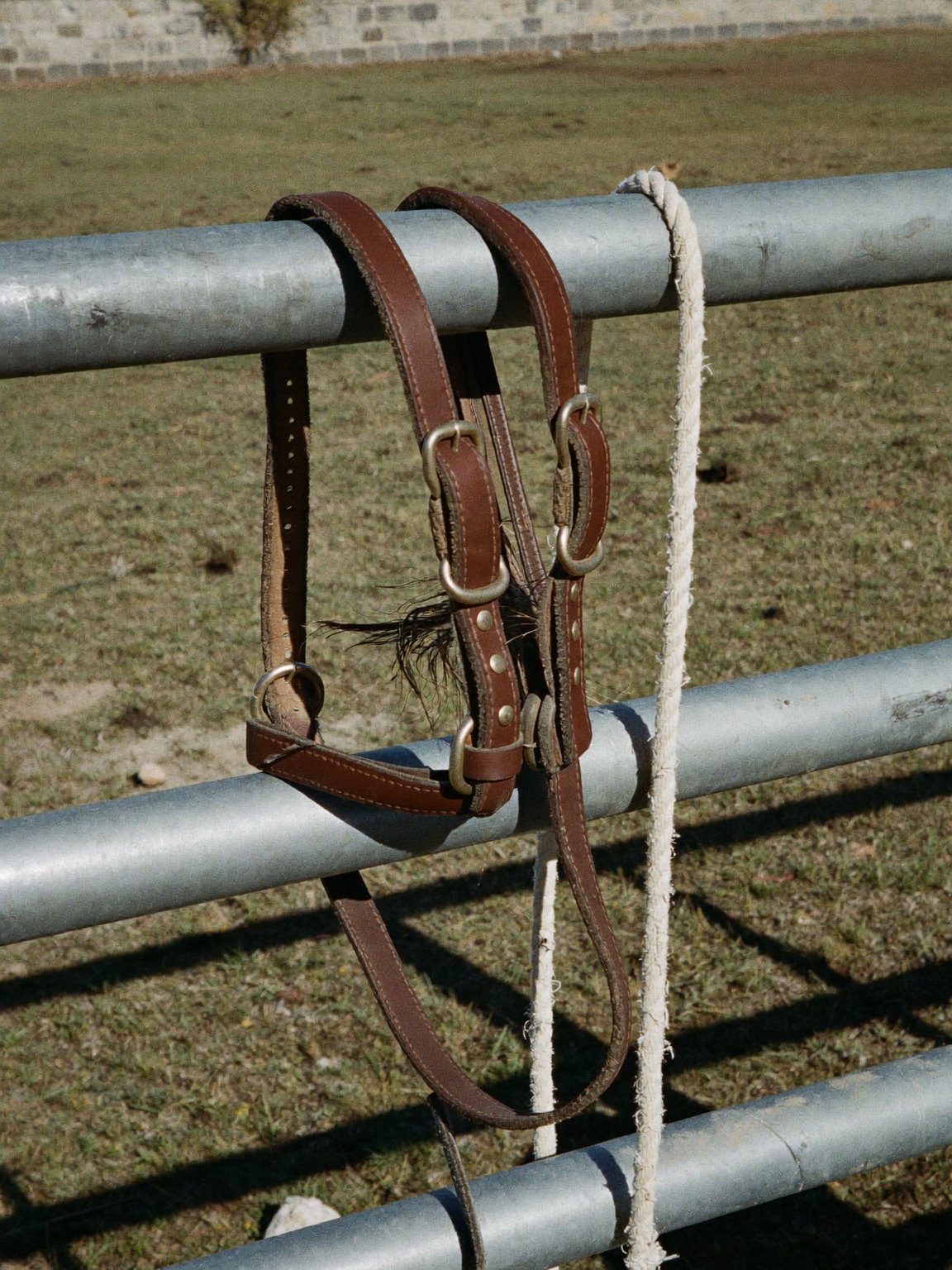
- About a dozen items do the daily work at most yards: headcollar and rope, hoof pick, three brushes and a sponge, helmet, gloves, boots, a bag, tubs, a haynet and hooks.
- The headcollar is the most-used and most-overlooked piece of tack: fit, a breakaway option for tied horses and a spare matter more than the colour.
- A hoof pick with a brush is the single most-used tool. Keep one in the bag and one at the tie ring.
- Rider daily three: a helmet that lives at the yard, thin grippy gloves for wet reins and cold mornings, and separate boots for ground and saddle.
- The two-week test decides what lives in the bag. Everything else in the catalogue waits until there is a reason for it.
General editorial guidance. Fit a headcollar and a helmet on the individual horse and rider. Take questions about tying, turnout and any injury to your vet or instructor.