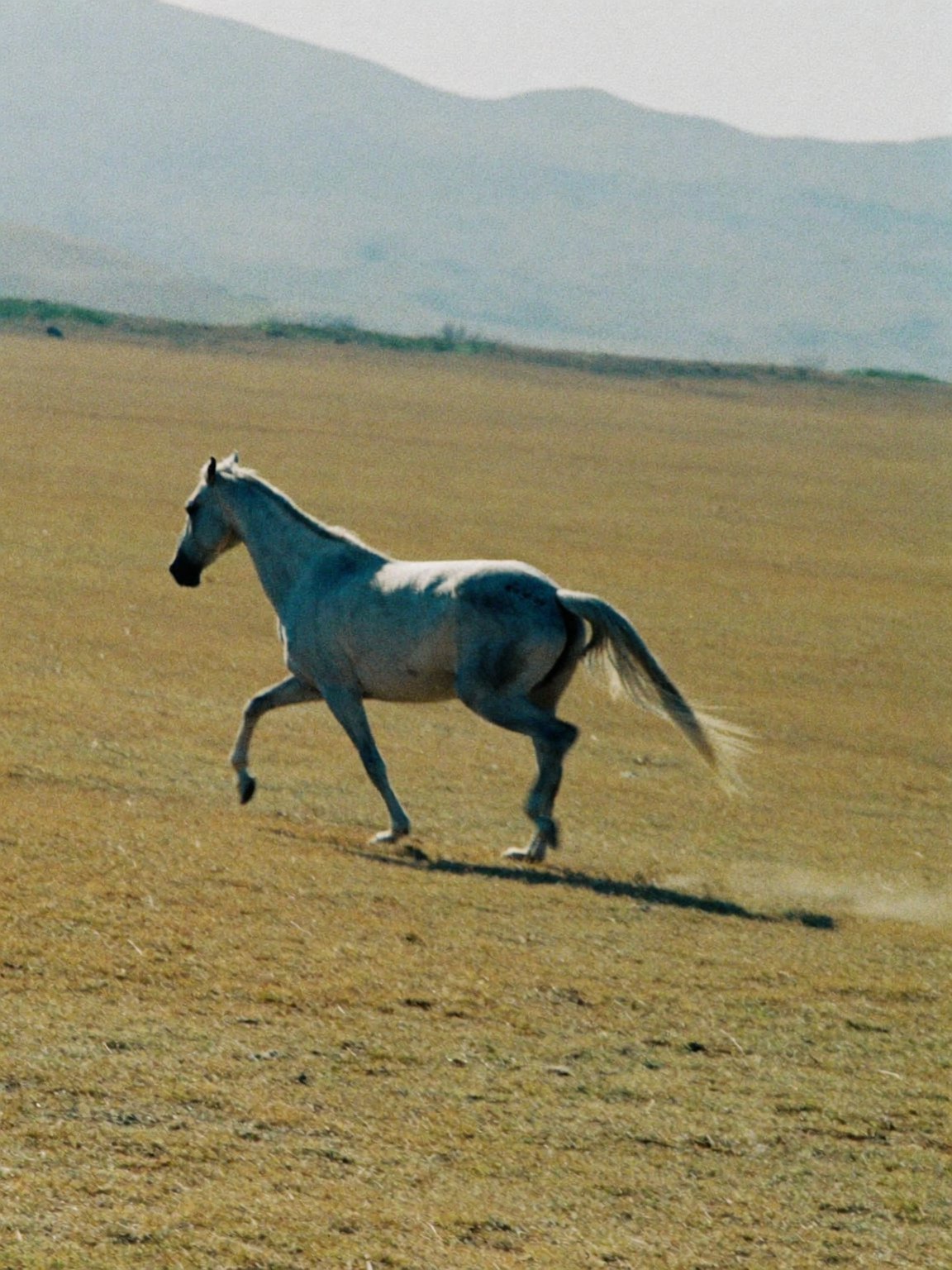
Six Signs on the Face: The Horse Grimace Scale
A horse in pain shows it. Mine looks fine. That is what most of us believe. The measurement is a scale of six facial signs, and it was built because horses do not show it, not to us.
Horses reduce their pain behaviour when a person is nearby; that is why a horse can look fine at the stable door and not be. In 2014 Dalla Costa and colleagues published the Horse Grimace Scale in PLOS ONE: six facial action units, each scored from absent to obviously present, that together give a reliable read of pain from the face alone. Ears held stiffly back, a narrowed eye, tension above the eye, strained chewing muscles, a strained mouth with a pronounced chin, and strained nostrils with a flattened profile. What the six signs look like, how to observe without being the reason the horse hides them, what counts as a score, and when the pattern means the vet.
Look when the horse is alone and undisturbed, from a distance or on video. Two or more of the six signs together, seen repeatedly, or a change from the horse’s usual face, is the reason to call the vet.
Where the scale comes from
Grimace scales began in laboratory animals and moved to horses in 2014, when a team led by Emanuela Dalla Costa filmed horses before and after routine castration and identified the facial changes that tracked pain. The result, published in PLOS ONE, is the Horse Grimace Scale: six facial action units, each scored 0 for not present, 1 for moderately present and 2 for obviously present, giving a total out of twelve. Trained observers agreed with each other, and the scores fell when pain relief was given.
The scale has since been tested in other kinds of pain, including laminitis and dental disease, and it is the basis of most of the automated pain-recognition research now being done on horse faces with computer vision. Its strength is that it does not need the horse to move, load or be touched: it reads the face at rest.
The six signs
One: ears held stiffly backwards, the two ears turned back and held there, unlike the relaxed, mobile ear of a horse listening behind it. Two: orbital tightening, the eye narrowed, the eyelid partly closed, the eye looking smaller and withdrawn. Three: tension above the eye, the muscles above the eye socket standing out so the area looks angular and strained. Four: prominent strained chewing muscles, the cheek looking tight and defined rather than soft. Five: the mouth strained and the chin pronounced, the lips pressed together and the chin looking knotted. Six: strained nostrils and a flattening of the profile, the nostrils drawn and the front of the face looking flatter than usual.
Each is scored on its own. A horse with a hard, drawn eye and ears pinned back for minutes at a time is scoring on two units; a horse that flicks an ear at a fly is scoring on none.
Six signs on the face the horse does not control. The scale reads them at rest, without touching the horse.
Why the horse hides it from you
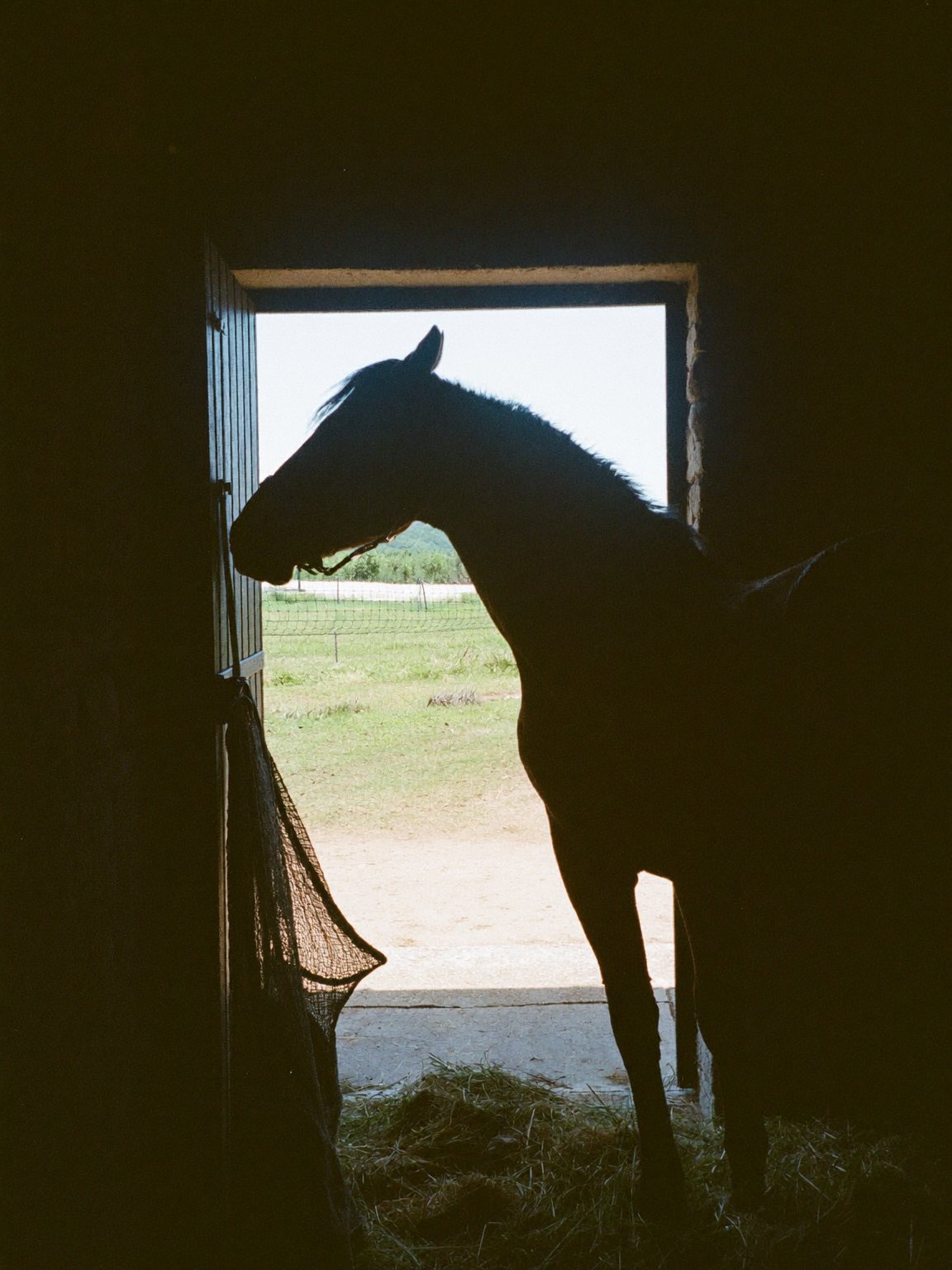
A 2020 study at the University of Pennsylvania filmed hospitalised horses with and without a person present and found that they showed fewer pain behaviours when someone was there. It matches what prey animals do: a horse that looks weak in front of another animal is at risk, and a person at the stable door counts. That is why the owner’s own impression at feeding time is the least reliable moment to judge, and why a horse that greets you brightly can still be in pain the rest of the day.
The consequence for observation is simple: the horse has to think it is alone. Watch from a distance where the horse is not attending to you, or set a phone on the stable door and film ten minutes with nobody in the aisle. The face in that footage is the one the scale is built to read.
How to observe and score
Choose a quiet time, not before feeding and not just after work. Look at the face for a few minutes rather than a glance, because the signs come and go. Score each of the six units 0, 1 or 2 as honestly as you can, and write it down with the date; the value of the scale is in the comparison with the same horse on another day, not in a single number. A horse with a naturally worried expression has its own baseline, and the change from that baseline is what matters.
Look for combinations. Two or more units scoring together, seen repeatedly across the day or across days, is a pattern. One unit on its own can be weather, a fly or a mood; a set of them that persists is not.
The Horse Grimace Scale supports observation. It does not diagnose, it does not say where the pain is, and it does not replace the vet. Its job is to make a pattern visible early enough to call one.
When the pattern means the vet
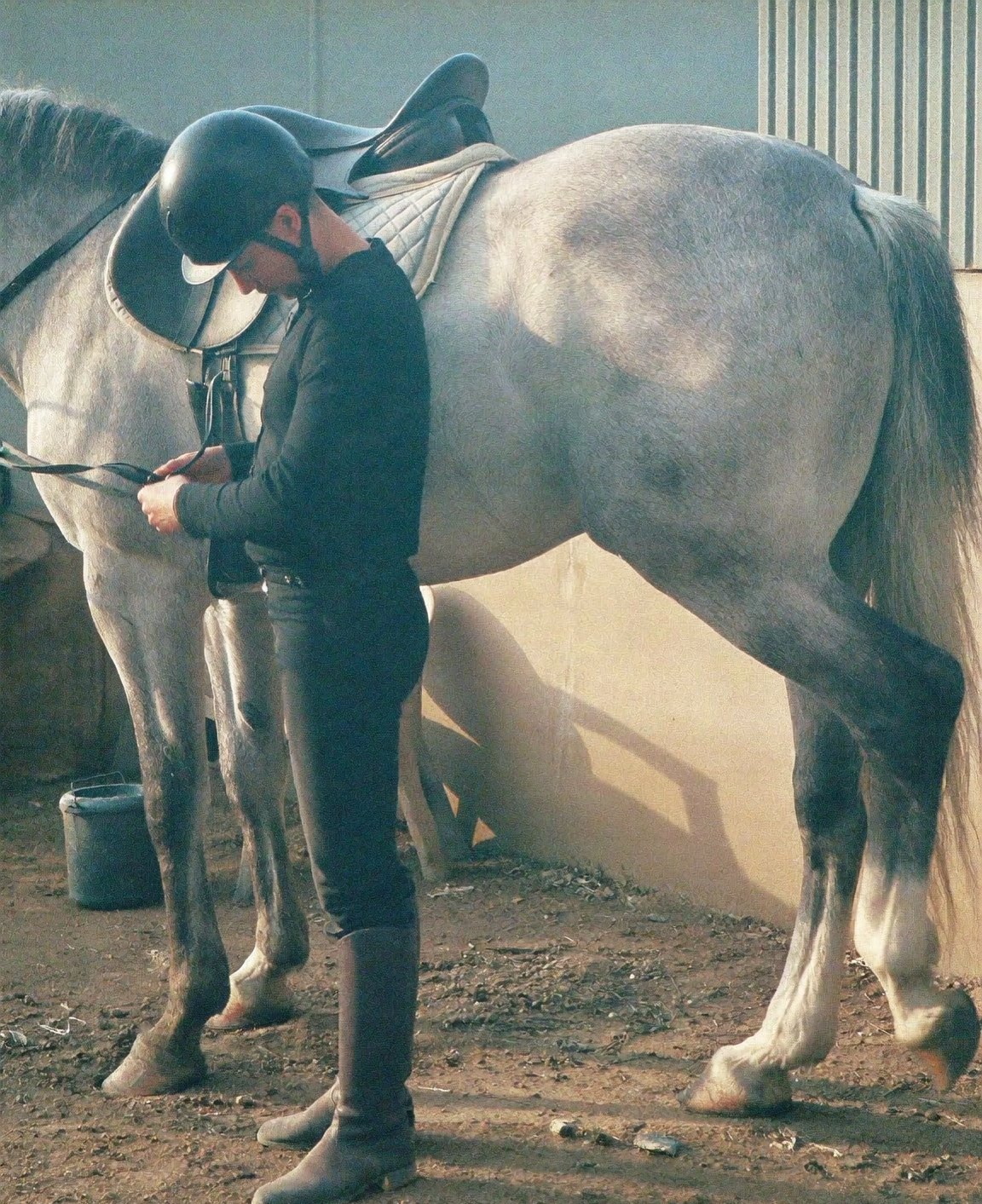
Two or more signs together, showing repeatedly or persisting through the day, or a clear change from the horse’s usual face, is the reason to call. So is any face score that appears alongside the ordinary signs of trouble: a horse off its feed, lying down more, moving stiffly, reluctant to be tacked up or girthed, or changed in temperament. On Mallorca, where a vet’s visit can be a day’s wait, the early call is the one that pays.
The same six signs are increasingly what the computer sees. Research published in 2026 describes artificial intelligence that detects pain in horse faces and shows which features drove its decision; the features are the ones on this scale. The measurement came first; the machine is learning to read it.
A horse that looks fine at the stable door may not be fine. The face it shows when it thinks it is alone is the one to read.
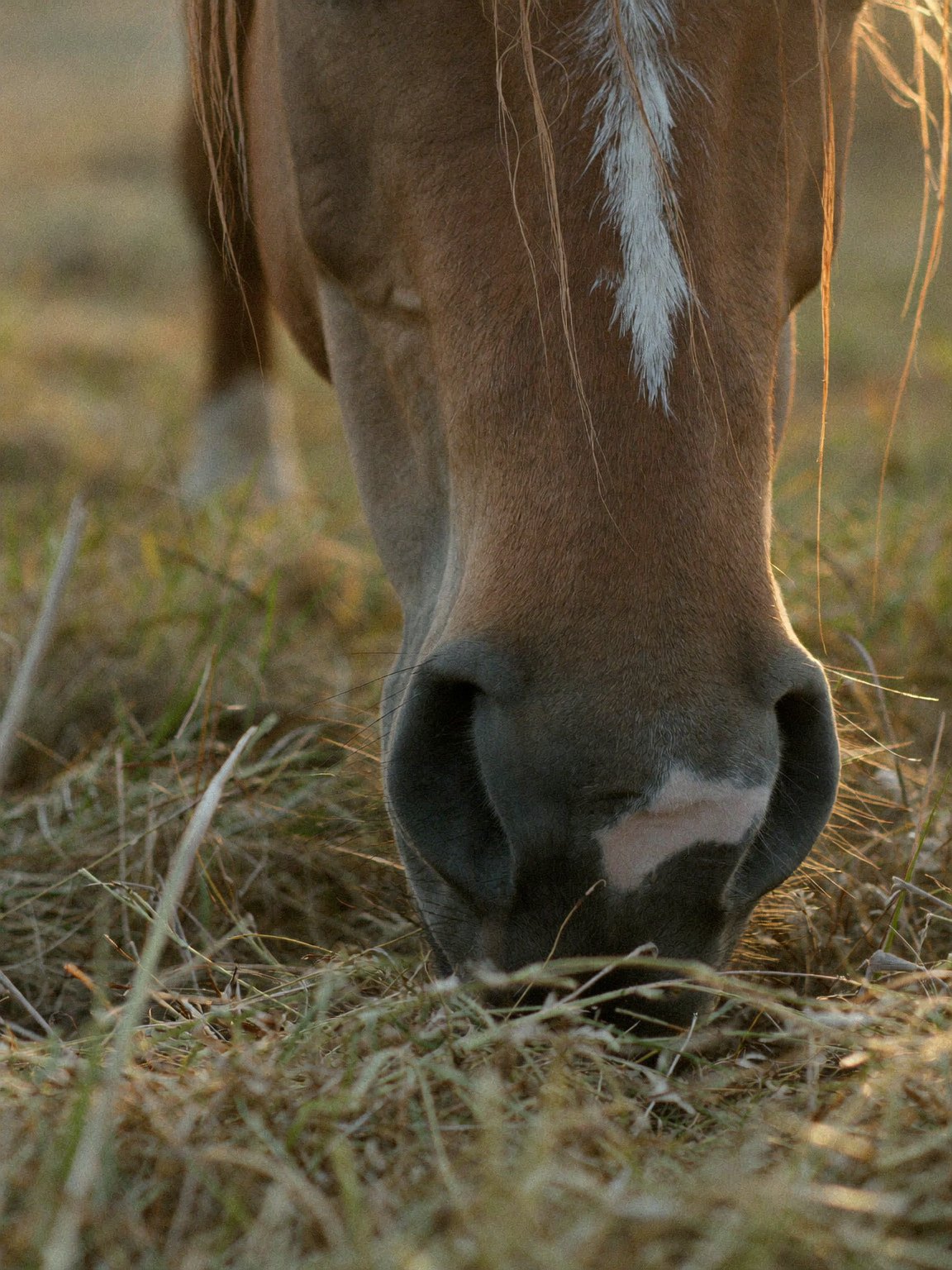
- The Horse Grimace Scale (Dalla Costa et al., PLOS ONE 2014) scores six facial action units from 0 to 2 for a total out of twelve.
- The six: ears stiffly back, orbital tightening, tension above the eye, strained chewing muscles, strained mouth with pronounced chin, strained nostrils with a flattened profile.
- Horses show fewer pain behaviours when a person is present; observe from a distance or on video with nobody in the aisle.
- Score each unit honestly, record it with the date, and compare the horse with itself; a change from baseline is the signal.
- Two or more signs together, repeatedly, or a clear change from the usual face: call the vet.
General editorial guidance, not veterinary advice. The Horse Grimace Scale supports observation and does not diagnose; a repeated pattern of facial pain signs, or any face score alongside a horse off its feed, lying down more or moving stiffly, needs a vet.