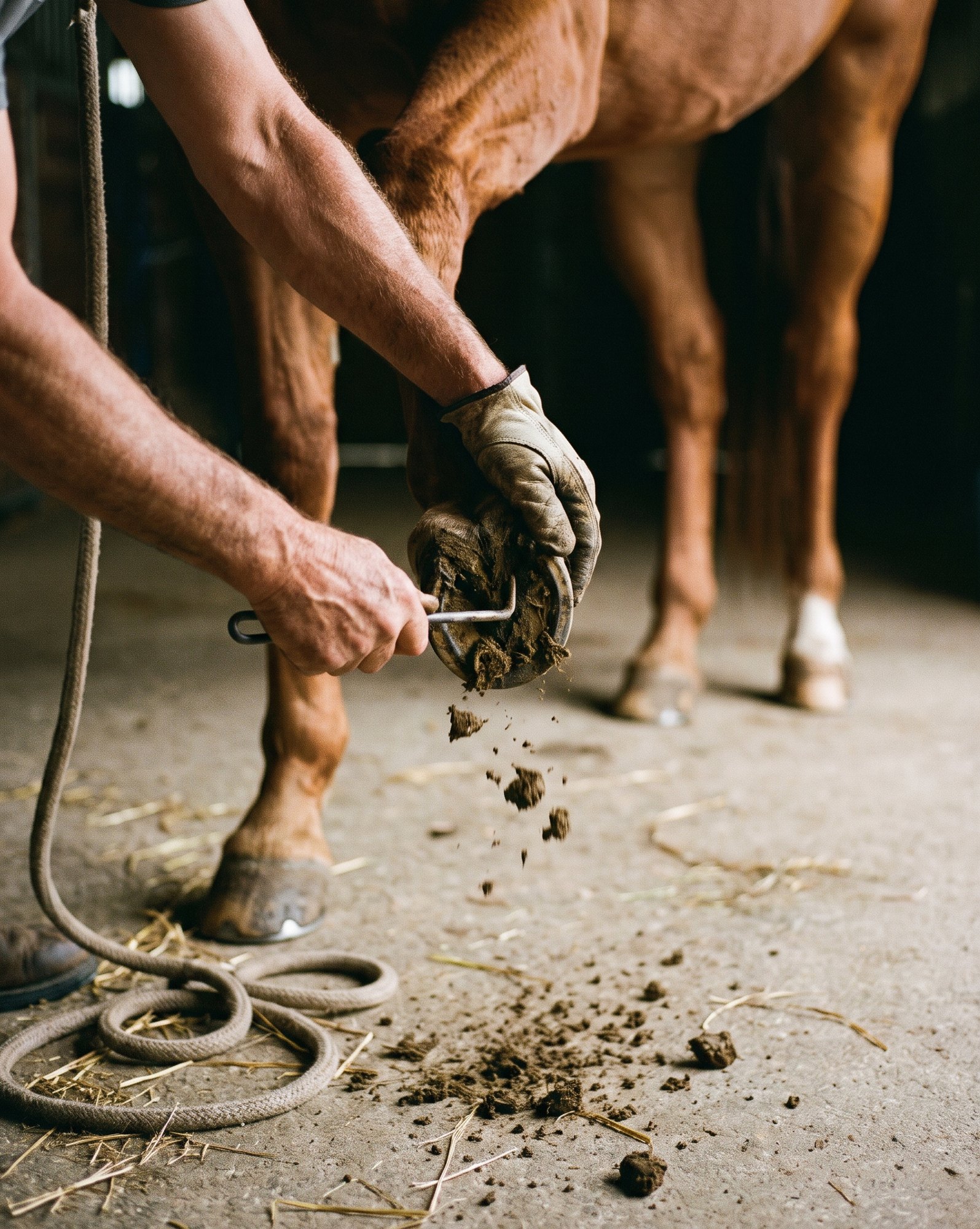
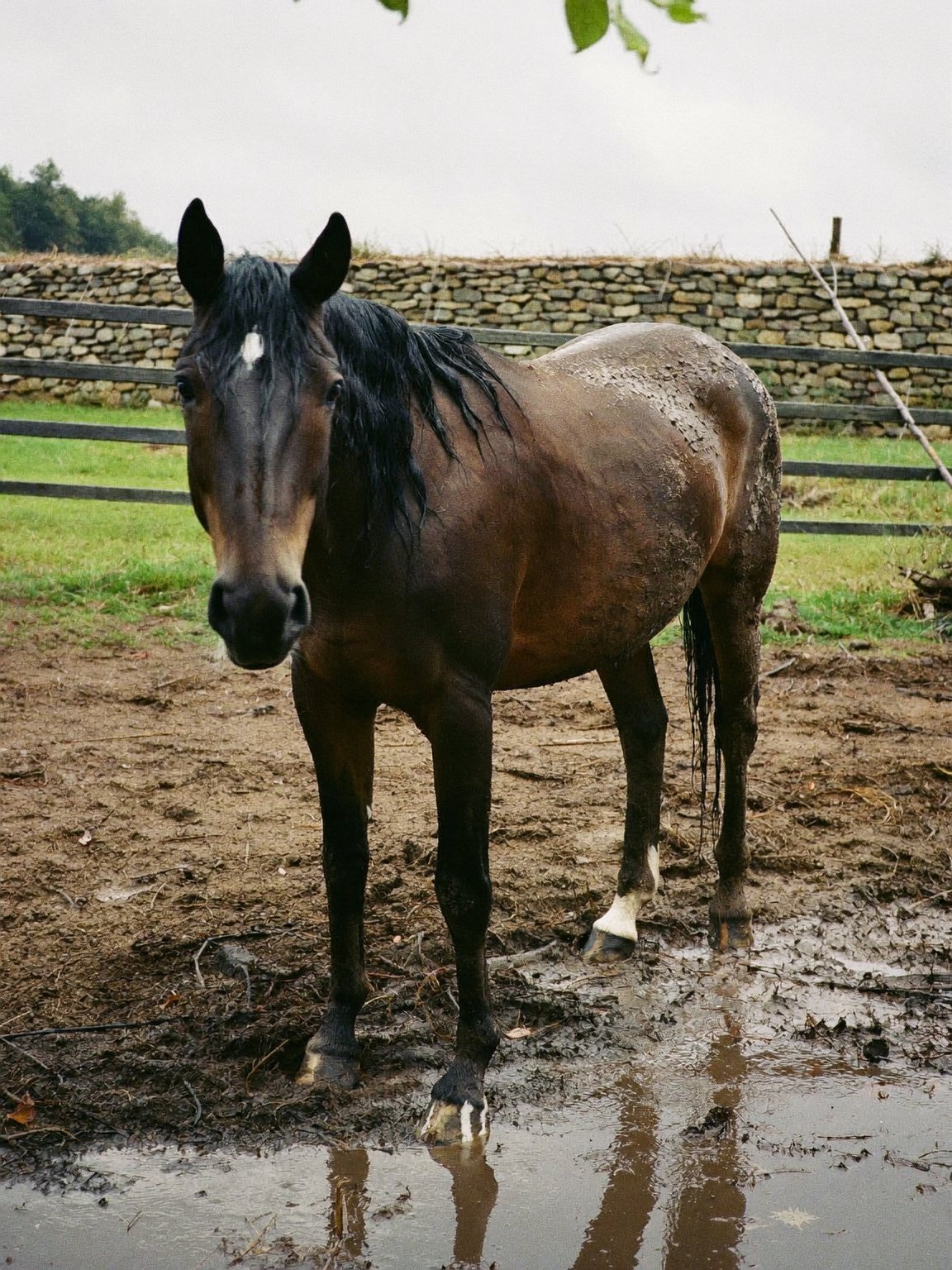
Barefoot on Mallorca: Where Hoof Boots Make Sense
Limestone, loose stone and a dry summer.
A horse that is comfortable in the arena can be footsore two kilometres up a camí. That gap is exactly what a hoof boot fills – and where it stops working is just as useful to know.
Boots go on for the ride and come off afterwards; size them by width and length shortly after a trim, and expect fronts and hinds to differ.
What the ground does
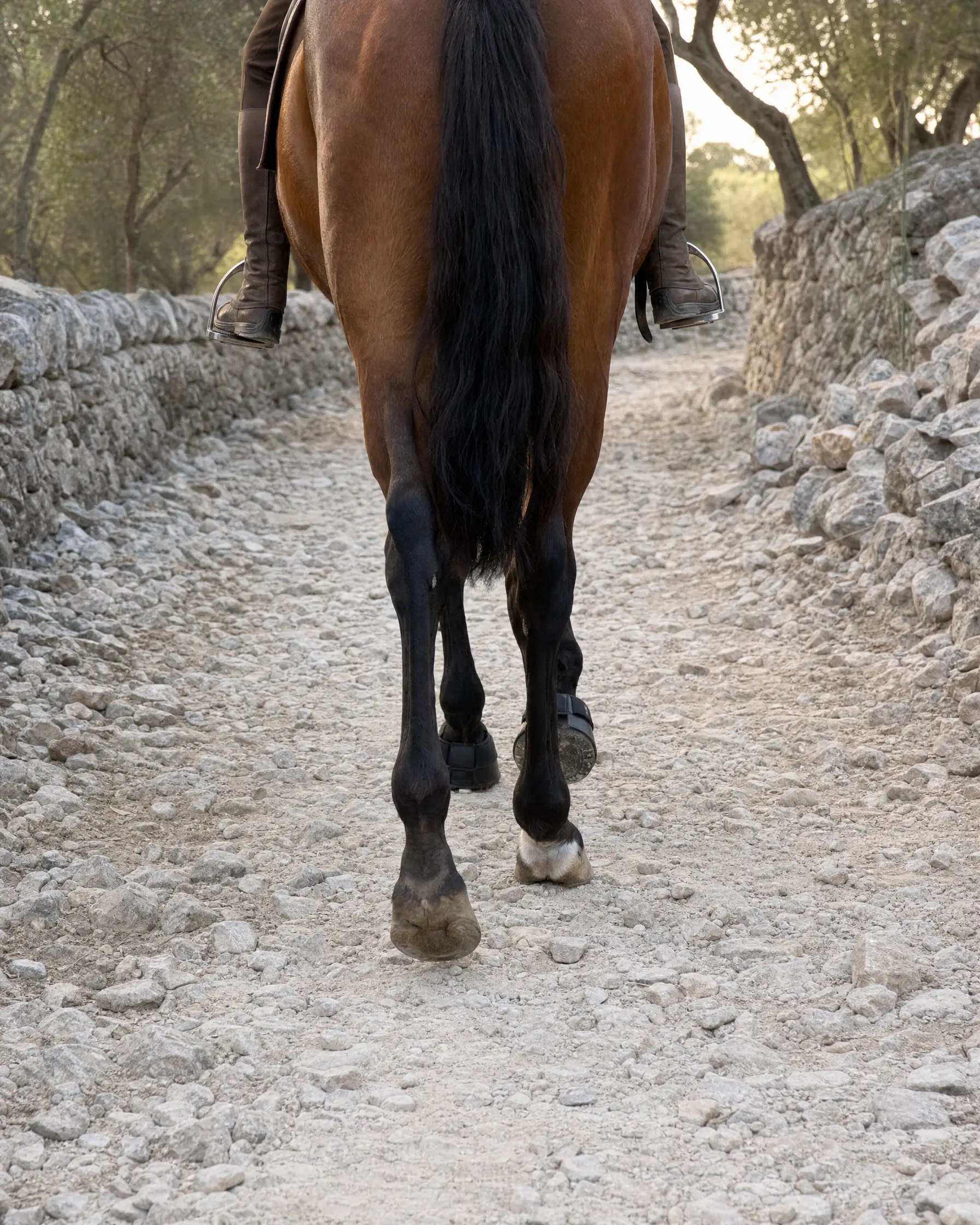
Mallorcan tracks are not kind to a bare sole. Limestone is abrasive, the loose stone on the camíns turns under the foot, and by July the ground is hard enough to bruise. Add a dry summer and hooves that chip more easily, and a horse that manages barefoot at home may still need help on a two-hour ride.
Hoof boots are the tool for that gap. They go on for the ride and come off afterwards, so the hoof spends most of its day bare. They can be used on the front feet only, which is where most of the work and most of the soreness happens, and they can carry a horse through the transition weeks after shoes come off.
Getting the size right
This is where most boots fail, and it is not the boot’s fault. Measure each hoof separately – fronts and hinds differ, and so do left and right. Measure width across the widest point and length from toe to the buttress of the heel; Equine Fusion documents the method with its boots.
Measure shortly after a trim. A hoof grows through the cycle, so a boot fitted in week one of a six-week cycle will be tighter in week six. And know the shape, not just the numbers: a narrow, upright hoof and a wide, flat one can share a length measurement and need different boots, which is why a slim last exists.
Choosing between them
The all-round boot is the one with an all-terrain sole built for grip and cushioning on mixed ground, a closure that lets the heel bulbs move and padding at the front. Sold as a pair, it is the reference for hacking out on stone.
A simpler build of the same sole, sold singly, is what you want when only the fronts need protection. A basic boot is the inexpensive spare for the trailer or a hoof that needs covering for a few days. And a medical boot is a different job entirely: soaking, poulticing and cooling rather than riding, and worth owning separately.
Where boots stop working
Twisting means the boot is too wide. Tightening it harder makes rubbing, not fit. Grit gets in on dusty tracks and rubs the pastern, so check after long rides; gaiters help. Deep mud and water can pull a boot off, and a lost boot on a camí is rarely found.
Heat is the last one. A closed boot in August is a warm boot: take them off at the end of the ride rather than at the end of the day.
When the farrier’s answer is better
Hoof boots are not an argument against shoes. A horse with thin soles, chronic hoof pain or a conformation that needs support may be better shod, and that is a conversation with a farrier and, if there is pain, a vet.
Barefoot works when the foot is healthy, the work matches the ground, and someone is watching the wear. On this island that means looking at the sole after every long ride on stone.
A boot that twists is too wide. Tightening it harder makes a rub, not a fit.
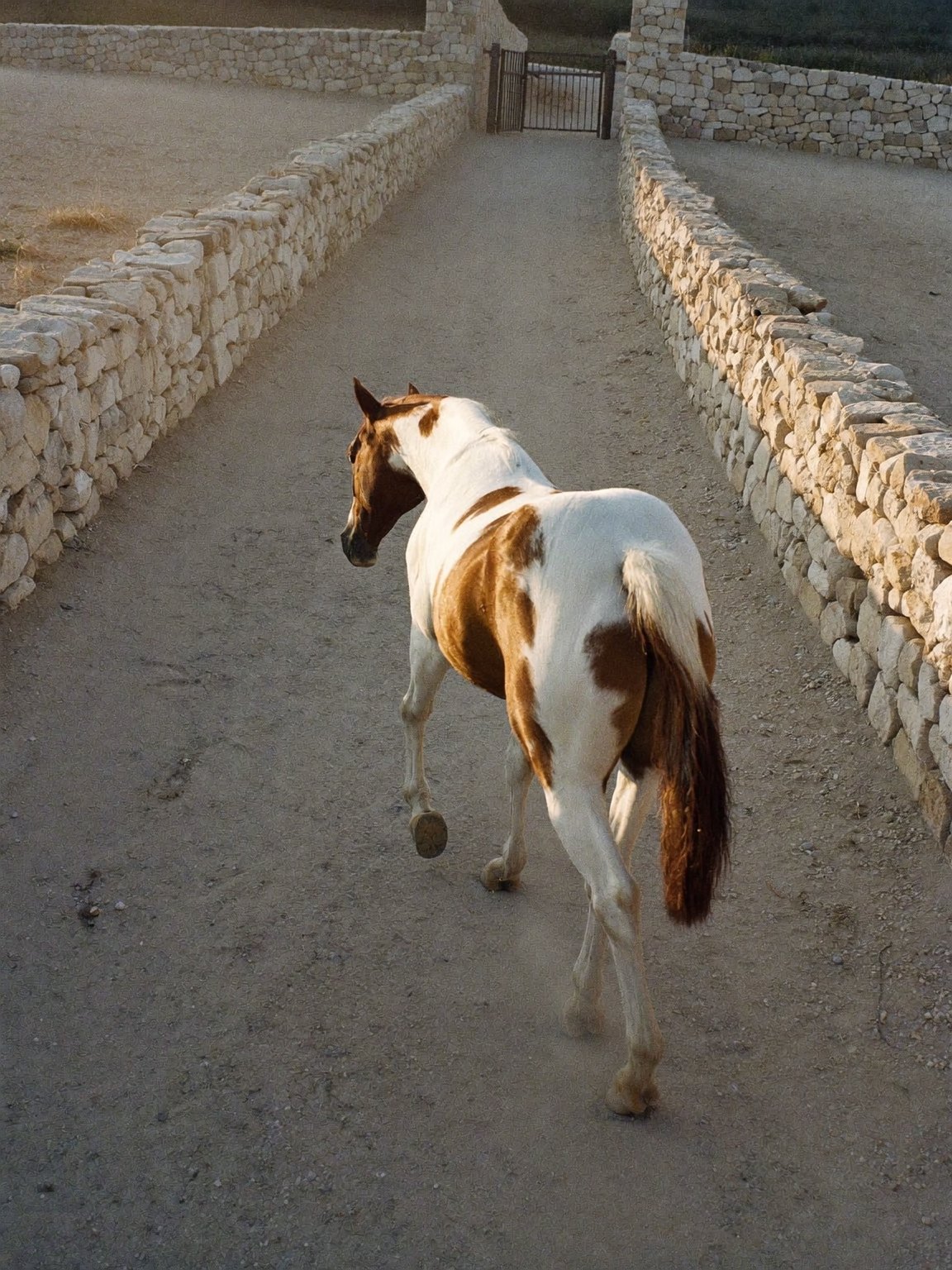
- Limestone and loose stone are the reason a horse that is fine at home can be footsore on a camí.
- Measure width and length on every hoof separately, shortly after a trim.
- Fronts only is a legitimate answer, and some boots are sold singly for exactly that.
- Twisting means too wide; grit and heat are the two things to check after a long ride.
- A medical boot is for soaking and cooling, not for riding.
General editorial guidance from makers’ documentation and published hoof-care literature. Trimming, shoeing decisions and any hoof pain belong with a farrier and, where relevant, a vet.