Wet-Season Yard Checklist
Twenty-five things to have sorted before the October rain arrives, and five to do every wet evening.
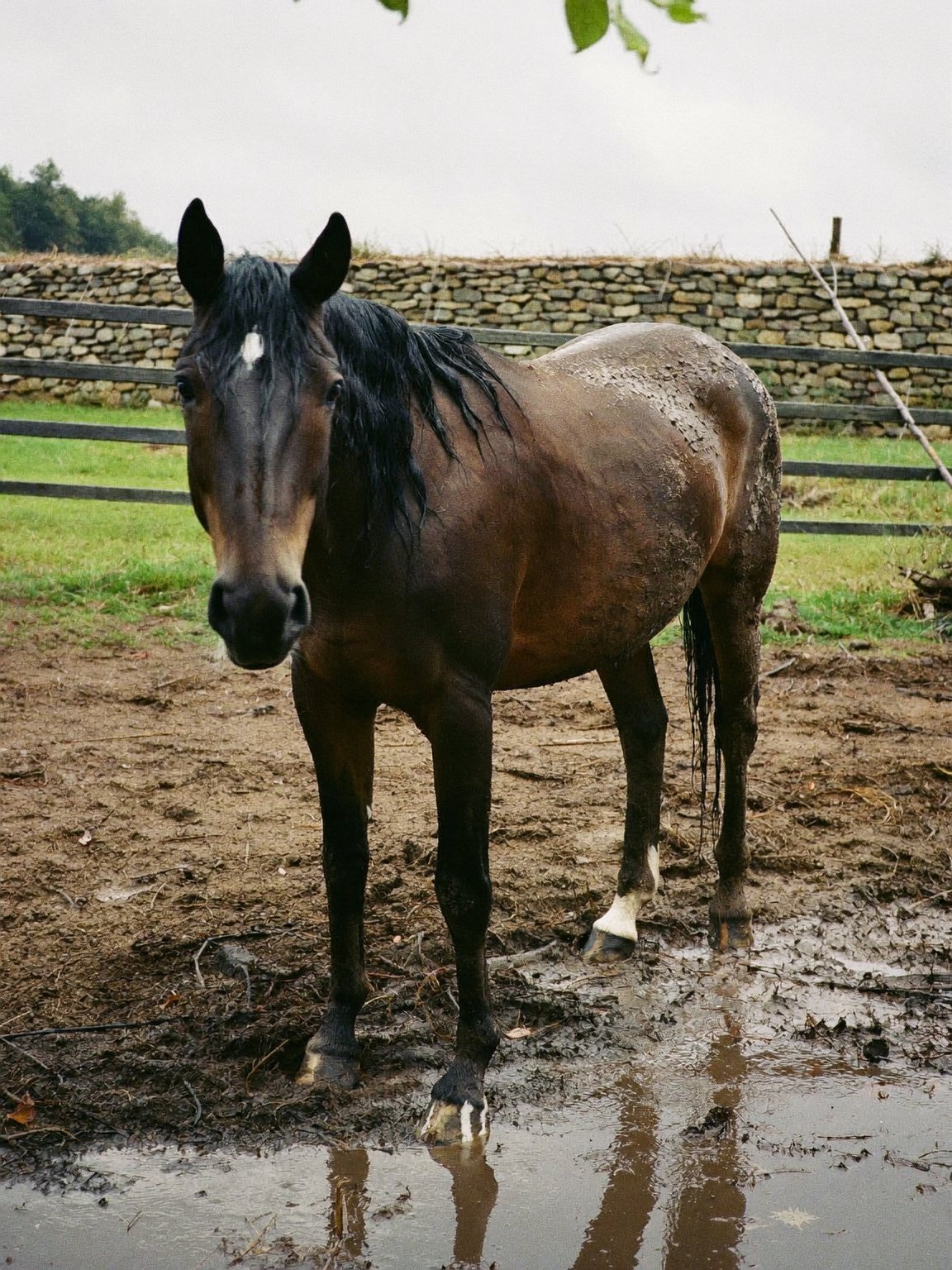
The island’s wet season is short and sudden: three weeks of rain on ground that has been dust since May. The yard that is ready has drainage, dry standing, lights and a first-aid box before the first storm; the one that is not spends November catching up. Print this for the tack room door.
Sections one to four are done once, in the last weeks of September and October. Section five is the routine for every wet evening until the ground dries.
If a horse’s heels or feet are already a problem, the mud fever and abscess articles linked below are the next read.
Ground & Drainage
- ✓Gateways and hay corners: hardcore, rubber mats or gravel where the horses queue
- ✓Ditches and drains cleared of summer growth so water leaves the paddock
- ✓Water troughs checked for overflow onto the standing area
- ✓Hay moved to a dry, drained spot and rotated so no corner is trampled to mud
- ✓Muck heap runoff directed away from the paddocks and the yard
Dry Standing
- ✓A hard standing, shelter or box each horse can use for part of every day
- ✓Bedding stocked for the weeks the horses come in more
- ✓Rug rail or hooks outside every box so wet rugs dry instead of lying in the aisle
- ✓A cooler per horse for coming in wet, and a spare that is dry
- ✓Slow-feed haynets so evening hay lasts the longer nights
Lights & Safety
- ✓Yard and aisle lights working, bulbs spare, before the clocks change on 25 October
- ✓A headtorch that lives in the car, with spare batteries
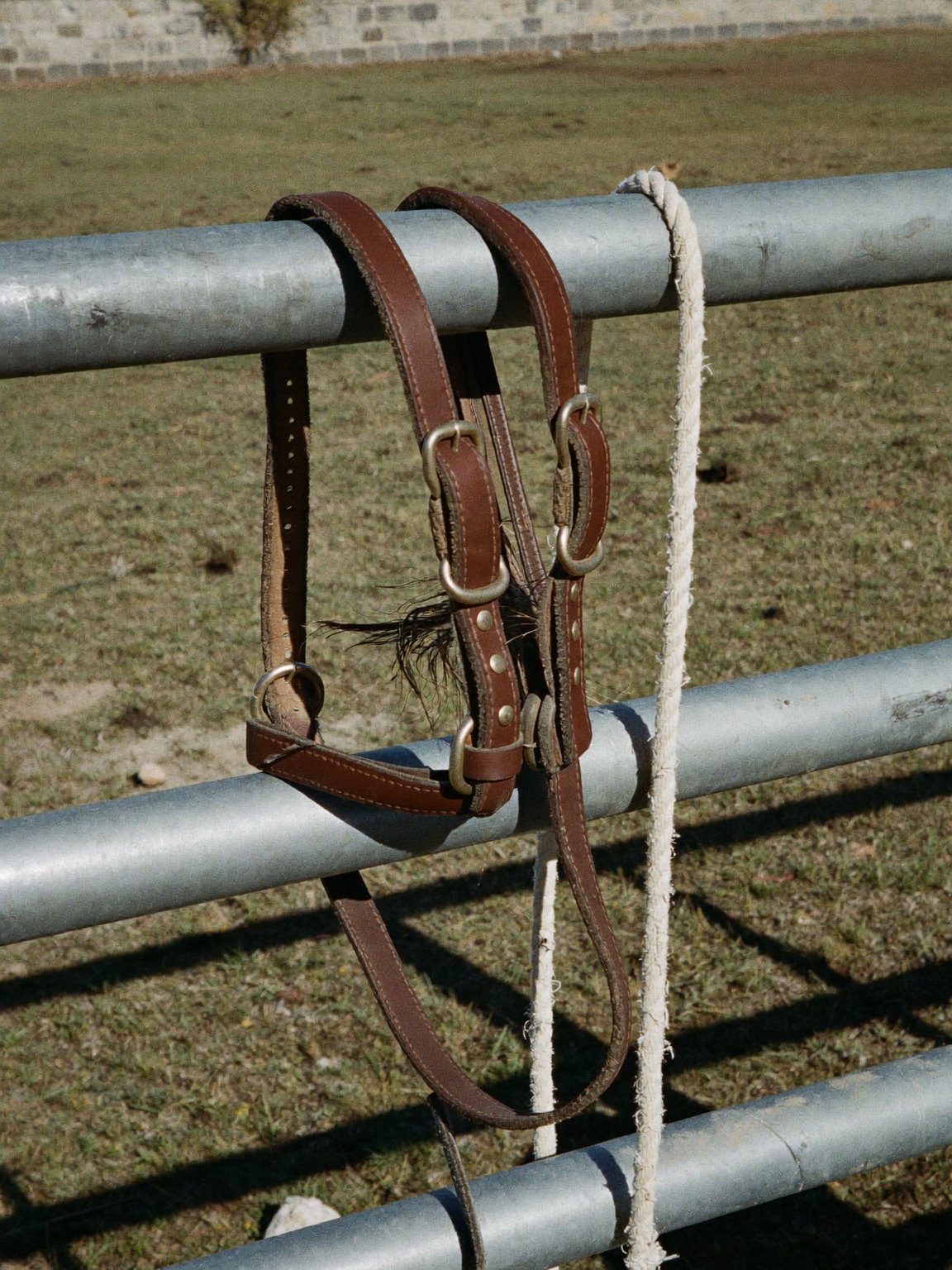
- ✓Field-safe headcollars with a breakaway for every horse turned out at night
- ✓Reflective strips on headcollars or rugs where a road is near the field
- ✓Vet, farrier and yard owner numbers written on the tack room wall, not only in a phone
Feet & Legs
- ✓Hoof soaking sock in each horse’s size, Epsom salts and a ready poultice
- ✓Cohesive bandage, adhesive tape, wound wash and a clean towel in the first-aid box
- ✓A body brush kept for legs only, to brush dried mud off rather than hosing
- ✓Farrier cycle booked at six weeks through the winter, not eight
- ✓Over-reach boots for the horse that pulls front shoes in mud
Every Wet Evening
- ✓Hay and water out while there is still light; buckets seen to be clean
- ✓A hand down each leg before the rug goes on: heat, swelling, scabs at the heel
- ✓Rug decided on the night temperature, dry inside, straps intact
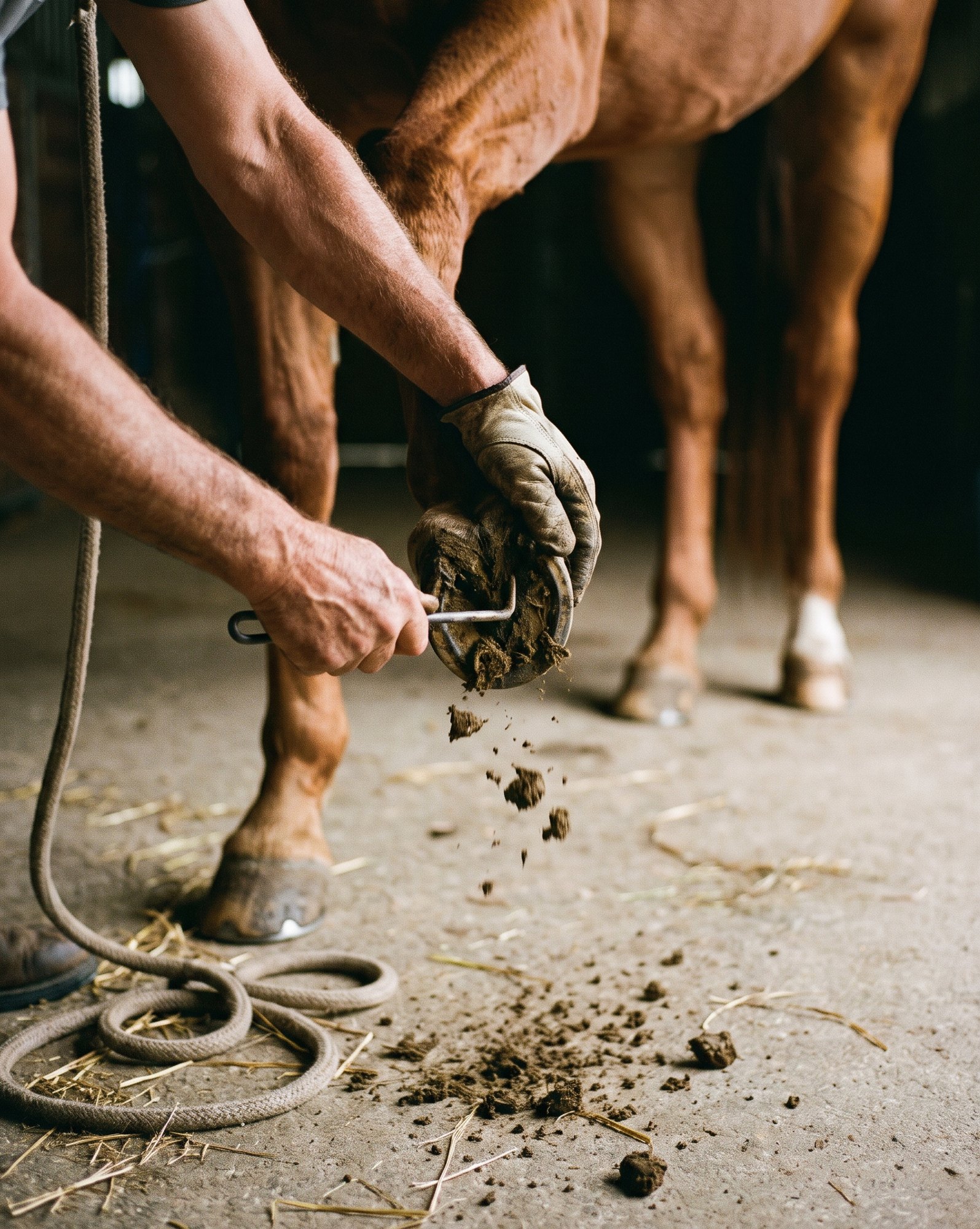
- ✓Feet picked out, especially the white line, every single evening
- ✓Gate locked, lights off, torch back where it lives
The wet season is three weeks long. A yard that is ready before it starts gets through it with a towel and a torch.
Drainage, dry standing and lights are September jobs; done in November they are twice the work.
Dry legs beat clean legs: brush dried mud off, dry the heels, give every horse a dry place to stand.
Five checks every wet evening, by hand and by torch, catch the abscess and the mud fever at the stage they are easy.
General guidance for yard routine in wet weather. Any heat, swelling, lameness or spreading skin lesion is a question for the vet, not a checklist.